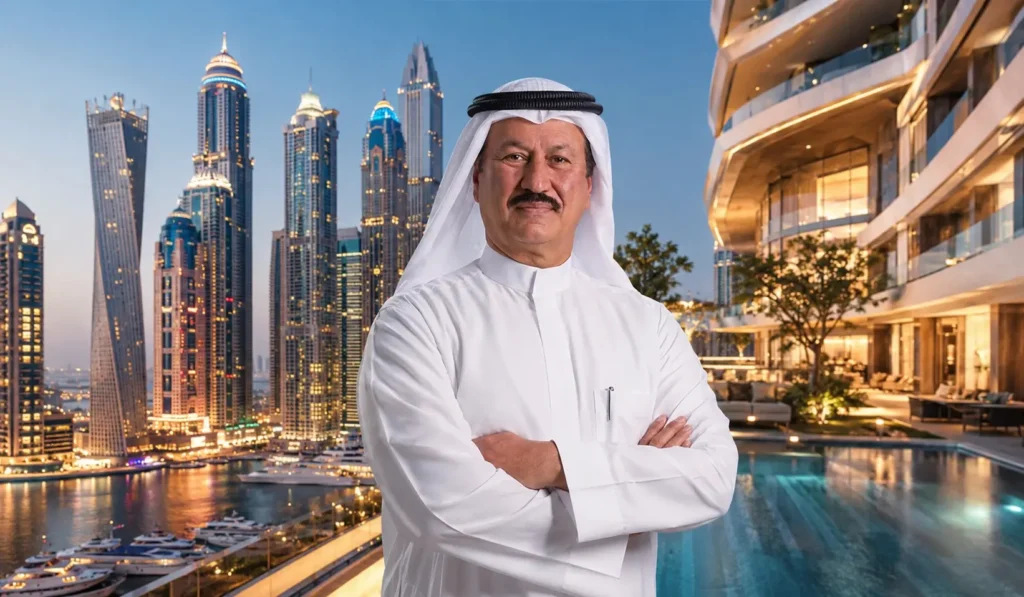
Hussain Sajwani is a self-made Emirati businessman and the founder of DAMAC Properties. As of April 2026, his real-time net worth is estimated at $15.3 billion, ranking him among the wealthiest individuals in the world. He is widely recognized for transforming Dubai’s skyline through luxury real estate developments and high-profile international partnerships. Recently, his focus has shifted toward global technology infrastructure, including a massive $20 billion pledge for data centers in the United States. This move highlights his ability to adapt to emerging market trends like artificial intelligence.
For investors and business analysts, his career offers a study in timing and resilience. From his early days in trade to his current role as a global billionaire, Sajwani has consistently identified market opportunities before they became mainstream. His journey reflects the broader economic transformation of the United Arab Emirates from a small trading hub to a global powerhouse. Understanding his strategic decisions provides valuable insight into the future of the luxury and technology sectors.
Hussain Sajwani’s Formative Experiences and Education
Hussain Sajwani was born in 1953 in Dubai during a time when the city was a small trading port. His parents were entrepreneurs who operated on a modest scale. His father owned a shop in the local souk that sold watches, pens, and goods imported from China. Sajwani began helping in his father’s shop at the age of seven, gaining early exposure to negotiation and international trade. His mother also contributed to the family income by selling fabrics door-to-door to women in their neighborhood.
His childhood was marked by the traditional lifestyle of Dubai before modernization. He recalls a time when houses had no running water or electricity and the first air conditioner was a major luxury for his family. These humble beginnings instilled a strong work ethic and discipline that would later define his business career. At age 14, he was given the responsibility of managing his father’s shops while the family traveled, proving his early aptitude for business.
Sajwani initially received a government scholarship to study medicine at Baghdad University. However, he struggled with the curriculum and decided to pivot his career path. He moved to the United States and attended the University of Washington, where he studied economics and industrial engineering. This international education exposed him to Western corporate structures and global market dynamics. He graduated in 1981, equipped with a pragmatic mindset toward risk and operational efficiency.
Early Entrepreneurial Success in the Food Services Industry
After returning to the UAE, Sajwani briefly worked as a contracts manager for Abu Dhabi Gas Industries (GASCO). He soon realized that his true calling was entrepreneurship and looked for opportunities to start his own venture. In 1982, he founded a catering company that served the energy and construction sectors. The business was established using $25,000 he had earned selling timeshares during his summer breaks from university.
The catering business grew rapidly by securing high-volume contracts with international firms and government entities. During the first Gulf War, Sajwani’s company provided meals for the U.S. military. At its peak, the business was serving over 150,000 meals per day across more than 200 locations. This venture was critical because it provided the capital Sajwani would eventually use to enter the real estate market. Even as his property empire expanded, the catering business continued to operate under the name Global Logistics Services.
Also Read: Ayoub Fathi’s Life Journey from Elite Hacker to Chief Information Security Officer of noon
DAMAC Was Born from a Billion-Dollar Opportunity in Dubai’s Real Estate Market
In the mid-1990s, Sajwani began experimenting with property development by building small hotels in Dubai to house business travelers. Between 1996 and 2000, he built and sold five three-star hotels, making a significant profit. However, the major turning point occurred in 2002 when the Dubai government introduced freehold ownership laws. This allowed foreigners to own property in designated areas, creating a massive new market for international investors.
Sajwani founded DAMAC Properties in 2002 to capitalize on this legislative shift. His first major project was Marina Terrace, a 20-story residential tower in Dubai Marina. He utilized an aggressive off-plan sales model, where units were sold before construction was finished. This strategy allowed him to fund construction using customer payments, minimizing his reliance on bank debt. By 2005, the project was successfully completed and handed over to buyers.
The company gained rapid momentum during the real estate boom of the mid-2000s. DAMAC positioned itself as a developer of “aspirational” projects for high-net-worth individuals. Notable early developments included DAMAC Hills, a large golf community, and Akoya Oxygen, an eco-friendly residential project. Sajwani’s willingness to use bold marketing strategies, such as offering free luxury cars with apartment purchases, helped set DAMAC apart from its competitors.
Hussain Sajwani Net Worth Grew Alongside Dubai’s Luxury Property Boom
Hussain Sajwani net worth has grown significantly alongside Dubai’s transformation into a global luxury and investment destination. With an estimated fortune exceeding $15 billion, Sajwani built his wealth primarily through DAMAC Properties, which became one of the Middle East’s most recognizable real estate brands. His strategy focused on targeting affluent international buyers through branded residences, premium golf communities, and luxury-focused developments in high-demand areas of Dubai. Beyond real estate, Sajwani expanded into hospitality, digital infrastructure, and technology investments, helping diversify his revenue streams beyond the property sector. Analysts often point to his aggressive expansion model and ability to capitalize on emerging market trends as major contributors to his billionaire status.
How DAMAC Sold Status, Not Just Property
A core part of Sajwani’s strategy was aligning DAMAC with global luxury brands. He recognized that in a crowded market, high-end branding could provide a unique competitive advantage. In 2013, he partnered with The Trump Organization to develop luxury golf courses in Dubai. This collaboration brought international attention to DAMAC and included the launch of the Trump International Golf Club.
Beyond golf, Sajwani pursued partnerships with iconic fashion houses to design property interiors. DAMAC worked with Versace Home, Fendi Casa, and Roberto Cavalli to create exclusive branded residences. These collaborations allowed DAMAC to sell a specific lifestyle rather than just physical buildings. Owning a DAMAC property became a symbol of status and access to a global luxury culture.
$20 Billion Bet That Could Transform DAMAC Forever
In 2021, Sajwani made the decision to take DAMAC Properties private, delisting it from the Dubai stock exchange. This was a controversial move but gave him the flexibility to shift the group’s focus toward new industries. He identified a massive growth opportunity in digital infrastructure, specifically data centers required for the expansion of artificial intelligence. Through its unit EDGNEX (later rebranded as DAMAC Digital), the group began building data centers globally.
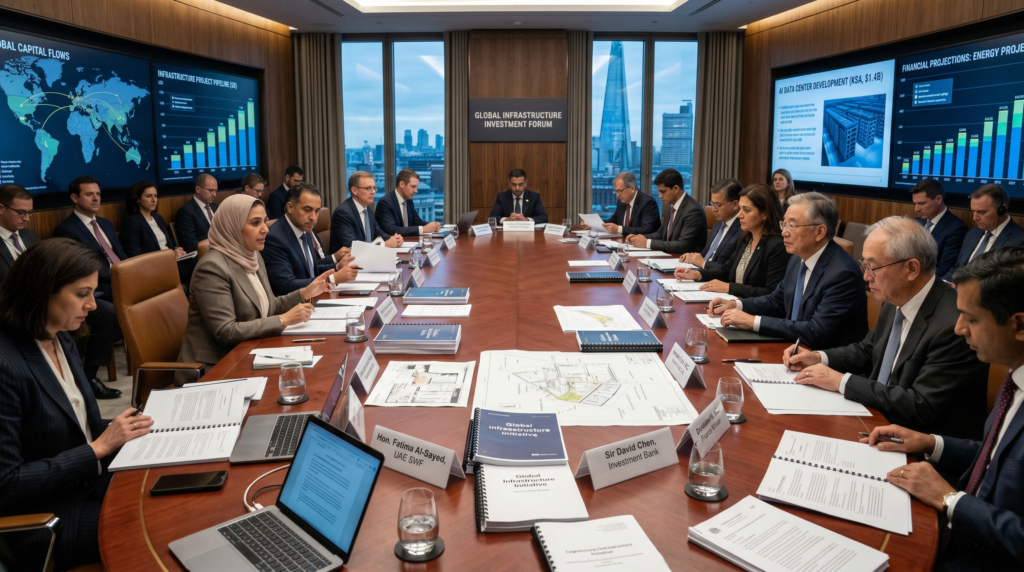
In January 2025, Sajwani pledged $20 billion to build data centers across the United States. This initiative targets high-density workloads for hyperscale operators like Microsoft, Amazon, and Google. The plan involves constructing facilities with thousands of megawatts of capacity in states such as Texas, Arizona, and Ohio. Sajwani has noted that while the return on equity for data centers may be lower than for real estate, the long-term stability and demand make it a compelling investment.
This trend toward tech-enabled infrastructure is worth watching for long-term investors. Sajwani has also invested in major technology companies such as OpenAI, SpaceX, and xAI to bridge real estate with the tech ecosystem. He believes that countries that lead in AI will have a significant advantage in the coming decades. DAMAC AI was launched to buy specialized chips from Nvidia and AMD to sell computing power to major tech firms.
Hussain Sajwani’s Hands-On Leadership and Family Legacy
Hussain Sajwani is known for a hands-on and highly detailed leadership style. He is deeply involved in marketing campaigns, project designs, and investor relations. Employees and peers describe him as charismatic and ambitious, but also demanding. He believes that going into the “minutest details” of a business is his greatest strength, even if it draws criticism from some.
The DAMAC empire is a family-run business, with Sajwani’s children playing central operational roles. His eldest son, Ali Sajwani, is the Managing Director of Operations and has been groomed as a key executive. His daughter, Amira Sajwani, serves as the Managing Director of Sales and Development and is the founder of the prop-tech firm Prypto. Another son, Abbas Sajwani, is the CEO of AHS Properties.
Sajwani intentionally involves his family in strategic discussions, often during meals where he asks for their criticism and input. He has stated that he trained his children to say “no” and challenge his ideas to ensure they are prepared for leadership. He has implemented trust structures to minimize potential conflicts and allow for a smooth transition to the next generation.
Sajwani’s Vision of Success That Includes Society
Sajwani believes that successful business leaders have a responsibility to give back to society. He established the Hussain Sajwani – DAMAC Foundation to focus on youth empowerment and education. One of the foundation’s most prominent initiatives is the “One Million Arab Coders” program. This project aims to provide free digital training to young people across the Arab world, equipping them with skills for the future job market.
In early 2026, the foundation committed Dh100 million to the UAE’s “Edge of Life” campaign. This humanitarian initiative was launched to provide food aid and nutrition to five million children suffering from hunger worldwide. Sajwani has also supported local educational projects, such as providing AED 20 million in scholarships for Emirati students through the Dubai Schools Project. His philanthropic efforts are often focused on providing youth with the practical skills needed to achieve self-reliance.
Surviving the 2008 Crash, Legal Battles, and a Global Pandemic
The career of Hussain Sajwani has not been without significant obstacles. The 2008 global financial crisis hit Dubai’s property market exceptionally hard, causing prices to collapse and project delays across the city. During this period, critics accused DAMAC of being overly aggressive in its marketing and failing to deliver on time. Sajwani defended his company by focusing on long-term project delivery and eventually navigating the business through the recovery.
He also faced legal challenges, including a 2011 conviction in an Egyptian court regarding a land deal. The sentence was later suspended, and Sajwani maintained that he had done nothing wrong. More recently, the COVID-19 pandemic presented a new disruption to the global economy. DAMAC responded by doubling down on digital sales and flexible payment plans, which kept the company operational during the tourism slowdown.
Sajwani’s Long-Term Market Vision
The Dubai real estate market remains a core focus for Sajwani, who believes the city is currently entering a sustainable phase of growth. He dismisses concerns about a market “bubble,” pointing to the high demand from international buyers moving to Dubai for its infrastructure, safety, and tax-favorable environment. He argues that with 3 billion people living in the regions surrounding Dubai, the potential for long-term growth is significant.
For business owners, these market dynamics represent a shift toward high-margin, branded assets and digital integration. DAMAC’s expansion into the United States and other global markets suggests a strategy of geographic diversification to mitigate regional risks. As the demand for AI grows, his $20 billion investment in data centers could redefine the group’s identity from a property developer to a technology infrastructure giant.
FAQs – Frequently Asked Questions
Hussain Sajwani is an Emirati billionaire and the founder and chairman of DAMAC Properties, a major luxury real estate developer based in Dubai.
Sajwani is often called the “Donald of Dubai” due to his high-profile business partnership with the Trump family and his similar focus on luxury branding and aggressive marketing.
The investment is focused on building data centers to meet the massive global demand for artificial intelligence and cloud computing infrastructure.
DAMAC was previously listed on the London and Dubai stock exchanges but was taken private by Hussain Sajwani in 2022 to allow for more strategic flexibility.
Notable projects include the Trump International Golf Club Dubai, DAMAC Hills, and branded residences with Versace, Fendi, and Roberto Cavalli.
Through the Hussain Sajwani – DAMAC Foundation, he supports initiatives like “One Million Arab Coders” and has donated Dh100 million to global child hunger relief.
Yes, his children Ali, Amira, and Abbas are all involved in senior leadership roles within the DAMAC Group or have started related business ventures.

Dwayne Paschke is a seasoned content strategist and AI automation specialist with over nine years of experience at the intersection of journalism and digital innovation. A versatile force in the media landscape, Dwayne has built a reputation as an expert content writer and investigative journalist, contributing high-impact pieces to various reputable news websites.