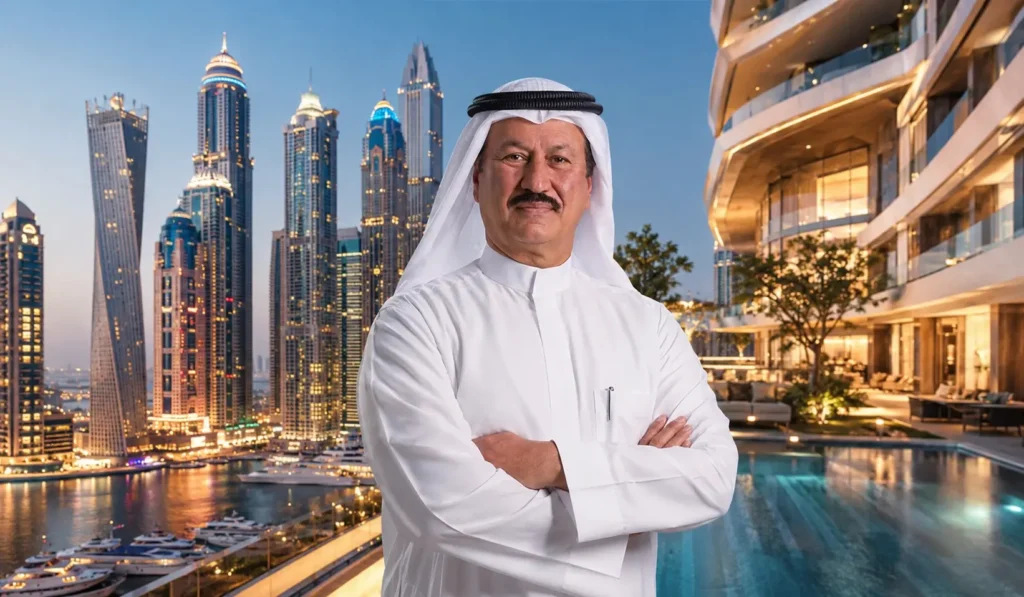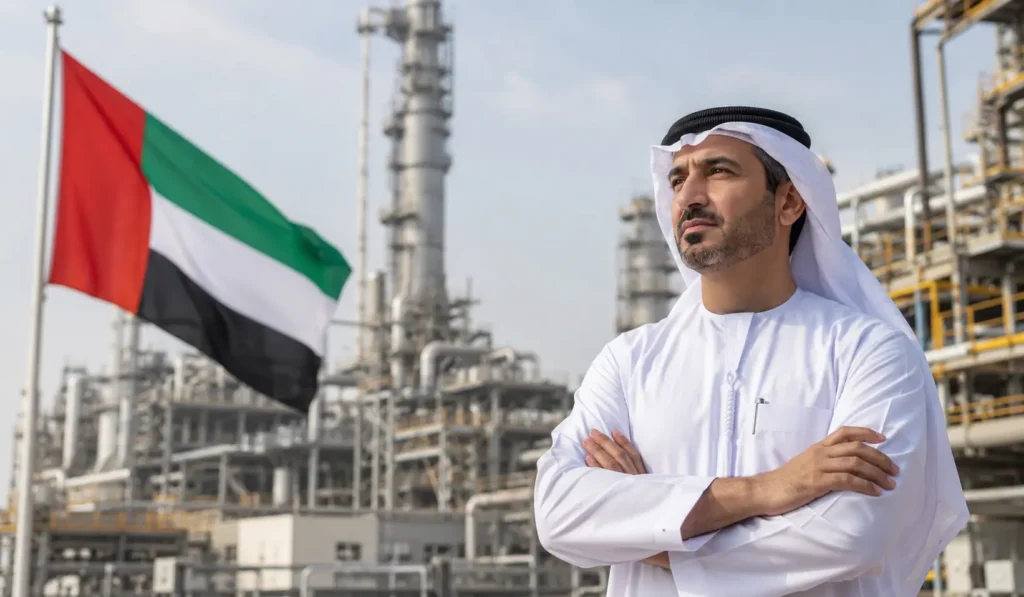
The United Arab Emirates’ massive economic traditionally rely on oil. At the base of this transformation is Badr Al-Olama, a prominent executive and public official who has spent two decades building the country’s advanced manufacturing and investment sectors. As the Director General of the Abu Dhabi Investment Office (ADIO), he now leads the charge in attracting global capital and fostering a sustainable “Falcon Economy”. This article explores his journey from a legal background to becoming a key architect of the UAE’s industrial future. Understanding his strategic decisions provides deep insight into how the UAE plans to remain a global leader in the coming decades. Businesses should pay close attention to these changes as they signal a broader move toward technology-heavy industries.
How Badr Al-Olama, a Lawyer, Transitioned into Aerospace Leadership?
Badr Al-Olama’s path to industrial leadership began in the legal field rather than engineering or finance. He earned his degree in Shari’a and Law from the UAE University in 2002. He later pursued higher education in the United States, obtaining a Master of Law (LL.M) from Harvard Law School in 2005. This prestigious educational foundation provided him with a unique perspective on international regulations and corporate structures.
Before transitioning into business leadership, he practiced as an advocate and legal consultant. He began his professional life at Habib Al-Mulla & Company, which is now known as Baker & McKenzie Habib Al-Mulla. During this time, he contributed to seminars on complex legal topics like international war crimes and offshore companies in the UAE. His legal training eventually became a vital asset when he began negotiating multi-billion dollar aerospace contracts.
How does a lawyer end up leading an aerospace company? For Al-Olama, it was a deliberate career shift encouraged by UAE leadership. When he joined Mubadala Investment Company in 2005, he was told to stop thinking like a lawyer and start focusing on project development and finance. He even completed Level One of the CFA program to solidify his financial expertise.
Industrial Development at Mubadala And Its Vision And Execution
The year 2005 marked the beginning of Al-Olama’s 15-year tenure with Mubadala Investment Company. Mubadala is a global sovereign investor with a mandate to create sustainable financial returns for Abu Dhabi. Al-Olama’s initial role involved learning the ropes of industrial project management from the ground up. He was part of the team that began discussing the Abu Dhabi 2030 Economic Vision, a plan that many thought was overly ambitious at the time.
During his time at Mubadala, he was responsible for the UAE Clusters portfolio. This diverse set of businesses spanned sectors including aerospace, technology, and healthcare. His work focused on forging strategic partnerships with global organizations to diversify the local economy. He also played a key role in the strategic development of the Nibras Al Ain Aerospace Park. This project was a joint initiative between Mubadala and Abu Dhabi Airports Company to establish a sustainable aerospace ecosystem in the capital.
How a 32-Year-Old CEO Built a World-Class Aerospace Company?
One of Al-Olama’s most significant achievements was his leadership of Strata Manufacturing PJSC. At the age of 32, he was appointed as the Chief Executive Officer of the Al Ain-based facility. Strata is a wholly-owned advanced composite aerostructures manufacturing plant. Under his management, the company transformed from a startup into a global tier-one supplier for the world’s largest aircraft manufacturers.
By 2013, Strata had secured over $2 billion in contracts to produce essential aircraft parts for both Airbus and Boeing. The facility became the sole manufacturer of specific components for the Airbus A330, A350, and A380. This success was not just about buying machinery; Al-Olama prioritized investing in people before equipment. He enrolled Emirati nationals in advanced training programs to ensure they were capable of manufacturing complex composite structures before the factory was even fully built.
For investors, this trend is worth watching as it demonstrates the UAE’s ability to compete in high-stakes global supply chains. Today, more than half of Strata’s workforce consists of UAE nationals, and remarkably, nine out of ten of those Emiratis are women. This focus on female empowerment in a traditionally male-dominated field has become a hallmark of Al-Olama’s leadership style.
Programs Like the Golden Visa Attract Global Talent to Abu Dhabi
In recent years, Badr Al-Olama has moved from managing specific industrial assets to overseeing broader economic growth as the Director General of ADIO. ADIO is the government entity responsible for driving economic diversification and sustainable growth in Abu Dhabi. In this role, Al-Olama helps global investors and companies establish and grow their operations in the emirate.
His leadership at ADIO focuses on key priority industries, including AgTech, Life Sciences, and Digital Technology. He works closely with other leaders, such as H.E. Ahmed Jasim Al Zaabi, to enhance the “Falcon Economy”. This economic model emphasizes a diversified, smart, and sustainable approach to growth. Al-Olama’s tenure has seen a focus on attracting capital into sectors that will define the next 50 years of the UAE’s history.
Under his guidance, ADIO has expanded its “Clusters” strategy to drive innovation in future-focused industries. This includes large-scale projects in food and water security, as well as the Fintech, Insurance, Digital & Alternative Assets (FIDA) cluster. He also oversees the Abu Dhabi Residents Office (ADRO), which aims to attract and retain global talent through programs like the Golden Visa.
International Platforms Like GMIS Position the UAE as an Industrial Leader
Beyond his domestic roles, Al-Olama has established a significant presence on the international stage through the Global Manufacturing and Industrialisation Summit (GMIS). Established in 2015, GMIS is a joint initiative between the UAE government and the United Nations Industrial Development Organization (UNIDO). Al-Olama has headed the organizing committee since its inception, aiming to bridge the gap between governments and the private sector.
GMIS is not merely a “talking shop”; it is designed to leave a tangible legacy through various initiatives. For example, the Mohammed Bin Rashid Initiative for Global Prosperity is an open innovation platform that crowdsources solutions to global challenges. These challenges relate to the UN Sustainable Development Goals, including themes like healthy food, climate change, and infectious disease prevention.
In 2020, due to the pandemic, Al-Olama led the decision to take the summit virtually rather than postpone it. He argued that a summit preaching the power of the Fourth Industrial Revolution had to embrace digital tools. This virtual format allowed for a broader reach, with solutions submitted from over 150 different countries.
The UAE’s 4IR Strategy Brings Policy, Education, and Industry Together
Al-Olama is a strong proponent of the Fourth Industrial Revolution (4IR) and its potential to transform societies. He previously served as a member of the UAE Ministerial Council on the Fourth Industrial Revolution. He believes the COVID-19 pandemic was a turning point that proved 4IR technologies could enable remote work and risk management rather than just replacing humans with robots.
A major component of his 4IR strategy involves the adoption of 3D printing in manufacturing. He notes that while the aerospace industry is traditionally conservative regarding safety, 3D printing is a force that cannot be stopped. The UAE is positioning itself to be a key player in 3D printing components for global giants like Boeing and Airbus. This technology allows for parts to be produced faster, cheaper, and with less waste.
Artificial Intelligence (AI) and the digital economy are also central to his vision. He encourages the younger generation to study AI, blockchain, and augmented reality, as these will be essential skills in the future labor market. The UAE has already taken concrete steps in this direction by appointing a Minister for Artificial Intelligence and establishing the Mohamed bin Zayed University of Artificial Intelligence.
The Green Chain Initiative Is Supporting the Future of Low-Carbon Manufacturing
Sustainability has become a core pillar of Al-Olama’s industrial strategy. At GMIS, he launched the “Green Chain Initiative,” a crowdsourcing platform that uses blockchain technology. The goal is to develop green supply chains by funding renewable energy projects to power manufacturing facilities. Any excess energy generated can be used to mine cryptocurrencies, which then serves as a reward for companies investing in green technology.
He is also looking toward the “holy grail” of aerospace: green flight. While fully electric commercial planes may be years away, Al-Olama sees biofuels and hydrogen fuel cells as necessary stepping stones. He believes that battery manufacturing will eventually become a regionalized business and hopes the UAE can take a first-mover advantage in this sector.
His focus on the environment was sharpened by the global lockdowns during the pandemic. He observed that nature’s recovery during this period showed what was possible when human impact was reduced. He believes that technology must be harnessed as a primary tool to tackle climate change and ensure the world remains habitable for future generations.
Leadership in Workforce Development and Economic
A recurring theme in Al-Olama’s career is the belief that a nation’s most rewarding investment is in its human talent. This philosophy was applied at Strata, where the focus was on building a national workforce capable of competing globally. He emphasizes that successful leadership requires empathy and emotional intelligence to manage diverse teams effectively.
The localization of the aerospace workforce is a key achievement for the UAE. Al-Olama takes pride in the fact that Emirati talent is now responsible for parts on the wings and tails of major commercial aircraft. This has debunked earlier skepticism about whether a young nation could handle such high-tech manufacturing.
Furthermore, his role at Emirates Post Group (now 7X) and other boards allows him to influence a wide range of sectors. He serves on the boards of Yahsat, SHUAA Capital, and the Abu Dhabi Chamber of Commerce & Industry. This wide-reaching influence helps integrate different parts of the UAE economy, from logistics to satellite communications, into a cohesive industrial strategy.
Major Constraints and the UAE’s Post-Oil Economic
The journey toward a diversified economy is not without its challenges and risks. The aerospace sector, in particular, was severely impacted by the pandemic, which Al-Olama described as “heartbreaking”. However, his approach was to “hope for the best but plan for the worst”. Under his guidance, companies like Strata repurposed their production lines in just 30 days to manufacture N95 masks. This move turned the UAE from a consumer into a net exporter of critical medical supplies during a global crisis.
Looking ahead, the UAE is preparing for the “post-oil era”. Al-Olama often cites HH Sheikh Mohammed Bin Zayed Al Nahyan’s vision that exporting the last barrel of oil should be a moment of celebration. This celebration will only be possible if the country has successfully established alternative, high-tech industries.
This could shape the market in the coming months as the UAE continues to invest heavily in its space program and advanced manufacturing. The Hope Probe mission to Mars, which Al-Olama helped oversee through the UAE Space Agency board, is a prime example of this ambition. It proved that with a clear vision and homegrown talent, even a young nation can achieve phenomenal milestones in space exploration.
Drones and Autonomous Systems Are Transforming Logistics in the UAE
The next 50 years are expected to be even more transformative than the previous five decades. Al-Olama envisions a future dominated by hybrid models that combine digital technology with traditional manufacturing. He expects an uptick in the use of cargo drones and unmanned aerial vehicles (UAVs) for logistics. Recent trials in Abu Dhabi have already demonstrated drone parcel delivery, showcasing the potential for smarter and more sustainable supply chains.
Strategic partnerships will continue to be vital. A notable example is the collaboration between Mubadala and the Saudi Arabian Military Industries Company (SAMI) to develop a regional aerospace and defense ecosystem. Such partnerships allow for the optimization of resources and global market access while building a home-grown defense industry.
In conclusion, Badr Al-Olama’s career reflects the broader story of the UAE: a story of rapid transformation, bold ambition, and a relentless focus on the future. By prioritizing education, embracing technology, and fostering international collaboration, he has helped put Abu Dhabi on the global aerospace and industrial map. As he leads ADIO and other major entities, his strategic vision will remain central to the UAE’s goal of becoming one of the world’s strongest and most sustainable economies.
FAQ’s — Frequently Asked Questions
Badr Al-Olama is a senior executive in the UAE who currently serves as the Director General of the Abu Dhabi Investment Office (ADIO). He is known for his previous leadership at Mubadala and Strata Manufacturing.
He holds a degree in Shari’a and Law from UAE University and a Master of Law (LL.M) from Harvard Law School. He began his career as a lawyer before transitioning into business and project development.
Strata is an Abu Dhabi-based company that manufactures advanced composite aircraft parts. Under Al-Olama’s leadership, it became a Tier-1 supplier to major companies like Boeing and Airbus.
GMIS is a global platform established by the UAE and UNIDO to shape the future of manufacturing. Al-Olama heads its organizing committee and oversees its innovation initiatives.
Under Al-Olama’s direction, Strata repurposed its facilities in 30 days to produce N95 masks. This effort involved partnerships with Honeywell and the Chinese government.
It is a GMIS initiative that uses blockchain technology to develop green supply chains. It aims to crowdsource renewable energy projects to power factories and decarbonize industry.
Al-Olama views 3D printing as a key part of the Fourth Industrial Revolution. It allows the UAE to produce aircraft components more efficiently and position itself as a tech leader in the aerospace supply chain.
The vision is to create a knowledge-based, high-tech economy so that the country no longer depends on oil exports. Al-Olama is a key figure in building the industrial infrastructure necessary to achieve this goal.

Dwayne Paschke is a seasoned content strategist and AI automation specialist with over nine years of experience at the intersection of journalism and digital innovation. A versatile force in the media landscape, Dwayne has built a reputation as an expert content writer and investigative journalist, contributing high-impact pieces to various reputable news websites.