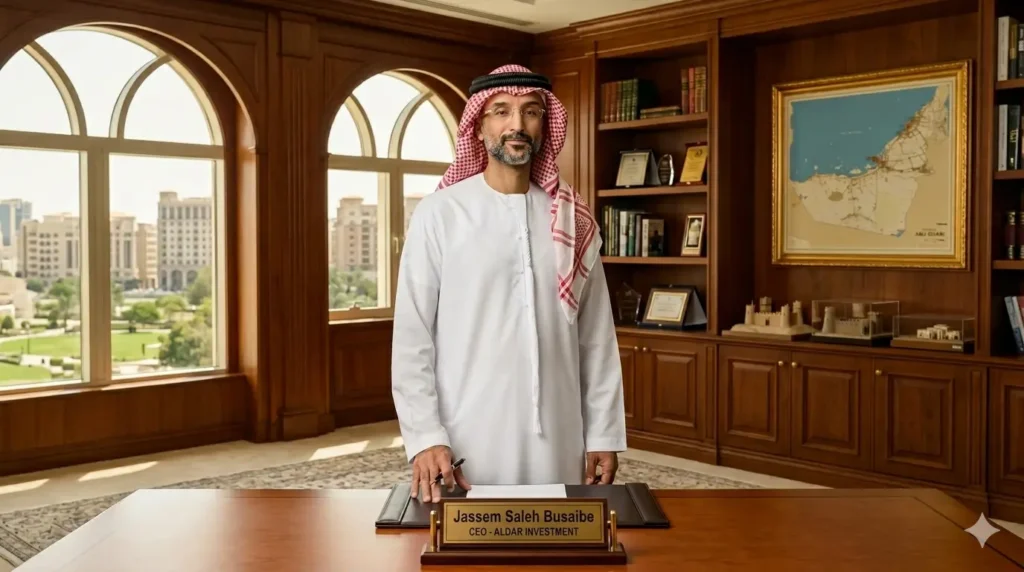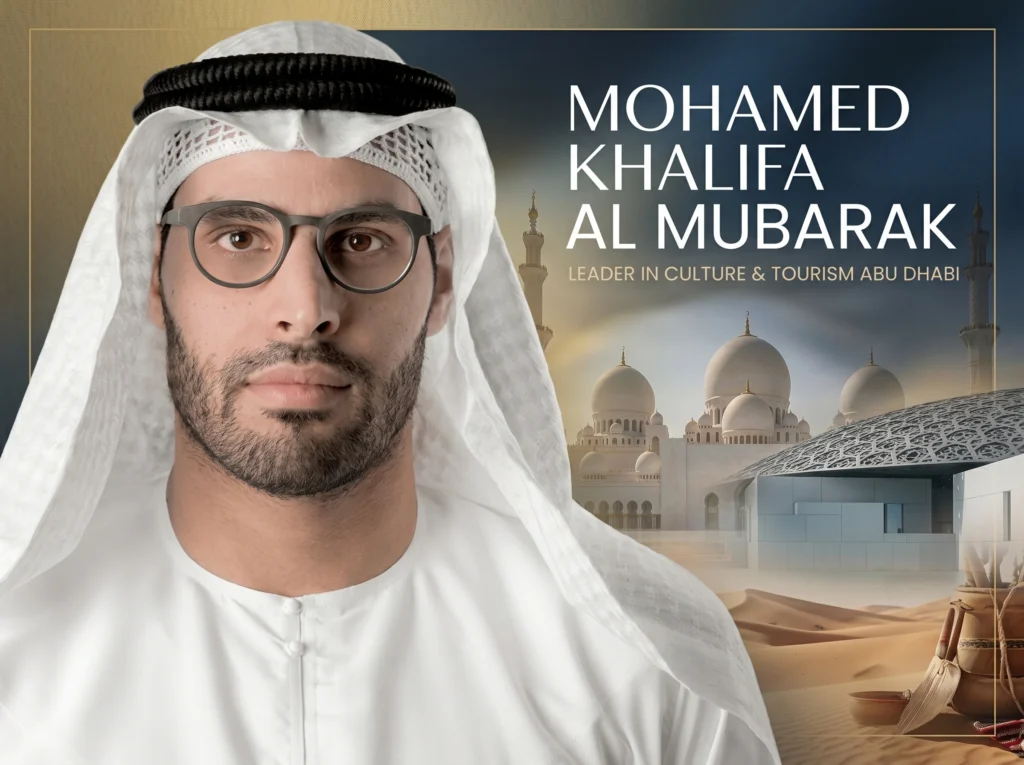
Mohamed Khalifa Al Mubarak is one of the UAE’s most influential public figures, serving as Chairman of the Abu Dhabi Department of Culture and Tourism (DCT Abu Dhabi), Chairman of Aldar Properties, and holding board positions across several major Abu Dhabi institutions. In his role at DCT Abu Dhabi, he oversees the emirate’s positioning as a global cultural destination, including the development of Saadiyat Island’s cultural district, which houses the Louvre Abu Dhabi and the forthcoming Guggenheim Abu Dhabi and Zayed National Museum. Through Aldar, one of the UAE’s largest listed real estate developers, he has guided a company that shapes Abu Dhabi’s physical and commercial era. His influence spans culture, real estate, investment, and soft power, making him central to understanding Abu Dhabi’s transformation from a petroleum economy to a diversified, internationally recognized hub.
There is a particular kind of influence that operates without announcing itself. It doesn’t generate the volume of press coverage that a business acquisition or a political statement produces. It works on longer timescales, through institutional decisions that accumulate into something only visible when you step back far enough to see the whole picture.
Mohamed Khalifa Al Mubarak operates at that register. If you are tracking Abu Dhabi’s transformation from oil capital to cultural destination, from regional city to globally recognized hub of art, architecture, and investment, you will find his name at the intersection of the most consequential decisions being made. Not always in the foreground. But consistently, structurally present in the architecture of what is being built.
Mohammad Khalifa Al Mubarak Roles
Mohamed Khalifa Al Mubarak’s formal positions span an unusual range for a single individual. Chairman of the Abu Dhabi Department of Culture and Tourism. Chairman of Aldar Properties, one of the UAE’s largest listed real estate developers, with a portfolio that has expanded significantly into the UK and other international markets. Board positions at Abu Dhabi Media and other significant institutions within the Abu Dhabi ecosystem.
The breadth is not incidental. It reflects a deliberate architecture of connected influence in which cultural development, physical urban development, and media are understood as components of a single, integrated project: the repositioning of Abu Dhabi in the global imagination.
At DCT Abu Dhabi, he oversees the institutional machinery of that repositioning most directly. The department is responsible for the emirate’s tourism strategy, cultural sector development, and the positioning of Abu Dhabi as a destination for the kind of visitor, culturally curious, high-spending, internationally mobile, who currently defaults to Paris, London, or New York.
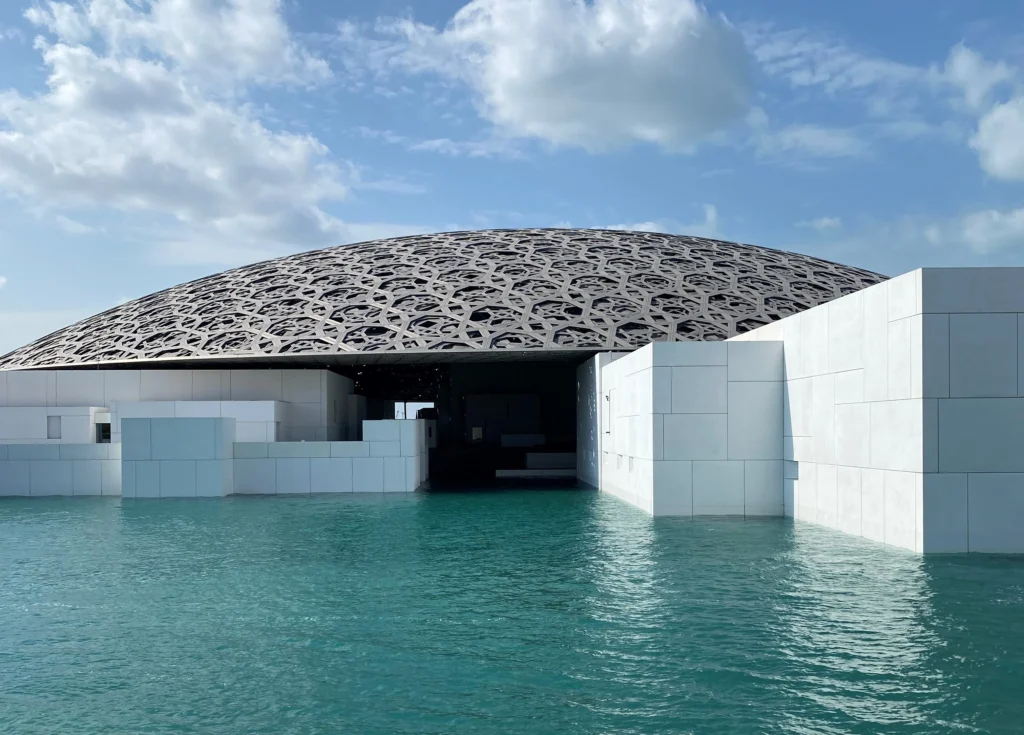
The ambition is real. The Louvre Abu Dhabi, opened in 2017 on Saadiyat Island, is not a franchise operation or a borrowed brand exercise. It is a genuine museum, one of the largest in the region, that has established itself as a serious cultural institution with meaningful programming, genuine acquisitions, and an architectural experience (Jean Nouvel’s rain-of-light dome) that is genuinely compelling. The forthcoming Guggenheim Abu Dhabi and Zayed National Museum will, when complete, create a cultural district with few equivalents in the world.
These are not small undertakings. They require sustained institutional commitment, curatorial credibility, and the kind of long-term vision that resists the pressure to monetize quickly. Al Mubarak’s role in sustaining that commitment through the governance structures he chairs and the strategic direction he sets is central to why the project has progressed.
What Did Aldar Pursue Under Al Mubarak’s Leadership
If DCT Abu Dhabi is where cultural identity is curated, Aldar Properties is where that identity becomes physical.
Aldar is not simply a real estate developer in the conventional sense. In the Abu Dhabi context, it is one of the primary vehicles through which the emirate’s physical transformation is executed, developing the residential communities, commercial properties, hospitality assets, and mixed-use destinations that constitute the built environment of Abu Dhabi’s ambition.
Under Al Mubarak’s chairmanship, Aldar has pursued a strategy of expansion that extends beyond Abu Dhabi. The acquisition of Sodic in Egypt and substantial investments in UK residential development have positioned Aldar as a regional and increasingly international real estate platform, not simply a domestic property company. The financial scale of these moves, Aldar’s market capitalization and deal volumes have grown substantially, reflects both genuine commercial performance and the strategic intent of positioning Abu Dhabi’s anchor real estate developer as a global player.
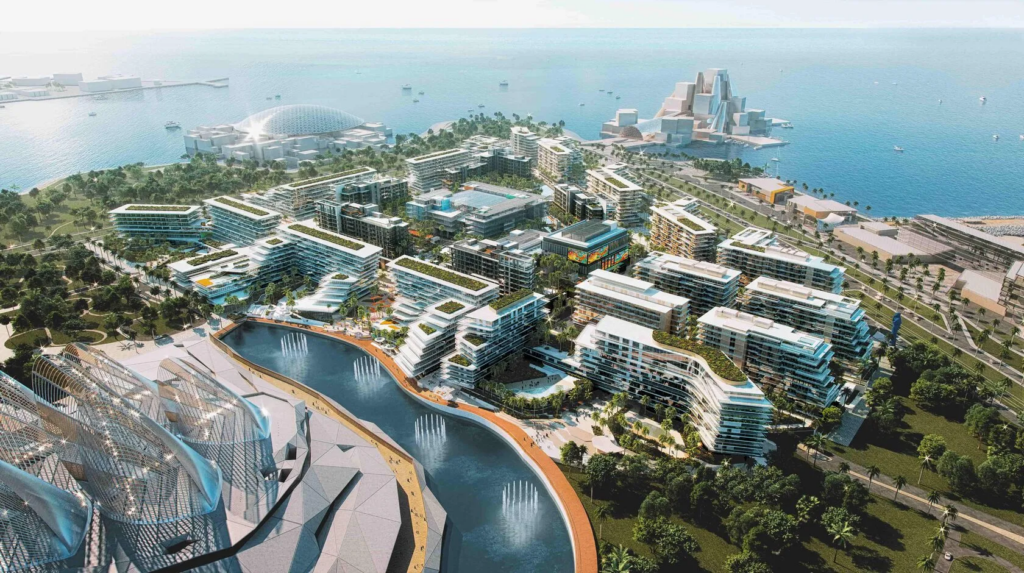
The connection between Aldar’s physical development work and DCT Abu Dhabi’s cultural programming is not coincidental. Saadiyat Island, the cultural district where the Louvre, the forthcoming Guggenheim, and associated hospitality and residential developments sit is an Aldar-developed master plan. The physical environment in which Abu Dhabi’s most significant cultural institutions are being built is being created by the same company whose chairman also chairs the cultural authority overseeing those institutions.
This integration, culture and real estate developed in deliberate alignment, is the structural expression of a strategy that understands cultural destination-building as an urban development project as much as an arts programming one.
What Culture Actually Does for a Country
To understand why Al Mubarak’s capabilities and institutional access is focused on cultural development rather than, say, finance or technology, you need to understand how seriously Abu Dhabi’s leadership takes soft power as a strategic instrument.
Soft power, the ability to attract and influence rather than coerce, operates through culture, education, and the projection of values that make a place desirable to visit, invest in, and associate with. Countries and cities that have mastered soft power attract capital, talent, and partnerships in ways that purely economic or military power cannot replicate.
The UAE’s track record in understanding this is strong. Emirates airline, the World Government Summit, the acquisition of major sports franchises and events, these are not coincidental luxuries. They are systematic investments in the kind of global attention and positive association that serve economic and diplomatic objectives.
Cultural institutions operate on the same logic. When the Louvre Abu Dhabi exhibits works that span 5,000 years of human civilization in a building that is itself a masterpiece of architectural ambition, it projects a particular image of Abu Dhabi: as a place of genuine sophistication, long-term thinking, and cosmopolitan openness. That image does work, attracting tourists who spend money, convincing executives that Abu Dhabi is worth a regional headquarters consideration, and sustaining the diplomatic relationships that a small, wealthy state in a complex geopolitical neighborhood requires.
Al Mubarak understands this connection between culture and strategic positioning with evident clarity. His public statements on cultural development consistently return to the theme of Abu Dhabi’s global positioning, not in a crass way, but with a recognition that cultural investment and national interest are aligned in ways that some cultural institutions resist acknowledging.
The Abrahamic Family House and Coexistence
Al Mubarak’s work extends far beyond corporate balance sheets and tourism metrics; it touches the social framework of the UAE. As President of the Abrahamic Family House and a prominent member of the Higher Committee of Human Fraternity, he helps guide an unprecedented physical symbol of interfaith dialogue.
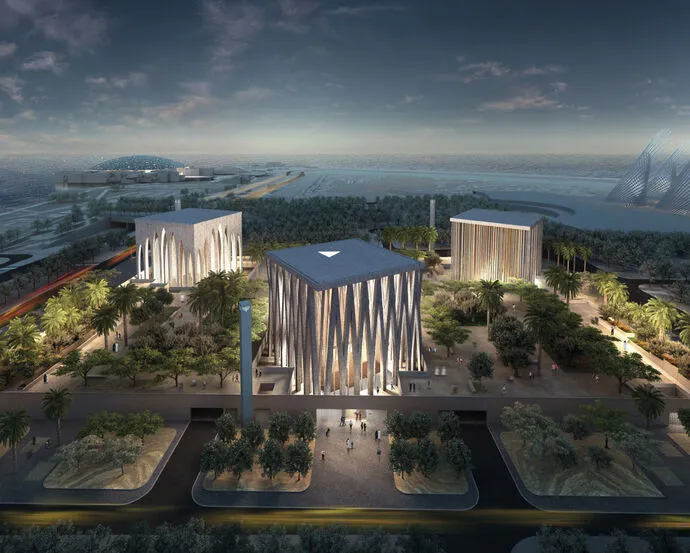
Located in the Saadiyat Cultural District, the Abrahamic Family House brings together a mosque, a church, and a synagogue within a single, unified architectural compound designed by Sir David Adjaye. It is a physical manifestation of the Document on Human Fraternity.
By placing this institution alongside the world’s greatest museums, Al Mubarak is sending a clear signal to international investors, academics, and global citizens: Abu Dhabi is a safe, cosmopolitan, and radically open society built on mutual respect and peaceful coexistence. This social stability is the invisible bedrock that allows long-term economic investments to flourish safely.
What Was Mohamed Khalifa’s Leadership Approach
Al Mubarak is not a high-profile communicator in the mold of the most visible leaders in the UAE’s business ecosystem. He does not cultivate a personal brand through social media volume or frequent public speaking at international forums. His presence is felt more through the institutions he chairs and the outcomes they produce than through personal visibility.
This is itself a choice, and a revealing one. It suggests a leadership orientation focused on institutional outcomes rather than personal profile, on the quality of what is built rather than the attention generated in the building process.
The results speak. Aldar’s financial performance and international expansion. DCT Abu Dhabi’s sustained progress on the Saadiyat cultural district. The Louvre Abu Dhabi’s emergence as a genuine cultural institution rather than simply a famous-brand-name museum. These are outcomes that require sustained, intelligent governance rather than simply ambitious announcements.
Where is Abu Dhabi’s Broader Progression All Headed
Abu Dhabi in 2026 is executing one of the most ambitious urban and cultural transformation projects in the world, and doing it with financial resources, political stability, and institutional consistency that few comparable projects have enjoyed.
The completion of the Guggenheim Abu Dhabi, the opening of the Zayed National Museum, the continued development of Saadiyat Island’s residential and hospitality offerings, and Aldar’s international expansion are all elements of a project that will take another decade to fully manifest.
When it does, Abu Dhabi will be genuinely different, not simply a wealthier or more developed version of what it is today, but a place with a distinct cultural identity, internationally recognized institutions, and a built environment that reflects genuine artistic ambition.
That change is being shaped, at the institutional level, by Mohamed Khalifa Al Mubarak more consistently than almost any other individual. Understanding his role is understanding, in significant part, what Abu Dhabi is becoming.
Final Verdict
Mohamed Khalifa Al Mubarak represents a category of leadership that is genuinely rare: institutional, patient, integrated across domains, and oriented toward outcomes that take decades to fully realize.
The buildings he is helping to create will outlast any particular government program. The cultural institutions being established under his governance will define Abu Dhabi’s international identity for generations. The real estate portfolio being built through Aldar will shape the physical experience of the city and its region.
None of this is happening accidentally. It is the product of sustained strategic vision, competent institutional governance, and the kind of long-term thinking that is easier to sustain in Abu Dhabi’s governance environment than in political systems measured by electoral cycles.
Whether you approach this from an investment perspective, a cultural perspective, or simply an interest in understanding how ambitious urban transformations actually happen, Mohamed Khalifa Al Mubarak is a figure worth paying serious attention to.
FAQs – Frequently Asked Questions
He is Chairman of the Abu Dhabi Department of Culture and Tourism, Chairman of Aldar Properties, and a board member of several major Abu Dhabi institutions. He is one of the most influential figures in the UAE’s cultural and real estate sectors.
The government body responsible for Abu Dhabi’s tourism strategy, cultural sector development, and the positioning of the emirate as a global cultural destination — including oversight of the Saadiyat Island cultural district.
One of the UAE’s largest listed real estate developers, responsible for significant portions of Abu Dhabi’s built environment, with an expanding international portfolio including acquisitions in Egypt and the UK.
A cultural and residential development in Abu Dhabi hosting the Louvre Abu Dhabi and the under-development Guggenheim Abu Dhabi and Zayed National Museum — one of the most ambitious cultural district projects in the world.
A universal museum opened in 2017 on Saadiyat Island, designed by Jean Nouvel, exhibiting works spanning multiple civilizations and 5,000 years of human history. It is the first Louvre museum outside France.
Aldar has made significant acquisitions in Egypt (Sodic) and investments in UK residential development, positioning it as a regional and international platform extending beyond the UAE domestic market.
Cultural investment serves Abu Dhabi’s soft power strategy — building the international profile, destination attractiveness, and global association that support tourism, investment attraction, and diplomatic relationships alongside direct economic returns.
A major contemporary and modern art museum under development on Saadiyat Island, which when complete will be the largest Guggenheim museum in the world, designed by Frank Gehry.

Dwayne Paschke is a seasoned content strategist and AI automation specialist with over nine years of experience at the intersection of journalism and digital innovation. A versatile force in the media landscape, Dwayne has built a reputation as an expert content writer and investigative journalist, contributing high-impact pieces to various reputable news websites.