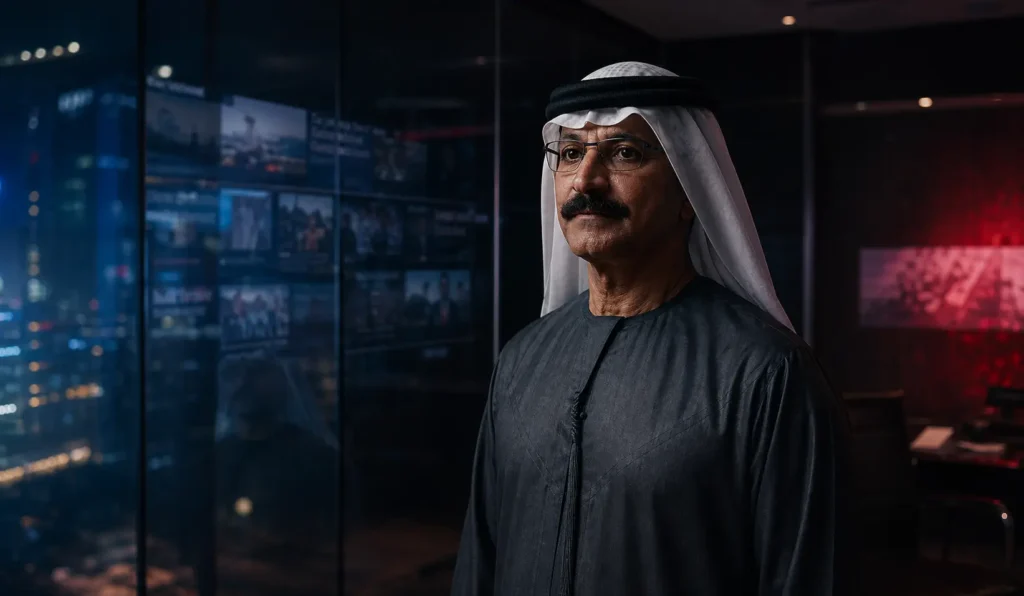
On February 13, 2026, the global logistics industry experienced a massive leadership shift. Sultan Ahmed bin Sulayem, the long-serving Chairman and Group CEO of DP World, resigned from his positions effective immediately. This decision came after intense international scrutiny regarding his personal and professional ties to the late American financier and convicted sex offender Jeffrey Epstein.
The departure of Bin Sulayem marks the end of an era for one of the most powerful business figures in the United Arab Emirates (UAE). DP World, which is majority-owned by the Dubai government, is a cornerstone of the global economy, handling approximately 10% of the world’s container trade. The company’s Board of Directors has since appointed His Excellency Essa Kazim as the new Chairman and Mr. Yuvraj Narayan as the Group CEO.
This transition is not just a change in personnel; it represents a critical moment for Dubai’s economic strategy and its standing in the global financial markets. Investors and businesses should pay close attention to these changes as the company navigates this period of reputational risk and leadership transition.
His Journey From Public Service to Global Economic Leadership
Sultan Ahmed bin Sulayem was born in 1955 into a prominent Dubai family with deep ties to the ruling Al Maktoum family. His father served as a key advisor to the city’s rulers, providing Bin Sulayem with a foundational understanding of Dubai’s political and economic landscape. He earned a Bachelor of Science in Economics from Temple University in the United States before returning to the UAE to begin his career.
His professional journey started in the late 1970s as a customs officer at Dubai’s port. His potential was quickly recognized by His Highness Sheikh Mohammed bin Rashid Al Maktoum, who appointed him as the Chairman of the Jebel Ali Free Zone (JAFZA) in 1985. Under his leadership, JAFZA grew from hosting 19 companies to more than 7,500 by the year 2020.
Bin Sulayem was instrumental in transforming Dubai from a local trading hub into a global commercial powerhouse. He was a driving force behind the rapid expansion of the city’s infrastructure and tourism sectors. For investors, his track record of scaling small projects into global entities was a defining feature of his leadership style.
Interesting Article: Mohamed Alabbar’s Billion-Dollar Vision That Transformed Dubai
How DP World Grew From a Local Operator to a Global Supply Chain Giant?
The growth of DP World under Bin Sulayem was characterized by aggressive international expansion and iconic real estate projects.
- 1985: Appointed Chairman of the Jebel Ali Free Zone (JAFZA).
- 1997: Initial discussions began for the construction of the Palm Jumeirah after a lunch meeting with Sheikh Mohammed bin Rashid Al Maktoum.
- 2001: Actual construction work on the Palm Jumeirah commenced after years of environmental and engineering studies.
- 2005: Inauguration of the Dubai Gold & Commodities Exchange (DGCX).
- 2006: Led the US$6.8 billion acquisition of the P&O Group, which propelled DP World to become the third-largest port operator in the world.
- 2007: Formally appointed as Chairman of DP World.
- 2016: Appointed as Group CEO in addition to his role as Chairman.
- 2018: Became Chairman of Virgin Hyperloop One, reflecting a strategic shift toward futuristic transportation technology.
- 2026: Resigned from all executive positions on February 13 following the release of the Epstein files.
One of his most notable strategic decisions was the acquisition of P&O, which gave DP World a massive footprint in Europe, Asia, and the Americas. This move shifted the company from being a local operator to a truly global integrated supply chain provider.
Palm Jumeirah and Global Ports As Visionary Projects
Bin Sulayem’s legacy is physically represented by the Palm Jumeirah, the world’s largest man-made island. The project was born from a necessity to increase Dubai’s beach front for tourism. Initially, the design was a simple round island, but Sheikh Mohammed suggested a shape that would maximize coastline, leading to the famous palm tree design.
The project faced significant engineering challenges. Early attempts to use desert sand failed because it became “quick sand” when touched by water. Bin Sulayem eventually discovered that sand dredged from the sea floor was stable and sturdy enough for construction. Businesses should note that this innovative approach to problem-solving became a hallmark of Dubai’s development strategy.
Beyond real estate, Bin Sulayem oversaw the transformation of DP World into a network spanning 78 countries with over 119,000 employees. He focused on creating “Smarter Trade” by integrating ports with economic zones and logistics services. Under his tenure, DP World and its free zones contributed more than 36% to Dubai’s GDP.
Epstein File Disclosures Lead to Increased Attention on Sultan Ahmed bin Sulayem
The downfall of Sultan Ahmed bin Sulayem began with the public release of millions of documents related to Jeffrey Epstein’s network by the U.S. Department of Justice. Although Bin Sulayem has not been charged with any crime, his name reportedly appeared in these documents over 4,700 times.
Also Read: Frank Meyer on Digital Transformation and Leadership at Etihad Airways
Investigation into these files revealed a decades-long relationship between Bin Sulayem and Epstein, beginning as early as 2007. The correspondence continued long after Epstein’s 2008 conviction for soliciting prostitution from a minor. The emails showed that the two men discussed business, politics, and personal matters.
The content of these emails caused significant reputational damage. Documents revealed lewd and salacious exchanges about women and sexual experiences. In one 2009 email, Epstein asked Bin Sulayem if he was okay and mentioned that he “loved the torture video”. While the context of this specific email remains unknown, it was flagged by U.S. lawmakers as highly disturbing.
Global Investors React as Scrutiny Over DP World Leadership Intensifies
The revelation of Bin Sulayem’s ties to Epstein had immediate and severe consequences for DP World’s international business relations. Major institutional investors signaled deep concerns about the company’s governance and leadership.
- British International Investment (BII): The UK’s development finance agency paused future capital investments in DP World ventures, specifically regarding African port developments.
- La Caisse (CDPQ): Canada’s second-largest pension fund, which holds a 45% stake in DP World Canada, suspended all future investments until “necessary actions” were taken.
- The Earthshot Prize: This environmental project, founded by the Prince of Wales and funded partly by DP World, was reported to the UK Charity Commission following the revelations.
This collective pressure from global financial partners made Bin Sulayem’s position untenable. On the Friday of his resignation, both BII and CDPQ welcomed the leadership change, calling it an “appropriate step forward”. This could shape the market in the coming months as DP World works to restore investor confidence.
Business and Politics Are Closely Linked in Global Infrastructure Expansion
The Epstein files also suggested that Epstein acted as an informal intermediary for Bin Sulayem in high-level political dealings. One significant example involved the US$2.45 billion London Gateway port project on the River Thames.
Emails show that Epstein helped Bin Sulayem lobby Peter Mandelson, who was then the UK Business Secretary. Epstein reportedly provided Mandelson’s personal email address and advised Bin Sulayem on how to draft letters to secure UK government loan guarantees for the project. In one email, Epstein explicitly told Mandelson to “be nice to Sultan”.
While there is no suggestion of wrongdoing by Mandelson, the documents show that Epstein introduced Bin Sulayem to various powerful figures, including former Israeli Prime Minister Ehud Barak and former Trump advisor Steve Bannon. For market analysts, these revelations highlight the complex and often invisible networks that drive major infrastructure deals.
DP World Will Be Defined by AI, Digital Platforms, and Automation
Before his resignation, Bin Sulayem was a vocal advocate for the role of technology in logistics. He believed that the global supply chain was “fragile” and “weak,” and that digitalization was the only way to build resilience after the COVID-19 pandemic.
He pushed DP World toward:
- Artificial Intelligence (AI): Using predictive analysis to make better decisions about investment and shipping routes.
- Digital Platforms: Launching tools like SeaRates.com and the Digital Freight Alliance to move cargo management online.
- Hyperloop Technology: Investing millions in Virgin Hyperloop to move high-priority goods at ultra-fast speeds.
The new leadership under Essa Kazim and Yuvraj Narayan is expected to continue this technological push. However, they must do so while addressing the governance standards that were called into question during the recent scandal. Businesses should pay close attention to whether the company maintains its aggressive innovation agenda under the new guard.
Also Read: Dubai’s Malls Are Making Billions – And It’s Just Getting Started
How DP World Contributes to Jobs and Economic Stability?
DP World is more than just a company; it is a vital organ of the UAE economy. It contributes 12% of the UAE’s total GDP and is a major employer, with over 115,000 workers globally. The stability of DP World is directly linked to the economic security of the region.
Bin Sulayem’s leadership saw the company survive multiple global crises, including the 2008 financial crash and the pandemic. He often stated that “trade will always find its way” and viewed disruptions as opportunities to find new routes and markets.
The leadership transition has been managed swiftly by the Dubai government to minimize market volatility. Prominent Emirati figures, including the deputy chief of police in Dubai, have acknowledged the “tremendous efforts” of Bin Sulayem while emphasizing the importance of maintaining high governance standards.
The Company Must Address Reputation and Trust Concerns in Global Markets
Despite the swift appointment of new leadership, DP World faces several significant challenges in the near term:
- Restoring Reputation: The company must distance its brand from the salacious details of the Epstein files to ensure that major Western pension funds and development agencies resume full cooperation.
- Geopolitical Volatility: Ongoing conflicts in the Red Sea and other regions continue to add costs for shippers and disrupt traditional maritime routes.
- Governance Scrutiny: International partners may demand more transparency in how the company manages its leadership and strategic partnerships moving forward.
- Technological Disruption: While AI and automation offer efficiency, they also present risks to traditional business models that the company must proactively anticipate.
For investors, this trend is worth watching. The ability of the new Chairman and CEO to navigate these risks will determine whether DP World maintains its dominant position in the global supply chain.
Is Corporate Leadership in the Middle East Changing Forever?
The resignation of Sultan Ahmed bin Sulayem marks a shift toward a more institutionalized form of leadership. While Bin Sulayem was a “visionary tycoon,” the new leadership is likely to focus on stability, ESG (Environmental, Social, and Governance) standards, and rebuilding trust with Western capital markets.
Also Read: How Du’s Q1 2026 Results Reflect UAE’s Economic Strength?
We can expect:
- Increased Focus on Decarbonization: DP World has already committed to a zero-carbon future by 2050, and this will likely become a primary metric for attracting institutional investment.
- Strategic Near-Shoring: The company will likely invest more in logistics parks and storage facilities closer to consumer markets to mitigate the fragility of long-distance sea trade.
- Diversified Trade Routes: Continued development of multi-modal routes (rail, road, and sea) to bypass regional conflicts like those in the Red Sea.
Is the era of the “celebrity CEO” in the Middle East coming to an end? As global standards for executive behavior and corporate governance tighten, the region’s largest firms are being forced to adapt to a world where personal conduct is inseparable from corporate value.
FAQs – Frequently Asked Questions
He resigned following the public release of the U.S. Department of Justice documents that revealed a decades-long personal and professional relationship with the late sex offender Jeffrey Epstein.
Essa Kazim has been appointed as the new Chairman of the Board, and Yuvraj Narayan has taken over as the Group CEO.
No. While he was named as a “co-conspirator” in some FBI documents and his name appeared thousands of times in the Epstein files, he has not been charged with any criminal activity.
It is extremely important. DP World and its associated free zones contribute approximately 33% to 36% of Dubai’s GDP and about 12% of the total UAE GDP.
Major investors like the UK’s British International Investment and Canada’s CDPQ pension fund paused future investments in DP World projects until the company took “necessary actions” regarding its leadership.
These are millions of documents released by the U.S. Department of Justice following legal pressure and the passage of the Transparency Act, detailing the network and contacts of Jeffrey Epstein.
While the core business of port operations and logistics is expected to continue, the company is likely to place a higher emphasis on corporate governance and transparency to satisfy global investment partners.

Dwayne Paschke is a seasoned content strategist and AI automation specialist with over nine years of experience at the intersection of journalism and digital innovation. A versatile force in the media landscape, Dwayne has built a reputation as an expert content writer and investigative journalist, contributing high-impact pieces to various reputable news websites.