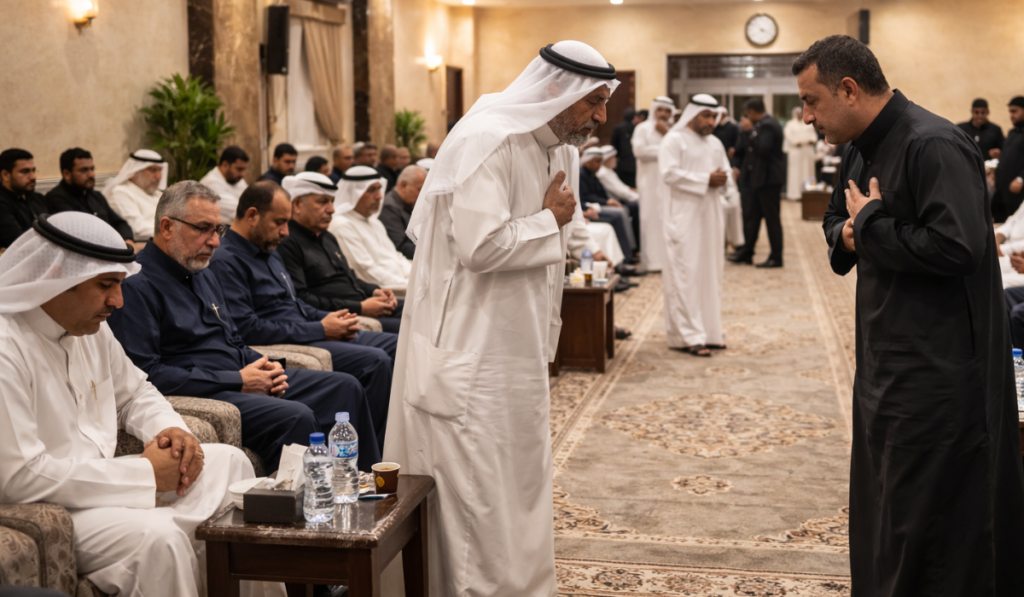
Kuwait Municipality is preparing to introduce new guidance that would prohibit handshakes inside mourning halls located in cemeteries, following a public health recommendation from the country’s Ministry of Health.
According to a report by Al Jarida, the proposal stems from a formal request by the Ministry of Health urging authorities to encourage mourners to replace physical greetings with non-contact gestures, such as eye contact or verbal condolences.
Kuwait Municipality’s Director-General Saud Al Dabus confirmed that a circular would be issued implementing the recommendation, describing it as a precautionary step designed to protect public health and reduce the potential transmission of infectious diseases.
Preventive, Not Reactive
In a statement reported by Al Qabas, officials clarified that the move is preventive rather than a response to any specific outbreak.
Dr. Abdullah Al Sanad, spokesperson for Kuwait’s Ministry of Health, emphasized that the country’s current health situation remains stable. He explained that encouraging eye greetings instead of handshakes is part of broader efforts to promote safer public health behavior in everyday settings.
“The health situation inside the country is reassuring,” Dr. Al Sanad said, noting that the circular is meant to strengthen awareness around hygiene and reduce avoidable risks.
Public health specialist Dr. Ahmed Al Outeibi also stated that there have been no reports of new viral outbreaks within Kuwait. He described the decision as an activation of general preventive measures rather than an emergency response.
Context: Monitoring COVID-19 Variants
The recommendation follows recent monitoring of the JN.1 COVID-19 variant in Kuwait. According to earlier statements reported by regional media outlets, health authorities confirmed the presence of the variant but indicated that no extraordinary measures were required.
Global health agencies such as the World Health Organization (WHO) have continued to advise countries to maintain proportional preventive strategies, particularly in environments where close physical contact is customary.
The JN.1 variant, tracked internationally, has been classified as part of ongoing variant surveillance efforts rather than a cause for renewed lockdown-style restrictions. Kuwait’s health authorities have echoed this stance, stressing stability while encouraging responsible hygiene practices.
Cultural Sensitivity and Public Health
Handshaking is a deeply rooted social custom in Kuwait and across the Gulf region, particularly during mourning ceremonies where extended greetings are common.
Funeral gatherings often involve large numbers of attendees offering condolences in person, making such environments high-contact settings. Public health experts globally have long recognized physical greetings as potential vectors for respiratory and contact-based disease transmission.
The COVID-19 pandemic significantly altered greeting norms worldwide, introducing alternatives such as elbow bumps, nods, and non-contact acknowledgments. While many societies have largely resumed traditional practices, certain institutions continue to promote modified behavior during high-risk seasons.
Kuwait’s proposed policy appears to align with this measured approach — preserving social customs while minimizing unnecessary health exposure.
Broader Public Health Messaging
The move signals a continued emphasis on health awareness even in the absence of crisis conditions. Officials have framed the measure as part of a culture of prevention, reinforcing hygiene consciousness beyond pandemic peaks.
Preventive health frameworks — including vaccination campaigns, sanitation initiatives, and behavioral recommendations — remain central to Kuwait’s public health strategy.
According to guidance from the Kuwait Ministry of Health, precautionary measures are regularly evaluated based on epidemiological assessments and international best practices.
Balancing Stability and Vigilance
While the proposal may generate discussion given its cultural implications, officials have consistently stressed that Kuwait is not facing a public health emergency.
Instead, authorities appear to be adopting a precautionary stance aimed at reducing avoidable transmission risks in high-contact environments.
If implemented, the circular would formalize a shift toward non-contact greetings within mourning halls while preserving broader social freedoms.
The policy reflects a continued balancing act between maintaining cultural traditions and adapting to evolving public health realities.

UK-based journalist covering UAE entrepreneurship, executive branding, and leadership growth across global business ecosystems.