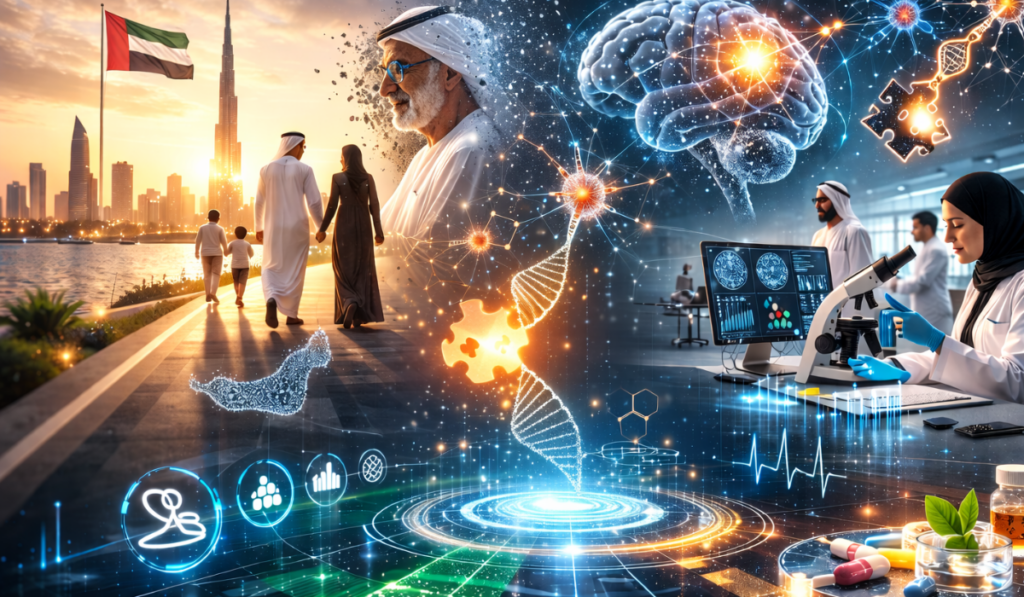
The genetic data of hundreds of thousands of Emirati citizens may provide new insights into Alzheimer’s disease, as global researchers explore how diverse DNA datasets can improve treatment outcomes across populations.
Health experts from the Davos Alzheimer’s Collaborative (DAC) — an international initiative launched at the World Economic Forum — recently engaged with UAE health leaders to examine how regional genomic data can support more inclusive clinical research and personalised dementia care.
Why Genetic Diversity Matters
Alzheimer’s research has historically relied heavily on Western populations. DAC founding chairman George Vradenburg has emphasized that broader genetic representation is essential to understanding how treatments perform across different ethnic and biological backgrounds.
The UAE’s Emirati Genome Programme, launched in Abu Dhabi in 2019 and later expanded nationwide, has collected DNA samples from more than 800,000 citizens. The initiative aims to build a comprehensive genetic map to strengthen preventive medicine and personalised healthcare.
Researchers believe this dataset could help identify genetic predispositions linked to Alzheimer’s, allowing earlier intervention strategies and potentially more effective therapeutic targeting.
New Therapies and Their Challenges
Recent anti-amyloid drugs such as lecanemab and donanemab have been approved in select markets including the United States and Japan. Information about these treatments is available via the U.S. Food and Drug Administration (FDA) and global regulatory authorities.
While these therapies can slow disease progression in early stages, they are costly and may not be equally effective across genetically diverse populations.
Scientists are also investigating the neurological benefits of GLP-1 receptor agonists — medications primarily used for diabetes and obesity management. Studies on this area are ongoing and have been discussed in publications such as The Lancet and other peer-reviewed journals.
Prevention Still Plays a Major Role
According to the Lancet Commission on Dementia Prevention, Intervention and Care (2024 Report), up to 45 percent of dementia cases globally are linked to modifiable risk factors. These include hypertension, diabetes, obesity, smoking, hearing loss, physical inactivity, and social isolation.
Health experts estimate that 60–65 percent of dementia cases may be delayed or mitigated through lifelong brain health strategies — including balanced nutrition, exercise, cognitive engagement, and adequate sleep.
The Middle East’s Ageing Curve
The Middle East and North Africa region is projected to experience one of the fastest increases in dementia prevalence, driven by demographic shifts and longer life expectancy. Findings published by The Lancet Commission indicate that North Africa and the Middle East could see a substantial rise in dementia cases over the coming decades.
Dr. Mie Rizig of University College London, who leads the DAC Africa Task Force, has highlighted the scientific importance of studying genetically admixed populations such as Emiratis. The UAE’s diverse ancestry — incorporating African, South Asian, and European lineages — presents unique opportunities for drug discovery and precision medicine research.
A Regional Opportunity in Global Science
The scale of genomic data generated under the Emirati Genome Programme is unprecedented in the region. Experts say that combining this data with international research networks could accelerate breakthroughs in understanding how Alzheimer’s develops across different populations.
As global life expectancy rises, Alzheimer’s disease remains one of the most pressing public health challenges. The UAE’s genomic infrastructure may position the country as a strategic contributor to global ageing science — not only for treatment innovation but also for preventive brain health strategies.
Sources
• Davos Alzheimer’s Collaborative (DAC)
• Emirati Genome Programme
• U.S. Food and Drug Administration (FDA)

Aisha Al Mansoori is a UAE-based business and technology analyst covering startups, venture capital, AI, fintech, and innovation trends shaping the Emirates’ economy.