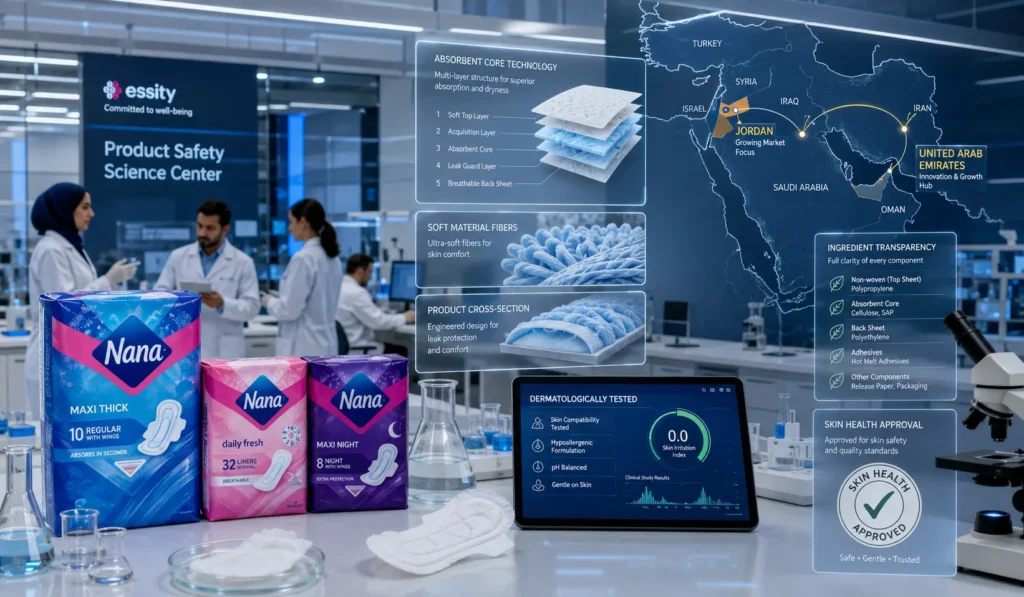
Nana pads are owned by Essity, a global hygiene and health products company based in Stockholm, Sweden.
Depending on the region, Essity sells these same feminine care products under other well-known brand names such as Libresse, Bodyform, Nuvenia, and Saba.
The global hygiene and health market is growing dramatically, driven by a growing consumer demand for transparency, safety, and social responsibility. At the center of this growth is Essity, a leading global hygiene company that manages the prominent feminine care brand, Nana. For business leaders and market analysts, understanding how Essity maintains its market share in competitive regions like the United Arab Emirates (UAE) and Jordan provides a blueprint for successful international expansion. With net sales reaching approximately SEK 146 billion (EUR 13 billion) in 2024, Essity demonstrates the immense financial scale of the modern hygiene sector.
The company’s presence in the Middle East is not a new development, as the Nana brand has been distributed by the Fine Drug Company (FDC) since 1985. This long-term partnership highlights the importance of local expertise in navigating the specific cultural and logistical requirements of the UAE market. As consumer awareness regarding product ingredients and dermatological safety continues to rise, how do global brands like Nana adapt their strategies to remain relevant and trusted?
Why Essity’s Global Reach and Strong Finances Matter in Everyday Life?
Essity is a major player on the Nasdaq Stockholm, with its headquarters located in Stockholm, Sweden. The company employs 36,000 people and conducts sales in approximately 150 countries. This global reach is supported by a diverse portfolio of brands, including TENA, Tork, Libresse, and Nana. The company’s purpose is to break barriers to well-being, a mission that directly influences its marketing and product development strategies.
In 2025, the company reported net sales of approximately SEK 138 billion, underscoring its stability in a volatile global economy. This financial strength allows Essity to invest heavily in research and development, ensuring that its products meet evolving regulatory and safety standards across different jurisdictions. For investors, this consistent performance and wide geographic footprint make Essity a key entity to monitor within the consumer goods sector.
FDC’s Contribution to Nana’s Success in the UAE and Jordan
In the Middle East, the success of the Nana brand is deeply tied to its distribution through FDC (Fine Drug Company). FDC has brought Nana products to the region for nearly four decades, positioning Nana as a household name for liners and pads. The brand is specifically designed for optimal fit and comfort, taking inspiration from the clothing and lifestyle of the modern woman.
FDC manages a wide range of departments, including Household and Personal Care, Pharmaceuticals, and Food and Beverage. This diversified structure provides Nana with a robust logistics network and established relationships with retailers across the UAE and Jordan. Businesses should pay close attention to how such partnerships facilitate market entry and long-term brand loyalty in the Gulf region.
The Materials Used in Nana Hygiene Products
A critical aspect of Nana’s market strategy is its focus on product transparency and ingredient safety. Millions of women use Nana products daily, and the company emphasizes that all materials are approved and comply with relevant legislation. Raw materials are selected for their ability to absorb and retain fluids while ensuring user comfort.
The typical composition of a Nana pad includes:
- Surface Material: Fiber materials made of polypropylene, polyethylene, or polyester to keep the skin dry.
- Acquisition Layer: Porous wood or polyester fibers that transport liquid to the core.
- Absorbent Core: A combination of paper pulp and superabsorbent polymers (SAP).
- Adhesive: Synthetic resins and polymers used to bind layers and secure the pad to clothing.
- Backsheet: Polyethylene film used to prevent leakage.
Essity collaborates with EDANA, the international trade association for nonwovens, to ensure they adhere to high environmental and safety standards. While it is not currently a legal requirement to declare all materials on the packaging, Essity chooses to declare added perfumes to alert sensitive consumers. This transparency is a strategic move to build consumer trust in an era where shoppers are increasingly cautious about synthetic materials.
Also Read: Calo’s Case Study in Customer-Obsessed Culture and Rapid Scaling
Skin Health Standards Behind Nana’s Product Approval
To distinguish itself from lower-cost competitors, Nana emphasizes that its products are “dermatologically tested”. Because there is no official global definition for this term, Essity has established its own rigorous protocol. This process involves careful selection of materials, safety assessments, controlled manufacturing conditions, and follow-up through customer complaints.
The safety assessments include toxicological tests and human dermal safety studies, such as repeat insult patch tests. Furthermore, specific product lines, such as “PureSensitive,” have received accreditation from the Skin Health Alliance. This third-party validation is essential for marketing products to consumers with sensitive skin in the UAE and Europe.
Marketing Strategy and the “Break Taboos” Campaign
Nana has moved beyond traditional product advertising to engage in social advocacy through its “Break Taboos” and “Project V” campaigns. These initiatives focus on education regarding puberty, periods, and intimate care. By addressing topics such as “Periodsomnia” and the myths surrounding menstruation, the brand seeks to build a deeper emotional connection with its audience.
The brand also offers digital tools, such as a Period Tracker, to integrate itself into the daily lives of its users. This shift toward becoming an “expert advisor” rather than just a product manufacturer is a significant trend in the feminine hygiene industry. For market analysts, this strategy demonstrates how brands can use education to drive consumer engagement and brand preference.
Nana’s Approach to Digital Engagement and Online Experience
The user experience on Nana’s digital platforms is heavily personalized through the use of cookies and data tracking. These systems allow the company to analyze site usage and assist in marketing efforts by building interest profiles for targeted advertising. Strictly necessary cookies ensure the website functions, while performance cookies help the company monitor which pages are most popular among UAE and Jordanian users.
However, the company also respects privacy rights, allowing users to manage their consent preferences and opt-out of certain tracking. This balance between personalized marketing and data privacy is crucial for maintaining a professional digital presence in international markets.
The £1 Cleaning Secret Everyone Is Talking About Across Europe
While Essity manages the hygiene brand “Nana,” it is important to note the presence of other brands in the global market that use similar names for different sectors. One such example is “Nanna’s Secret,” an all-natural cleaning clay produced by a UK-based family business, Must Have Ideas Ltd. This miracle cleaning clay is discovered in a village in the south of France and marketed as a chemical-free alternative for household cleaning.
With over 10 million happy customers and a 4.6/5 rating from over 160,000 reviews, Nanna’s Secret highlights the power of the “natural” and “family-run” brand narrative. Consumers praise the product for its effectiveness on ovens, hobs, and shower glass without the need for harsh chemicals. While entirely separate from Essity’s hygiene products, the success of Nanna’s Secret underscores a broader market trend: a global consumer shift toward natural ingredients and trusted, transparent brands.
Also Read: Reem Al Hashimy’s Global Strategic Impact on the UAE Diplomacy
How Essity’s Nana Brand Is Preparing for the Future of Consumer Care?
The feminine hygiene market in the UAE and the wider Middle East is expected to continue growing as the population increases and more women enter the workforce. Strategic decisions to focus on specialized products, such as “Goodnight” extra-long pads and “V-Protection” technology, allow Nana to cater to specific consumer needs.
Key trends to watch include:
- Sustainability: Increased focus on renewable paper pulp and eco-promises.
- Health-Conscious Consumers: Rising demand for “PureSensitive” and dermatologically approved options.
- Digital Integration: The use of apps and trackers to foster brand loyalty.
For investors and businesses, the evolution of Essity’s Nana brand serves as a case study in how to combine global scale with local sensitivity and scientific rigor. This could shape the market in the coming months as competitors scramble to match these levels of transparency and consumer engagement.
FAQs – Frequently Asked Questions
Nana is a brand of Essity, a global hygiene and health company headquartered in Stockholm, Sweden. In the UAE and Middle East, it is distributed by FDC.
Yes, many Nana products are dermatologically tested. Specifically, the “PureSensitive” range is accredited by the Skin Health Alliance.
The pads typically consist of polypropylene or polyester surface layers, an absorbent core made of paper pulp and superabsorbent polymers, and a polyethylene backsheet.
Nana has been brought to the region by FDC since 1985.
Project V is an initiative by Nana to break taboos surrounding menstruation and provide expert advice on intimate care and puberty.
Essity uses renewable paper pulp sourced from responsibly managed forests in its pads and liners.
No, Nanna’s Secret is a natural household cleaning clay from a UK-based company called Must Have Ideas Ltd and is not related to Essity’s feminine hygiene products.
Nana products are available in-store at major retailers across the UAE, including sanitary pads and panty liners.

Dwayne Paschke is a seasoned content strategist and AI automation specialist with over nine years of experience at the intersection of journalism and digital innovation. A versatile force in the media landscape, Dwayne has built a reputation as an expert content writer and investigative journalist, contributing high-impact pieces to various reputable news websites.