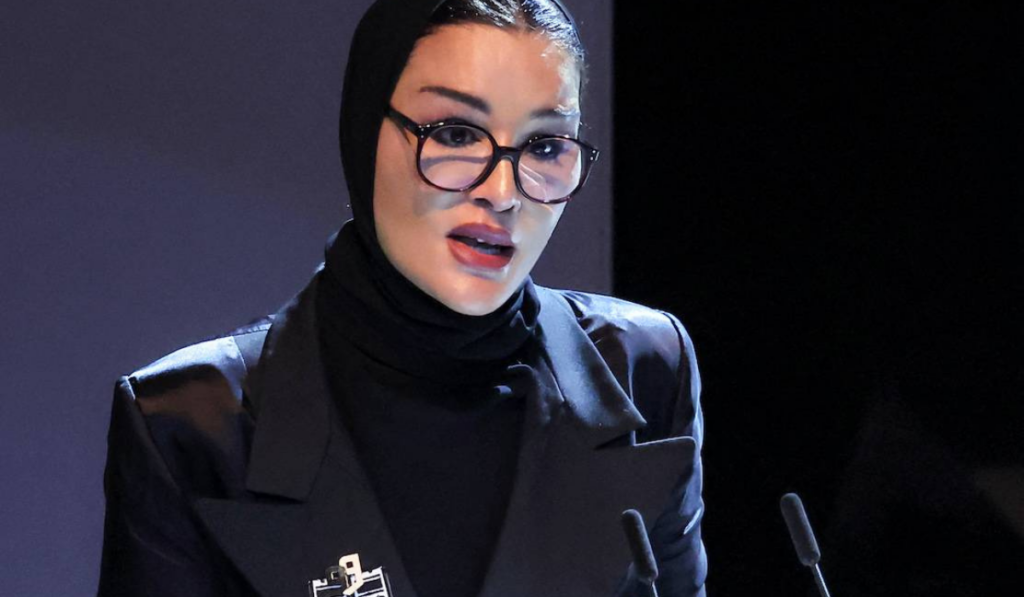
When Her Highness Sheikha Moza bint Nasser attended the opening of Jadal 2026 in Doha, the event was more than a ceremonial gathering. It was a statement about the future of scholarship, leadership, and narrative authority in the Muslim world.
Hosted by Al-Mujadilah Center and Mosque for Women under the umbrella of Qatar Foundation, the annual Jadal summit convened more than 100 Muslim women scholars, researchers, and practitioners from across North America, Europe, Africa, Asia, and the Middle East.
But the deeper story is not attendance numbers. It is infrastructure — intellectual infrastructure.
Building an Intellectual Ecosystem
The 2026 theme, “Muslim Women Navigating Theology, Ethics, and Society,” signals a strategic pivot away from reactive discourse toward proactive knowledge production.
Rather than focusing solely on representation, Jadal centers normative authority — examining how Muslim women have shaped Islamic legal thought, ethics, governance, and community life since the inception of Islam.
In her opening remarks, Executive Director Dr. Sohaira Siddiqui emphasized stewardship in religious knowledge — describing it as both principled and responsive. Her framing reflects a growing movement toward scholarship that bridges tradition with contemporary complexity.
This approach aligns with global trends in academic reform. Institutions worldwide are rethinking how research intersects with lived experience, public policy, and community leadership.
From Conference to Conversation
Jadal positions itself not merely as a conference, but as an ongoing intellectual dialogue. This distinction matters.
Leadership summits often produce declarations. Sustainable movements build networks.
By gathering interdisciplinary voices — from ethical business to bioethics, urban belonging to legal reform — Jadal is constructing cross-sector intellectual capital.
The event also marked the launch of a new partnership between Al-Mujadilah and Qatar’s Ministry of Social Development and Family, formalized in the presence of HE Buthaina bint Ali Al Jabr Al Nuaimi.
The partnership aims to elevate historical and contemporary contributions of Muslim women through public programming and research initiatives. This signals institutional alignment between scholarship and social policy — a rare but powerful combination.
Narrative Innovation: The “More Muslim” Podcast
One of the summit’s most forward-looking initiatives was the launch of More Muslim, an audio documentary podcast exploring the complexity of Muslim identity.
Blending historical analysis with contemporary storytelling, the series reflects a broader innovation trend: narrative sovereignty.
In an era shaped by algorithmic media and simplified identity narratives, institutions that control storytelling platforms control perception.
Al-Mujadilah’s move into narrative media suggests strategic recognition that scholarship must travel beyond academic journals to shape public consciousness.
Leadership Through Intellectual Stewardship
Sheikha Moza’s presence underscores Qatar Foundation’s long-standing investment in education and knowledge systems.
Under her leadership, Qatar Foundation has established global partnerships with universities such as Georgetown University in Qatar and other Education City institutions — reinforcing the country’s positioning as a regional knowledge hub.
Jadal fits within this broader ecosystem: not as a symbolic event, but as a structural pillar in Muslim women’s scholarship.
Why This Founder-Level Leadership Matters for 2026
While Sheikha Moza is not a startup founder in the traditional sense, her approach mirrors founder-led ecosystem building.
In 2026, leadership in emerging economies will increasingly hinge on intellectual sovereignty — the ability to shape research agendas, cultural narratives, and ethical frameworks.
By centering Muslim women as producers of theological and social thought, Jadal challenges outdated assumptions about authority structures within religious discourse.
More importantly, it demonstrates that leadership today is multidimensional:
- Institutional
- Intellectual
- Narrative
- Policy-aligned
As global debates around identity, ethics, and social reform intensify, platforms like Jadal may serve as incubators for next-generation thought leaders.
The summit is not merely about theology. It is about defining who shapes ethical discourse in the modern Muslim world.
And in that respect, Sheikha Moza’s continued stewardship positions her as one of the region’s most consequential ecosystem architects heading into 2026.