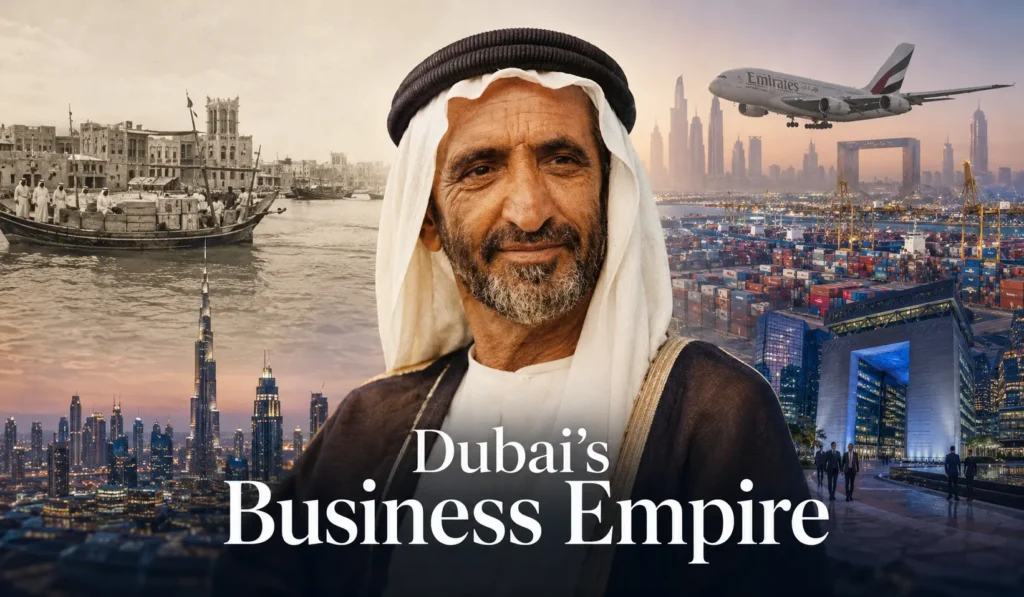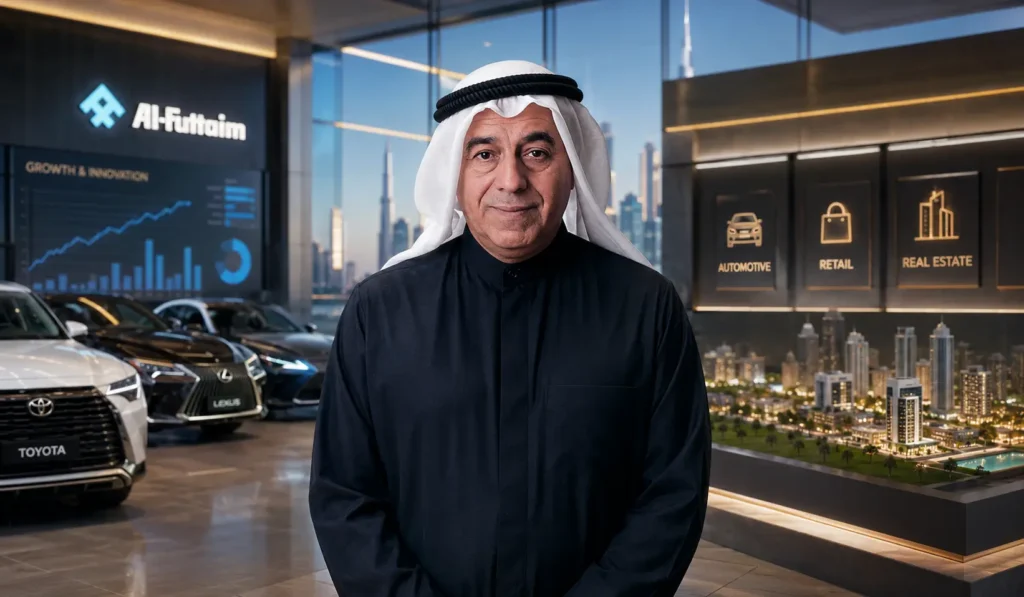
Abdulla Al Futtaim is one of the most influential figures in the Middle East business community, serving as the chairman and owner of the Al-Futtaim Group. His leadership has transformed a family trading business established in the 1930s into a global conglomerate with operations across more than 20 countries. Today, the Al-Futtaim brand is synonymous with reliability, customer-focused innovation, and market dominance in the automotive, retail, and real estate sectors.
This analysis explores the strategic growth of the Al-Futtaim Group, its impact on the UAE economy, and the visionary decisions of Abdulla Al Futtaim. For investors and market analysts, the trajectory of this family-owned empire offers critical insights into regional market stability and growth.
How the Al Futtaim Story Began?
The Al Futtaim family established their trading legacy in Dubai during the 1930s, a period when the local economy relied heavily on pearl diving and maritime commerce. Abdulla Al Futtaim’s grandfather, Hamad Al Futtaim, founded the initial operation as a small trading business focused on imports, exports, and Hajj transportation services.
Abdulla Al Futtaim was born in January 1940, growing up during the economic transition of pre-oil Dubai. As the global pearl industry declined due to the rise of cultured pearls, the family business shifted its focus toward the re-export trade of goods like textiles, spices, and gold. This early exposure to traditional Emirati trading practices provided Abdulla with a foundational understanding of supply, demand, and reputation-based commerce.
Also Read: UAE Space Investment Trends and the Strategic Leadership of H.E. Dr. Ahmad Belhoul Al Falasi
Strategic Growth through the 2000 Family Split
One of the most significant moments in the group’s history was the division of family interests in 2000. Brokered by Sheikh Mohammed bin Rashid Al Maktoum, the split allowed Abdulla Al Futtaim to retain control of the automotive, retail, and financial divisions. His cousin, the late Majid Al Futtaim, established the Majid Al Futtaim Group, focusing on malls and leisure.
This restructuring allowed Abdulla to sharpen his focus on strengthening core sectors and expanding the Dubai Festival City flagship destination. Businesses should pay close attention to how such strategic independence can lead to specialized market leadership.
What Started with Toyota in 1955 Has Never Stopped Growing
The automotive sector remains the primary engine of wealth for Abdulla Al Futtaim and his family. The 1955 deal with Toyota is widely regarded as a masterstroke of business foresight. At the time, Japanese cars were often dismissed globally, but Abdulla recognized their potential for reliability in harsh desert conditions.
Today, Al-Futtaim Automotive is the exclusive distributor for:
- Toyota and Lexus.
- Honda and Volvo.
- Hino trucks and Toyota Material Handling equipment.
In recent years, the group has aggressively pivoted toward sustainable mobility. By partnering with brands like Polestar and BYD, Al-Futtaim is positioning itself to lead the UAE’s transition to electric vehicles. For investors, this trend is worth watching as the region shifts toward a greener economy.
Franchise Expansion and Brand Partnership Model of Al-Futtaim
Al-Futtaim’s retail strategy is built on long-term partnerships with world-leading brands. Rather than creating local brands from scratch, the group specializes in the “replication of overseas concepts at the grassroots level”.
Key retail assets include:
- IKEA: The group holds franchise rights for the UAE, Qatar, Egypt, and Oman.
- Marks & Spencer: In 2017, the group acquired 27 stores in Hong Kong and Macau, bringing its total Asian and Middle Eastern footprint to 80 locations.
- Watsons: Introduced to the UAE in 2020 to tap into the Asian beauty market.
The group’s ability to maintain brand loyalty through geopolitical and economic turbulence is a testament to its operational resilience.
Al-Futtaim’s Role in Shaping Modern Urban Infrastructure
The group’s real estate division, Al-Futtaim Real Estate, has fundamentally changed the urban horizon of the UAE. The flagship Dubai Festival City is a “beacon of innovation,” integrating commercial, residential, and hospitality sectors into a single community.
Similar large-scale developments include:
- Cairo Festival City in Egypt, which officially opened in 2013.
- Doha Festival City in Qatar.
- Dubai Festival Plaza, which expanded the group’s retail reach in 2019.
These projects create long-term value for both occupiers and investors by staying ahead of urban demand.
Al-Futtaim’s Leadership in Financial Services and Insurance
Abdulla Al Futtaim recognized the potential of financial services long before they became a standard part of diversified conglomerates. Orient Insurance, founded by the group in 1982, is now the largest insurer in the UAE by financial capital, with 500 million AED.
Additionally, the group holds a significant stake in the Commercial Bank of Dubai (CBD). These financial assets provide a stable backbone for the group’s more volatile retail and automotive operations.
National Employment and Social Policy Goals
The Al-Futtaim Group plays a central role in the UAE’s post-oil economic diversification. The conglomerate employs over 40,000 people from more than 100 nationalities.
A primary focus of the group is Emiratisation. As of 2023, the group exceeded government targets by employing 1,347 UAE nationals, representing 13.4% of its workforce. Furthermore, the group signed a Memorandum of Understanding with the Ministry of Community Development to support Emirati home-based enterprises.
How Al-Futtaim Expanded Beyond the GCC?
While rooted in Dubai, the group has expanded into 20 countries across the Middle East, Asia, and Africa.
Notable international moves include:
- Singapore and Malaysia: Entering the retail business in 2008 through the acquisition of Robinsons & Co.
- Sri Lanka: Taking management of Associated Motorways in 2008.
- Saudi Arabia: Acquiring a 49.95% stake in Cenomi Retail in 2025.
This global reach demonstrates an understanding of scale, recognizing that the group’s ambitions extend far beyond the GCC.
Challenges in a Changing Market
Despite its massive success, the Al-Futtaim Group faces several modern challenges:
- Economic Volatility: The 2008 global financial crisis tested the group’s resilience, forcing a re-evaluation of expansion plans as real estate values dropped.
- Digital Transformation: The rise of e-commerce requires a shift away from traditional brick-and-mortar retail models.
- Market Competition: Rivalries with other major family groups, such as the Majid Al Futtaim Group, continue to shape market dynamics.
This could shape the market in the coming months as the group further integrates AI and data-driven decision-making into its operations.
Interesting Story: Is Apple Really Leaving Dubai? Shifting Business Operations Amid Regional Tension
Planning for the Future Under New Leadership
The future of the Al-Futtaim Group is currently being shaped by the third generation of the family. Abdulla Al Futtaim has effectively transitioned day-to-day leadership to his son, Omar Al Futtaim, who serves as Vice Chairman and CEO.
Under Omar’s leadership, the group is focusing on:
- Digitalization: Prioritizing e-commerce and fintech solutions for a youth-led digital community.
- Diversified Health and Education: Expanding Al-Futtaim Health (operating 19 clinics) and the Al-Futtaim Education Foundation.
- Sustainability: Continuing the push into green car technology and sustainable urban development.
Abdulla Al Futtaim remains the principal owner and chairman, ensuring that the group’s core values of respect, excellence, collaboration, and integrity remain intact during this evolution.
FAQs – Frequently Asked Questions
Abdulla Al Futtaim is an Emirati billionaire and the owner and chairman of the Al-Futtaim Group, one of the largest conglomerates in the UAE.
As of late 2025 and early 2026, his family’s net worth is estimated at approximately $4.7 billion to $4.9 billion.
The group is the exclusive distributor for Toyota and Lexus in the UAE. It also operates franchises for IKEA, Marks & Spencer, Toys “R” Us, and ACE Hardware.
The two groups were once one entity but split in 2000. Abdulla Al Futtaim controls the automotive and retail business, while his cousin Majid Al Futtaim focused on malls (like Mall of the Emirates) and leisure.
While Abdulla Al Futtaim is the chairman, his son, Omar Al Futtaim, leads the company as Vice Chairman and CEO.
The Al-Futtaim Group operates in more than 20 countries across the Middle East, North Africa, Asia, and Europe.
He is the owner of the megayacht Radiant, which was originally commissioned by Russian oligarch Boris Berezovsky and is valued at approximately $300 millio
The group established the Al-Futtaim Education Foundation, which supports schools like Deira International School and Universal American School, and provides scholarships for underprivileged students.

Dwayne Paschke is a seasoned content strategist and AI automation specialist with over nine years of experience at the intersection of journalism and digital innovation. A versatile force in the media landscape, Dwayne has built a reputation as an expert content writer and investigative journalist, contributing high-impact pieces to various reputable news websites.