Dubai has significantly revised its residency visa regulations for property investors to broaden access to the emirate’s real estate market. Under the updated framework introduced by the Dubai Land Department (DLD), individuals who are the sole owners of a property can now qualify for a renewable two-year residency visa regardless of the property’s purchase value. This major policy shift removes the previous minimum investment threshold of AED 750,000, which had long served as a barrier for mid-market and first-time investors.
By eliminating the price floor for solo buyers, Dubai is actively inviting the global mid-market to establish roots in the city. This reform is part of a broader strategic initiative to sustain growth in the real estate sector and reinforce Dubai’s status as a leading global investment hub. For international investors, this trend is worth watching as it reshapes the entry requirements for UAE residency.
UAE Property Visas Just Got More Flexible
For several years, the UAE has used property-linked residency programs to attract foreign capital and long-term residents. The most recent updates were published on the Cube Centre platform, an entity affiliated with the DLD that specializes in investor services. These changes reflect a push for greater regulatory flexibility and improved competitiveness in the global real estate market.
The new rules distinguish clearly between different types of ownership. While sole owners face no minimum value requirement, the rules for joint ownership have been refined to ensure eligibility remains tied to a meaningful financial stake. This prevents the system from being used for “visa-pooling” without genuine investment. For joint owners, each individual must hold a share value of at least AED 400,000 to qualify for residency.
How 2026 Became a Turning Point for Residency?
The UAE first introduced the two-year renewable property investor visa in 2019. This was part of a larger overhaul of the residency system aimed at allowing foreigners to live, work, and study without needing a local sponsor. Over time, the program has evolved from having high financial barriers to the current, more inclusive model.
In early 2026, the reform process accelerated with two major developments. First, the financial thresholds for the two-year “Taskeen” visa were restructured. Second, the General Directorate of Residency and Foreigners Affairs (GDRFA) and the DLD signed a Memorandum of Understanding (MoU) to merge multiple residency pathways into a single digital platform. Additionally, in February 2026, the 10-year Golden Visa requirements were eased by removing the 50% upfront payment rule for mortgaged properties.
Billion-Dirham Deals Signal Market Explosion
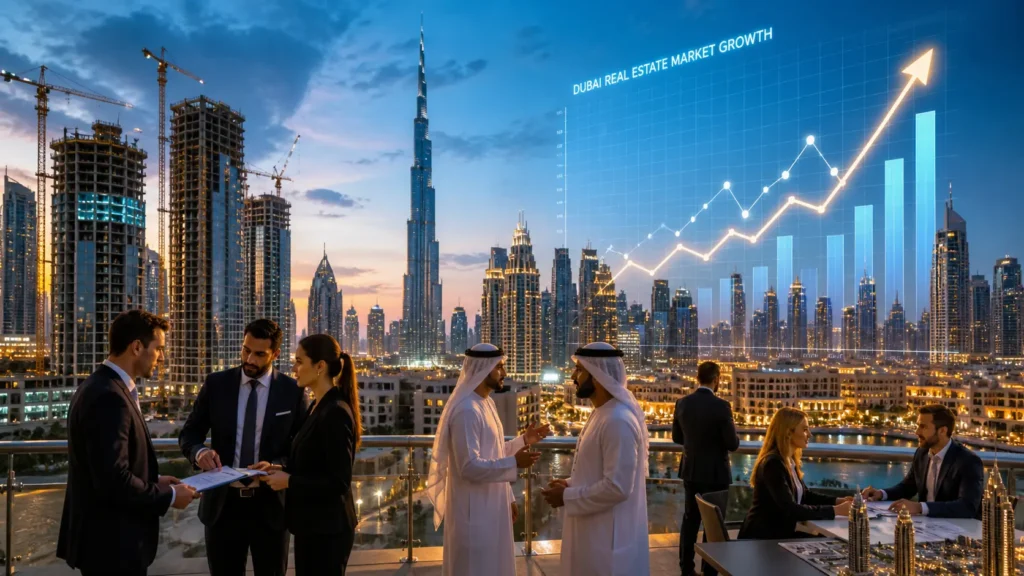
Dubai’s real estate market has shown remarkable resilience and growth leading into 2026. In the first quarter of 2026 alone, property transactions reached a staggering AED 138.7 billion across more than 44,150 deals. This represents a 21.2% increase in transaction value compared to the previous year. Confidence remains high among investors, with deal volumes increasing by 4.35% year-on-year.
The removal of the AED 750,000 threshold is expected to have a direct impact on the affordable housing segment. Data from early 2026 shows that properties valued below AED 750,000 accounted for 24% of all ready home deals. Furthermore, properties priced at or below AED 500,000 made up 8.6% of the market. These figures highlight a sustained demand for lower-priced units, which are now all eligible for residency benefits if owned by a single individual. This could shape the market in the coming months as more buyers target entry-level assets.
Also Read: UAE’s Digital Revolution Is Forcing Businesses to Adapt – Or Fall Behind
Affordable Properties Are Now High-Value Assets
The new visa rules are expected to bridge the gap between investment value and end-use utility for many buyers. For example, young professionals and families can now purchase studios or one-bedroom apartments in emerging corridors and immediately qualify for residency. Areas such as Jumeirah Village Circle (JVC), Dubailand, International City, and Dubai Silicon Oasis are anticipated to see increased demand due to their supply of affordable units.
Businesses and real estate developers should pay close attention to these changes as they may lead to higher sales volumes for mid-range properties. For investors, these entry-level properties are now strategic assets because they carry the same residency benefits as premium luxury villas. This change is also a core part of the Dubai D33 Economic Agenda, which aims to double the emirate’s GDP and attract 65,000 new investors and skilled professionals over the next decade.
Faster, Smarter, Easier — UAE Visa System Reinvented
One of the most significant administrative improvements in 2026 is the launch of a unified digital gateway for property-linked visas. This platform integrates the services of the GDRFA and the DLD, allowing applicants to manage documents, payments, and property verification in one place. This eliminates the need for investors to visit multiple government offices.
The new system automatically pulls property ownership details and valuations from DLD records. Once a payment is confirmed, the portal auto-books a biometrics appointment at a GDRFA center. This streamlined process has compressed visa approval times; clean applications are now often processed in under five working days, down from the previous three to six weeks.
Golden Visa or Taskeen? Here’s the Best Choice
Investors in Dubai have several pathways to residency based on their investment level and personal circumstances:
| Feature | 2-Year Taskeen Visa | 5-Year Retirement Visa | 10-Year Golden Visa |
| Minimum Investment | No minimum (sole owner) | AED 1 Million in property | AED 2 Million in property |
| Ownership Type | Sole or Joint (AED 400k/share) | Individual or through savings | Single or multiple properties |
| Age Requirement | None specified | 55 years and older | None specified |
| Stay Requirement | Must enter every 6 months | Must enter every 6 months | No minimum stay required |
| Family Sponsorship | Spouse and children | Spouse and children | Spouse, children, and staff |
The 10-year Golden Visa remains a premium option because it allows the holder to stay outside the UAE for more than six months without losing residency status. However, the updated two-year visa provides the most accessible entry point for new investors.
Step-by-Step Application Process for the 2-Year Visa
The application for the property investor visa is handled through the DLD’s Taskeen program.
The process generally follows these steps:
- Preparation: Ensure you have the electronic copy of the Title Deed for a completed property in Dubai.
- Submission: Submit the application and required documents through the unified digital portal or at the Al Manara Center (Cube).
- Documentation: You must provide a valid passport (valid for 6 months), a high-quality digital photo, a Good Conduct Certificate from Dubai Police, and proof of UAE health insurance.
- Medical Test: Complete a mandatory medical examination at an authorized center.
- Biometrics: Attend an in-person appointment for Emirates ID processing.
- Issuance: Once approved, the residency permit is issued, and the Emirates ID is delivered.
For mortgaged properties, a No Objection Certificate (NOC) from the bank or developer is required, confirming the amount paid and the outstanding balance.
Interesting News: UAE Security Forces Seize Huge Drug Shipment Worth Dh3.3 Million
The Reality Behind the Real Estate Hype
While the property market is strong, it is not without challenges. Global economic uncertainty and regional geopolitical tensions in the Middle East continue to weigh on investor sentiment. Recent conflicts have caused occasional fluctuations in property values; for instance, some reports indicated a slight monthly dip in villa and apartment prices in early 2026, even though annual growth remained positive.
Additionally, the removal of the minimum threshold may lead to a more selective market. Experts suggest that while more assets are now residency-eligible, buyers are becoming more informed. They are focusing on long-term livability, rental yields, and service charges rather than just buying the cheapest available asset to get a visa. There is also a risk that speculative buying in “fringe” locations could lead to lower returns compared to established, well-connected infrastructure hubs.
What Dubai Real Estate Will Look Like by 2030?
The future of Dubai’s residency programs may involve even more innovation. The DLD is currently exploring a real estate tokenization pilot. This could potentially allow fractional property ownership through digital tokens to eventually qualify as residency-linked assets, though this is not yet officially recognized for visa purposes.
Furthermore, the number of ultra-high-net-worth individuals (UHNWI) in the UAE is projected to grow by 36% by 2031. With over 208,000 new residents added in 2025 alone, the demand for housing across all price points is expected to remain high. As residency becomes easier to obtain, the pool of eligible buyers will likely continue to expand, sustaining the market’s long-term momentum.
FAQs – Frequently Asked Questions
There is no longer a minimum property value requirement for sole owners of a completed property in Dubai.
If a property is jointly owned, each co-owner must have a share value of at least AED 400,000 to be eligible for their own residency visa.
Yes, property residency holders can sponsor their spouse and children. Specific documents like attested marriage and birth certificates are required.
No, international investors can initiate the process remotely through the unified digital platform. However, you must visit Dubai in person for the biometric appointment and medical test.
The cost for a new visa is approximately AED 10,545. Renewing the visa costs about AED 8,215, while cancellation fees are around AED 1,239.
For the 2-year Taskeen visa, the property must be completed and registered with the DLD. Off-plan properties may qualify for the 10-year Golden Visa under certain conditions.
The service time is generally between 7 to 10 business days. Clean applications submitted through the new unified portal can be approved in as little as five working days.
Yes, holders of this residency can apply for a temporary work permit from the Ministry of Human Resources and Emiratisation or obtain an investment license from the Department of Economic Development.

Dwayne Paschke is a seasoned content strategist and AI automation specialist with over nine years of experience at the intersection of journalism and digital innovation. A versatile force in the media landscape, Dwayne has built a reputation as an expert content writer and investigative journalist, contributing high-impact pieces to various reputable news websites.