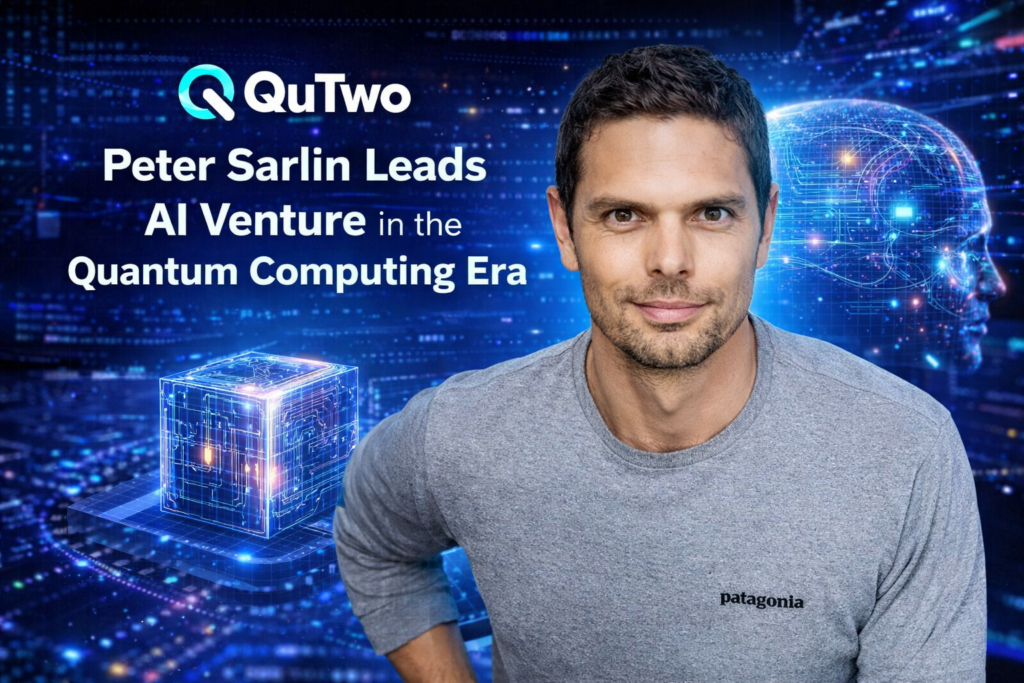
A little over a year after selling his artificial intelligence company to semiconductor giant AMD for $665 million, Finnish entrepreneur Peter Sarlin is already working on his next ambitious projects. The former founder of Silo AI has stepped down as CEO of the AMD unit formerly known as Silo AI and is now focusing on two new ventures: NestAI, a physical AI research lab, and QuTwo, a startup aimed at helping businesses transition into the future world of quantum-powered computing.
QuTwo is currently financed through Sarlin’s family office investment vehicle PostScriptum. The startup describes itself as “an AI lab for the quantum era,” with a mission to help companies begin integrating technologies that will eventually operate on quantum computing infrastructure.
QuTwo’s Vision: Preparing Businesses Before Quantum Computing Arrives
Rather than waiting for quantum computers to become commercially viable, QuTwo is already working with enterprise clients. One of its early partners is European fashion retailer Zalando. Together they are developing “lifestyle agents,” AI-powered systems that go beyond traditional search functions.
Instead of simply listing products when users search for them, these intelligent agents aim to anticipate user needs and recommend products, services, and experiences proactively.
The startup is built around the belief that traditional AI computing infrastructure is approaching efficiency limits, especially when it comes to the energy consumption and computational power required for large-scale AI models. Sarlin believes quantum computing could eventually help overcome these limitations.
However, QuTwo is not betting on a specific timeline for quantum breakthroughs. Instead, the company is developing a platform called QuTwo OS, designed to act as an orchestration layer that enables enterprises to shift gradually from classical computing systems to quantum computing.
In practical terms, this system will allow companies to run hybrid computing environments, where workloads can be routed between classical processors and quantum machines depending on which architecture performs the task more efficiently.
Quantum-Inspired Computing: The Practical Middle Ground
A major concept behind QuTwo’s strategy is “quantum-inspired computing.”
Since large-scale quantum hardware is still experimental and difficult to build, quantum-inspired methods simulate quantum behavior on classical hardware. These techniques allow companies to experiment with quantum-like algorithms today without relying on actual quantum processors.
QuTwo OS is designed to remain flexible across different types of hardware, meaning it can support:
- Traditional classical computing chips
- Quantum processors
- Quantum-inspired algorithms running on classical machines
This flexibility allows companies to adopt the technology gradually rather than waiting for the quantum ecosystem to mature.
Leadership Team Bridging AI and Quantum Computing
QuTwo’s leadership team includes experts from both the AI and quantum computing worlds.
On the quantum side:
- Kuan Yen Tan, co-founder of the quantum computing company IQM
- Antti Vasara, a board member and chairman of SemiQon
On the enterprise and business side:
- Kaj‑Mikael Björk
- Pekka Lundmark, who also serves on the startup’s board.
Altogether, the company includes more than 30 scientists specializing in artificial intelligence and quantum computing.
Sarlin describes the company’s position clearly: QuTwo is fundamentally an AI company building tools for a future quantum world, with the goal of moving AI workloads from classical computing toward quantum systems when the technology becomes practical.
Early Commercial Partnerships
Despite being a new venture, QuTwo is already working with enterprise partners across industries.
In addition to its collaboration with Zalando, the company has launched a joint research initiative with Finnish financial services provider OP Financial Group to explore applications of quantum AI in finance.
Sarlin also revealed that the company has secured design partnerships worth tens of millions of dollars. In these partnerships, enterprises work closely with QuTwo during the product development process to shape the technology according to their operational needs.
This model helps companies prepare early for future computing breakthroughs while allowing QuTwo to refine its platform based on real-world business problems.
The Entrepreneur Behind QuTwo: Peter Sarlin
Peter Sarlin is one of Europe’s most prominent AI entrepreneurs. Before launching QuTwo, he co-founded Silo AI in Helsinki in 2017 alongside Tero Ojanperä.
The startup quickly grew into Europe’s largest private AI research lab, employing hundreds of AI scientists and engineers and developing customized AI solutions for global enterprises including Allianz, Philips, Rolls-Royce, and Unilever.
Silo AI also became known for building open-source multilingual language models such as Poro and Viking, trained on Europe’s powerful LUMI supercomputer.
Unlike many Silicon Valley startups, Silo AI was largely bootstrapped, growing steadily through consulting and enterprise partnerships. Its revenue and workforce expanded rapidly as companies across industries began integrating AI into their products and operations.
In July 2024, AMD acquired Silo AI in an all-cash deal worth $665 million, marking one of the largest artificial intelligence acquisitions in Europe in the past decade.
Following the acquisition, Sarlin initially continued leading the Silo AI unit within AMD’s artificial intelligence division before eventually stepping down to pursue new deep-tech ventures.
Sarlin’s Broader Mission: Strengthening Europe’s AI Ecosystem
Beyond entrepreneurship, Sarlin has become an active supporter of European AI research. After selling Silo AI, he donated $10 million to support AI research initiatives across Europe, helping fund new research programs and university collaborations.
His goal is to ensure that Europe remains competitive in the global AI race, which is currently dominated by the United States and China.
Why QuTwo Matters
Quantum computing is still in its early stages, with most practical systems years away from large-scale deployment. Yet companies like QuTwo are betting that the transition will eventually reshape the computing landscape.
By building software that connects classical and quantum systems, QuTwo aims to position itself as a bridge between today’s AI infrastructure and tomorrow’s quantum computing era.
If Sarlin’s track record with Silo AI is any indication, he’s not exactly afraid of tackling absurdly difficult technology problems.

Dwayne Paschke is a seasoned content strategist and AI automation specialist with over nine years of experience at the intersection of journalism and digital innovation. A versatile force in the media landscape, Dwayne has built a reputation as an expert content writer and investigative journalist, contributing high-impact pieces to various reputable news websites.