The United Arab Emirates (UAE) is now a global technology and cybersecurity hub. This digital transformation is driven by high-level government initiatives, world-class research facilities, and a growing ecosystem of tech-driven enterprises. As 5G networks, the Internet of Things (IoT), and Artificial Intelligence (AI) converge, the digital landscape of the region is more connected—and more targeted—than ever before.
Cybersecurity is no longer just a technical requirement for UAE businesses; it is a fundamental pillar of national security and economic stability. Protecting digital assets is now critical to maintaining the trust of global investors and local consumers. Leading this charge are seasoned professionals who understand that modern defense requires a blend of advanced technology and a human-centric approach to risk management.
Dee Deu Short Podcast:
Strategic Role of Dee Deu in Protecting UAE’s Luxury Retail Sector
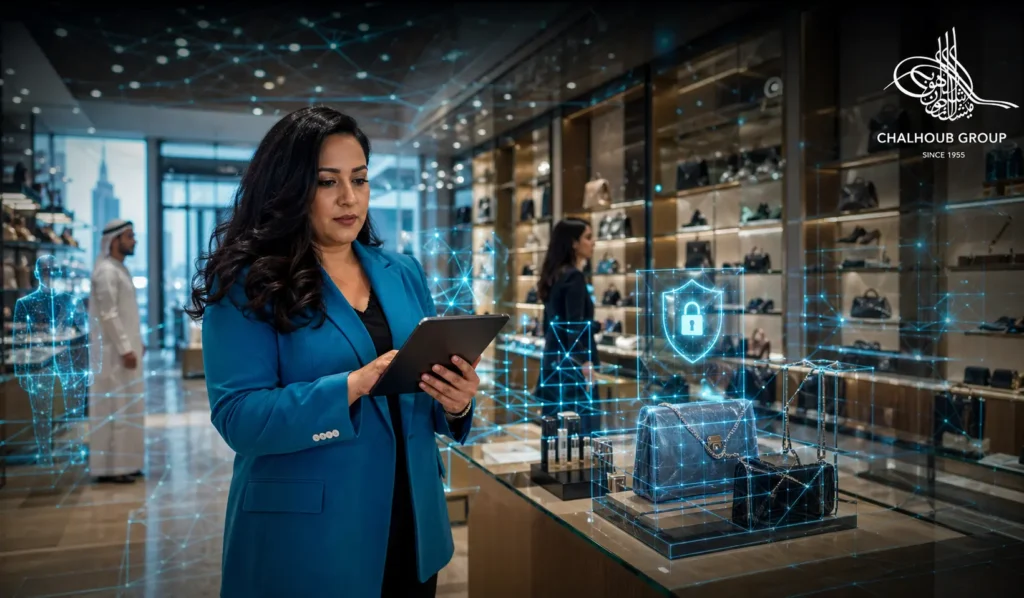
At the center of this evolving cybersecurity sector is Dee Deu, the Director of Information Security at the Chalhoub Group. With over 18 years of experience across sectors including banking, insurance, and real estate, Deu has become a recognized leader in the UAE’s cybersecurity sector. She joined the Chalhoub Group in 2024 to oversee information security strategy and governance for one of the region’s largest luxury retailers.
The Chalhoub Group operates across seven countries, managing a vast portfolio of luxury brands and retail operations. For a business of this scale, cybersecurity is directly tied to brand reputation. Deu’s role involves ensuring that the group’s technological infrastructure remains robust against increasingly sophisticated global threats. For investors and business leaders, this trend of prioritizing security at the executive level is worth watching.
Cybersecurity Has Become a National Priority in the UAE’s Digital Economy
The UAE’s commitment to digital security is reflected in significant market growth. The national cybersecurity market is projected to reach approximately US$543.47 million by 2025. Security services are expected to be the largest contributor to this growth, accounting for over US$294 million. This investment signals a proactive national effort to build a future-ready digital defense system that can withstand the “Agentic AI” era.
The evolution of the industry has seen it move from a “back-office” IT function to a “front-of-house” strategic priority. In the early 2000s, information security was often a small subsection of IT departments, largely focused on technical controls. Today, it is a board-level concern that influences everything from supply chain management to customer loyalty.
Also Read: How the UAE Space Agency Supports the Space Economy
From Early IT Roles to CISO Leadership — The Story of Dee Deu
Dee Deu’s career began nearly 20 years ago in the UK, starting as a graduate trainee in IT. Her entry into the security field was driven by a strong interest in identity access management during her placement year. Over the next two decades, she moved through various technical and non-technical roles, including security architecture and Governance, Risk, and Compliance (GRC).
Her professional timeline highlights a steady progression into leadership roles:
- 2015–2016: Group Head of Information Security at Halfords.
- 2016–2019: CISO and Head of Information Security at British Land.
- 2019–2024: Various CISO and Director roles, including leading Deu Labs.
- 2024–Present: Director of Information Security at Chalhoub Group.
Deu was named “CISO of the Year” at the 2019 Cyber Security Awards and has been recognized as one of the most influential women in the industry. This professional trajectory mirrors the broader industry’s maturation, moving from basic technical defense to complex strategic leadership.
How Leadership and Technology Work Together at Chalhoub Group?
The Chalhoub Group maintains a sophisticated Information Technology and Digital Operations team based in Dubai. This team is responsible for managing the company’s technological infrastructure and implementing innovative digital solutions. Under the leadership of executives like Michael Chalhoub (CEO) and Elisa Bruno (CEO of Level Shoes), the group integrates cutting-edge technologies to enhance the luxury retail experience.
The digital operations team includes specialists such as:
- Nadeem Semaan: Technology Infrastructure Manager.
- Alaa Saif and Mohammed Rashid: IT Managers.
- Mohammed Firas and Hashir Salam: Senior Software Engineers.
- Rouge Akhter: Digital HR Senior Project Manager.
This diverse team supports the Group’s goals of sustainability and innovation while ensuring that every digital touchpoint—whether in-store or online—is secure. Businesses should pay close attention to how integrated these technical roles have become within the broader corporate hierarchy.
Dee Deu’s Approach Shows How Cybersecurity Builds Customer Confidence
A core element of Dee Deu’s leadership philosophy is that information security should be an “enabler” rather than a “blocker”. In a customer-centric industry like luxury retail, security is about building trust and honoring the loyalty that customers place in the brand. If customers do not feel that their data and interactions are protected, the brand’s value is at risk.
Deu emphasizes three key pillars for a modern security strategy:
- Trust and Loyalty: Security must protect the customer’s interaction with the brand across all apps, websites, and physical stores.
- Operational Resilience: The organization must be able to continue functioning even in the face of a cyberattack.
- Shared Responsibility: Security is not just the responsibility of the IT team; it must be practiced by every employee at every level.
By demystifying and simplifying complex security concepts, leaders can ensure that the entire workforce understands their role in protecting the company. How can a business expect to remain secure if its employees find security protocols too complex to follow?
Interesting and Related Article: RZAM App – The AI-Powered Defense for UAE Digital Security | Cybersecurity
Identity Theft and AI Fraud Are Becoming Critical Security Concerns
The UAE is currently facing a surge in sophisticated threats powered by Artificial Intelligence. Experts at the FutureSec Summit 2025 warned that identity has become the “weakest link” in digital ecosystems. Cybercriminals are now using AI to create deepfakes—highly realistic voice and video clones—to commit fraud and bypass security systems.
These threats have real-world, “life-or-death” consequences, particularly in sectors like healthcare. For example, if a patient’s identity is stolen or misidentified due to a deepfake or administrative error, it could lead to the wrong diagnosis or medication. In the retail sector, identity theft and biometric spoofing can lead to massive financial losses and a total breakdown of consumer trust.
To combat these risks, the Chalhoub Group has conducted internal simulations using deepfakes to train staff on how to recognize and respond to these emerging threats. This proactive approach is essential as attackers continue to evolve faster than traditional defense mechanisms.
Cybersecurity Innovation Is Making the UAE a Global Technology Hub
The UAE has positioned itself as a central player in the global cybersecurity landscape. Events like the FutureSec Summit and the CIS Critical Infrastructure Cyberforge Summit draw international experts to Dubai to discuss the future of digital defense. These summits focus on cutting-edge topics such as Zero Trust architecture, post-quantum encryption, and AI-powered defense.
This global influence attracts major solution providers and innovators to the region, creating a “cybersecurity hub” that benefits both the public and private sectors. For international firms, the UAE serves as a testing ground for advanced security frameworks that can be scaled globally.
Cybersecurity Risks Are Increasing as Systems Become More Complex and Connected
Despite heavy investments in technology, the “human factor” remains the greatest challenge in cybersecurity. Experts emphasize that technology alone cannot solve the problem if basic controls and human awareness are lacking. “If you’re not getting basic cybersecurity controls right, AI will just magnify the problem,” Deu warned.
Key challenges include:
- Talent Shortages: The need for diverse and skilled security teams is growing.
- Evolving AI: Attackers are using machine learning to automate and scale their attacks.
- Complexity: As digital systems become more interconnected (5G, IoT, AI), the attack surface increases exponentially.
- Vendor Risks: Organizations are often only as strong as the “weakest link” in their supply chain, such as smaller clinics or suppliers with less robust security.
Female Cybersecurity Experts Are Shaping National Digital Security Strategies
The UAE is notable for the significant number of women in high-level cybersecurity leadership roles. These leaders are redefining the industry through a mix of technical expertise and strategic vision. Notable leaders alongside Dee Deu include:
- Hessa Almatrooshi: Director of IT (Acting) at Ajman Free Zone.
- Eman Al Awadhi: Vice President of Network and Cyber Security at Expo City Dubai.
- Seema Sharma: Head of Information Security at Wio Bank.
- Heide Young: Manager of Cyber Strategy & Engagement at NEOM.
- Sara Khalid Mohamed Alhosani: Director of Cyber Threat Intelligence in Abu Dhabi.
These women are not just filling roles; they are shaping national policy and leading large-scale incident responses. Their presence is a testament to the UAE’s focus on inclusive hiring and diverse perspectives in building a stronger digital defense.
Related Article: How CyberE71 and Hub71 are Building National Digital Resilience – UAE Cybersecurity Strategy 2026
Zero Trust and AI-Powered Security in the UAE
Looking ahead to 2026 and beyond, the theme of “Intelligent Defence” will dominate the industry. Organizations will increasingly rely on AI-powered defense systems to detect anomalies in real-time, such as changes in IP addresses, behavioral patterns, and even typing styles. Machine learning will revolutionize threat detection and automated crisis response, allowing companies to defend themselves at a scale that was previously impossible.
However, as AI becomes a primary tool for defense, it will also become a target. Companies will need to ensure that the AI systems they adopt are secure, unbiased, and transparent. The move toward “Zero Trust” architectures—where no user or system is trusted by default—will become the standard for enterprises across the UAE. This could shape the market in the coming months as more businesses migrate to these advanced frameworks.
FAQs – Frequently Asked Questions
Dee Deu is the Director of Information Security at Chalhoub Group and a recognized leader in the UAE cybersecurity industry with nearly 20 years of experience.
The most significant threats include AI-powered identity theft, deepfakes, and biometric spoofing, which target both individuals and critical infrastructure.
In luxury retail, cybersecurity is essential for maintaining consumer trust and protecting the brand’s reputation against data breaches.
The UAE is protected by Federal Decree-Law No. 45 on personal data protection and Federal Decree-Law No. 34 on cybercrimes.
Zero Trust is a security framework that requires all users, whether inside or outside the organization’s network, to be authenticated and authorized before gaining access to applications and data.
AI is used for both attack and defense. Defensively, it tracks behavioral anomalies and automates threat detection; offensively, it is used to create deepfakes and scale cyberattacks.
The market is projected to reach over US$543 million by 2025, driven largely by the demand for professional security services.

Dwayne Paschke is a seasoned content strategist and AI automation specialist with over nine years of experience at the intersection of journalism and digital innovation. A versatile force in the media landscape, Dwayne has built a reputation as an expert content writer and investigative journalist, contributing high-impact pieces to various reputable news websites.