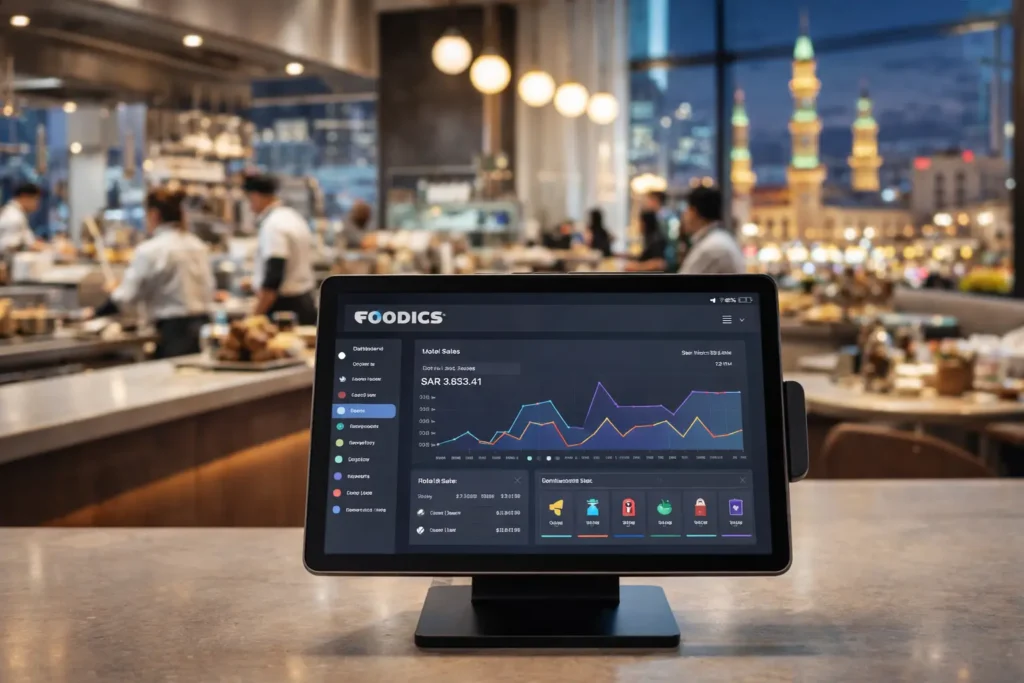
Six billion orders. That is the staggering volume of transactions that have flowed through a single digital pipeline since 2014, transforming what was once a landscape of “organized chaos” into a data-driven frontier for the Middle East’s food and beverage industry.
While diners see a sleek iPad at the counter, the reality behind the screen is a complex, multi-billion-dollar infrastructure that has become the silent nervous system for over 30,000 restaurants, cafes, and cloud kitchens.
In the high-stakes world of hospitality tech, Foodics is no longer just a startup; it is a regional heavyweight attempting to solve the oldest problem in the business: how to stop a kitchen from burning cash.
Two Students and a Paper Problem
The story did not begin in a boardroom, but in the crowded local cafes of Saudi Arabia. In 2014, Ahmad Al-Zaini and Mosab Al-Othmani, then students, noticed a recurring friction point: the static nature of the industry. Every time a restaurant wanted to change a price or add a seasonal special, they had to reprint physical menus. Digitalization was non-existent; the “backend” was often a stack of paper receipts and a prayer.
“We sensed there was a lack of digitalization in the Food and Beverage sector, especially in the ordering process,” Al-Zaini recalls. The initial spark was simple: digital tablets for menus. However, the founders quickly realized that a digital menu was merely a cosmetic fix for a structural crisis. To truly disrupt the market, they needed to build a cloud-based “one-stop-shop” that could handle everything from the first customer click to the final supplier payment.
Building the Cloud Architecture
Transitioning from a digital menu to a comprehensive Point of Sale (POS) and Restaurant Management System (RMS) required more than just code; it required a fundamental shift in how Saudi entrepreneurs viewed their data. Operating out of Riyadh, Al-Zaini (CEO) and Al-Othmani (CTO) began pitching a cloud-based future where a restaurant owner could manage an entire franchise from an iPad.
The early days were defined by the struggle to bridge the gap between “front of house” service and “back office” logistics. By moving the POS to the cloud, Foodics allowed real-time synchronization that was previously impossible for small food trucks or even established fast-food chains. The success signals came early as thousands of businesses across the Middle East, starving for efficiency, began swapping their legacy systems for the iPad-based solution.
Also Read: Mohamad Ballout With Kitopi Turned Empty Kitchens Into a Billion-Dollar Machine
Vision And A Complete Ecosystem
Under the leadership of Al-Zaini, Foodics has evolved into an ambitious “restaurant management ecosystem”. The leadership style is rooted in aggressive expansion and local presence; the company has invested heavily in human support on the ground in markets like the UAE, Egypt, and Jordan to build trust within the F&B community.
The vision is clear: to move beyond the kitchen. UAE Country Manager Niharika describes the industry as “organized chaos” and positions Foodics as the bridge to operational efficiency. This vision has recently expanded toward the broader hospitality sector, including hotels, through strategic partnerships with government entities.
How the Money Moves
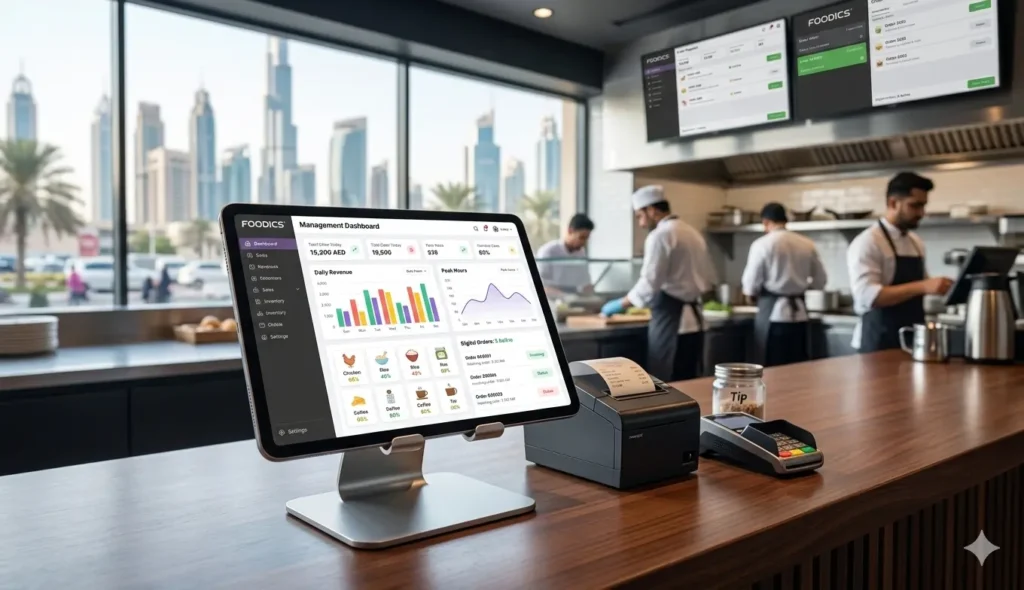
Foodics operates on a Software-as-a-Service (SaaS) model, with pricing starting at approximately $54 (or £42) per user, per month. This subscription revenue is the bedrock, but the real value lies in its modularity. The platform isn’t just one app; it is a marketplace of over 100 integrations.
The product suite is deep:
- Foodics Pay: An integrated payment solution allowing secure digital and card transactions.
- Inventory Management: Automated tracking that notifies owners when stock is low, reducing waste and manual errors.
- Accounting & HR: A dedicated dashboard for tracking bank balances (up to 10 accounts), profit/loss flow charts, and even employee loans and nationalities.
- Foodics One: A single-device solution with a built-in cashier for micro-retailers.
By integrating with procurement platforms like Suplyd, Foodics can automate the entire supply chain, theoretically eliminating human error in ordering raw materials.
The Accelerator of a Global Crisis
While many businesses crumbled during the 2020 pandemic, the hospitality industry’s shift toward e-commerce and take-out created a massive market opportunity for Foodics. “We witnessed a significant acceleration in the digitization of operations,” says Al-Zaini.
The company pivoted quickly to support cloud kitchens and launched Foodics PAY to meet the sudden surge in demand for contactless digital payments. This period proved that digital tools were no longer a luxury but a survival requirement. Beyond the pandemic, the company has shown a knack for community-driven breakthroughs, such as replacing hardware for free for UAE customers affected by recent floods.
Related Article: Calo’s Case Study in Customer-Obsessed Culture and Rapid Scaling
The Real World Reality Check – Foodics Reviews
Despite its meteoric growth and a high 4.5/5 rating on some software comparison sites when you search for Foodics reviews, actually Foodics faces a vocal segment of dissatisfied users. On platforms like Trustpilot, the company holds a 2.3/5 rating, with critics citing a sharp disconnect between “best-in-class” marketing and “nearly dead” ground support.
Investigation into user experiences reveals recurring pain points:
- Implementation Delays: Some business owners, like the management at Indomie Cafe in Nigeria, reported losing thousands of dollars in sales due to delays in setting up “Foodics Online”.
- Support Bottlenecks: Users have complained that chat support is often unhelpful and that on-ground technicians can take up to seven days to arrive.
- Financial Penalties: One high-profile complaint involved the depositing of post-dated cheques even after a business had officially closed, leading to claims of a lack of accountability.
This is where things get interesting: can a tech giant scale its human support as fast as its software?
Standing Out in a Crowded Market
Foodics does not operate in a vacuum. It faces stiff competition from global players like Toast POS, Square, and Lightspeed, as well as regional rivals like Grubtech.
Its primary advantage remains its deep regional integration, including support for Arabic and French, and a specific focus on the regulatory and tax environments (like ZATCA in Saudi Arabia) of the MENA region. However, competitors like Toast often outshine it in terms of sheer volume of verified positive reviews in the global market. Foodics counters this by positioning itself as the most comprehensive “all-in-one” solution specifically tailored for the Middle Eastern hospitality landscape.
The Data Driven Kitchen of 2026
The future of Foodics appears to be a bet on “Big Data” and Artificial Intelligence. Through integrations with platforms like Apicbase, the system is moving toward “Demand Forecasting”—using historical sales data to predict exactly how many tomatoes or kilograms of meat a restaurant will need next Tuesday.
This level of integration aims to “close the gap” between theoretical food costs and actual costs, which is often where restaurant profits disappear. By synchronising the front-of-house sales mix with back-of-house inventory down to the raw ingredient, Foodics is attempting to make the “unprofitable menu item” a thing of the past.
Digital Transformation of Foodics
Foodics has grown from a student’s observation in a cafe to a regional titan present in over 160 countries. It has successfully processed billions of orders and provided a digital lifeline to over 30,000 restaurants.
For entrepreneurs, there’s a lesson hidden here: innovation is rarely about the “bright idea” and almost always about the “infrastructure” that supports it.
As it eyes the broader hospitality and hotel sectors, the company’s biggest challenge will not be its code, but its culture. Balancing aggressive sales and rapid geographical expansion with the “empathy” and “support” it promises its users will determine whether Foodics remains the region’s preferred partner or becomes a cautionary tale of scaling too fast. For now, it remains the definitive architect of the Middle East’s digital dining revolution.
FAQs – Frequently Asked Questions
Foodics is a cloud-based Point of Sale (POS) and Restaurant Management System (RMS) designed for restaurants, cafes, food trucks, cloud kitchens, and other hospitality businesses. It helps businesses manage orders, payments, inventory, accounting, staff, customer data, and business analytics through a single integrated platform.
Foodics was founded in 2014 by Ahmad Al-Zaini and Mosab Al-Othmani in Saudi Arabia. What began as an idea to digitize restaurant menus evolved into one of the Middle East’s leading hospitality technology platforms serving thousands of businesses across the region.
Foodics is suitable for restaurants, cafes, coffee shops, bakeries, cloud kitchens, quick-service restaurants (QSRs), food trucks, fine dining establishments, and small retail businesses. Its cloud-based system supports both single-location businesses and multi-branch restaurant chains.
Foodics offers a comprehensive suite of features including cloud-based POS, inventory management, payment processing through Foodics Pay, accounting and HR tools, customer relationship management (CRM), sales reporting, multi-branch management, online ordering, and integrations with more than 100 third-party business applications.
Yes. Although Foodics was founded in Saudi Arabia, it has expanded across the Middle East and North Africa, including the UAE, Egypt, Jordan, Kuwait, Bahrain, and other markets. The platform also serves businesses internationally through its cloud-based infrastructure and multilingual support.
Foodics is widely recognized for its cloud-based technology, user-friendly interface, extensive integrations, and restaurant-focused features. However, some users have reported challenges related to implementation timelines, customer support responsiveness, and onboarding experiences. Businesses should evaluate both its strengths and customer reviews before selecting a POS solution.
Foodics leverages artificial intelligence, demand forecasting, and real-time business analytics to help restaurants optimize inventory, predict customer demand, reduce food waste, improve operational efficiency, and make more informed business decisions based on historical sales data.
Foodics competes with platforms such as Toast POS, Square, Lightspeed, and Grubtech. Its primary advantage lies in its deep focus on the Middle East and North Africa (MENA) market, offering localized features, Arabic language support, regional tax compliance, and integrations tailored specifically for hospitality businesses operating within the region.

Dwayne Paschke is a seasoned content strategist and AI automation specialist with over nine years of experience at the intersection of journalism and digital innovation. A versatile force in the media landscape, Dwayne has built a reputation as an expert content writer and investigative journalist, contributing high-impact pieces to various reputable news websites.