Fertiglobe to Launch Abu Dhabi Low-Carbon Ammonia Facility 2027

Low-Carbon Ammonia Facility in Abu Dhabi by Fertiglobe
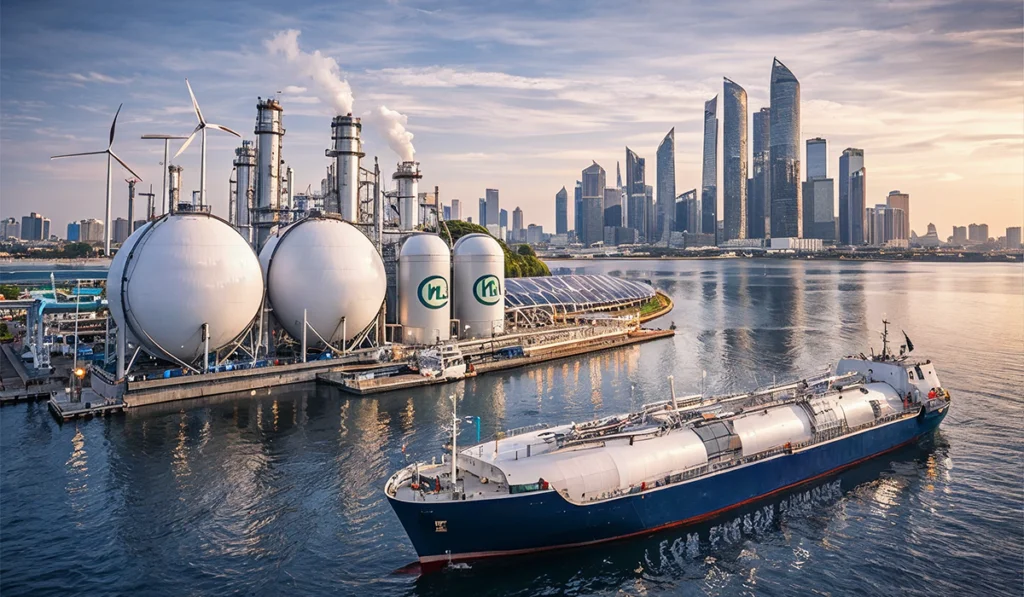
Fertiglobe Plan for 2027 Launch Low-Carbon Ammonia Facility in Abu Dhabi. Image Credit: AI-generated image for illustration purpose only.

Fertiglobe, the Abu Dhabi-headquartered nitrogen fertilizer producer, has confirmed that its one-million-tons-per-annum lower-carbon ammonia project in Ruwais is expected to commence operations in 2027, according to its fourth-quarter 2025 financial results.

Known as “Project Harvest,” the facility is being developed within the TA’ZIZ Industrial Chemicals Zone in Ruwais Industrial City. The consortium is led by Fertiglobe, alongside TA’ZIZ — a joint venture between ADNOC and ADQ — as well as Japan’s Mitsui & Co. and South Korea’s GS Energy Corporation.

Construction Progress and Investment

The project reached Final Investment Decision (FID) in July 2024, with construction beginning later that year. According to disclosures published via the Abu Dhabi Securities Exchange (ADX), the ammonia facility is now more than 70 per cent complete.

Italy’s Tecnimont has been appointed as the Engineering, Procurement and Construction (EPC) contractor, while US-based KBR is supplying the core ammonia process technology.

Fertiglobe has indicated that total capital expenditure is expected to remain below $500 million, supported by integration with existing infrastructure and feedstock availability in Ruwais.

Lower Carbon Ambition

A preliminary Life Cycle Assessment (LCA) study suggests that the plant aims to produce ammonia with up to 50 per cent lower carbon intensity compared to conventional production methods.

Additional emissions reductions are expected through carbon capture and sequestration initiatives in subsequent phases, in line with broader ADNOC sustainability strategy announcements.

Fertiglobe noted that logistical synergies with ADNOC — which holds an 86.2 per cent stake in the company — will be realised through integration with the TA’ZIZ industrial ecosystem.

The company also retains the option to increase its ownership in Project Harvest to 54 per cent following completion, up from its current 30 per cent stake.

Broader Low-Carbon Strategy

Separately, the company stated in its Q4 2025 investor filing that it expects a Final Investment Decision in the coming months for its Egypt Green Hydrogen project.

The Ruwais development reflects Abu Dhabi’s ambition to strengthen its position in clean fuels, hydrogen-linked supply chains, and lower-carbon industrial production.

‘Grow 2030’ Strategy

El-Hoshy highlighted the company’s steady progress under its ‘Grow 2030’ strategy, which was introduced during the company’s Capital Markets Day in May.

According to Fertiglobe, the company has already achieved around 38% of its 2030 growth objectives, driven by enhancements in manufacturing operations, cost optimization initiatives, and the integration of artificial intelligence across its business.

The company is also benefiting from the broader ecosystem of its majority shareholder, ADNOC, by utilizing shared logistics and utility infrastructure while lowering capital expenditure requirements. El-Hoshy noted that this collaboration has streamlined operations and reduced costs across several projects, including Project Harvest in the UAE. Construction on the project began in the third quarter of 2024, with the facility targeting an annual production capacity of 1 million metric tons of low-carbon ammonia by 2027.

Fertiglobe is simultaneously advancing other strategic initiatives, including Egypt Green, which is designed to produce green ammonia using electrolysis technology, and Project Baytown, a low-carbon ammonia venture in which Fertiglobe holds a minority stake alongside ADNOC and ExxonMobil. Both developments remain in the planning phase.

On October 1, Fertiglobe finalized the acquisition of Wengfu Australia’s distribution assets. The acquired business became self-financing within two months of completion and is projected to deliver approximately $23 million in additional annual earnings by 2030.

El-Hoshy emphasized that the company’s long-term ambition extends beyond simply supplying these products. Instead, Fertiglobe intends to strengthen its trading capabilities by sourcing products efficiently and expanding distribution into key Southeast Asian markets.

The company also identified increased production of diesel exhaust fluid and automotive-grade urea as important future growth opportunities. Together, these businesses are expected to contribute an estimated $22 million in additional annual earnings by 2030.

Project Location Ammonia Capacity (Million mt/year) Renewable / CCS-enabled Electrolysis Capacity (MW) Current Status Planned Start Date
Harvest UAE 1 CCS based on Rabdan rephasing In construction (underway since Q3 2024) Underway since Q3 2024
Project Baytown United States >1 CCS Still being evaluated 2029
Egypt Green (Ain Sokhna) Egypt <0.1 Renewable 100 Final Investment Decision (FID) expected in the coming months 2028
Rabdan UAE 1 CCS Rephase (could restart in the future) To be announced

Useful Resource: https://fertiglobe.com/fertiglobe-becomes-adnocs-vehicle-for-low-carbon-ammonia-growth-globally/

$2.42 Billion Distributed to Shareholders Since IPO

Fertiglobe has continued to prioritize shareholder returns while pursuing long-term growth through its disciplined capital allocation strategy. As part of this approach, the company recently approved an interim cash dividend of $150 million for the first half of 2024, which is scheduled to be paid this month.

With this latest distribution, Fertiglobe’s total dividend payments since its October 2021 initial public offering (IPO) will reach $2.42 billion, placing the company among the sector’s top performers in terms of dividend yield and overall shareholder returns. Based on the newly announced interim payout, the annualized dividend yield stands at approximately 5%, underscoring the company’s continued focus on rewarding investors.

Looking ahead, Fertiglobe intends to maintain a strong dividend policy supported by ongoing value creation initiatives. These include its Manufacturing Improvement Plan (MIP) and broader cost optimization program, which together are expected to generate approximately $150 million in additional annual EBITDA by the end of 2025.

Scroll to Top

Be in the Know