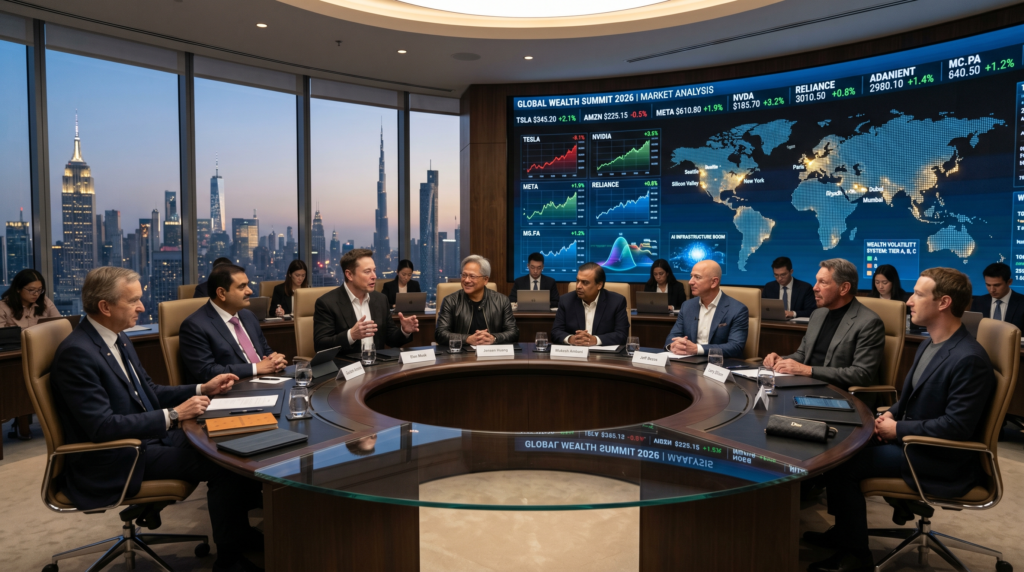
The global billionaire list in 2026 has never been more volatile, and that volatility tells you something important. The fortunes at the top are no longer primarily built on physical assets or inherited industrial empires. They are built on equity stakes in companies whose valuations swing with AI investment cycles, regulatory decisions, and a single quarterly earnings report. Understanding who is at the top matters less than understanding why, and what keeps them there.
The 2026 rankings are a snapshot of which business models the market currently believes will define the next decade. If you can read the list with that lens, it stops being a celebrity scoreboard and starts being one of the most useful economic maps available.
The Top Tier in 2026 – Who They Are and What Actually Made Them Rich
The upper echelon of the 2026 rankings is dominated by a group that would have looked familiar in 2023, but the positions, the margins between them, and the sources of their wealth have shifted meaningfully.
Elon Musk sits at or near the top, though his exact position fluctuates with Tesla’s stock price in ways that can swing his net worth by $20–30 billion in a single trading session. His wealth is distributed across Tesla (publicly traded), SpaceX (private, most recently valued above $200 billion), xAI (his artificial intelligence venture), X (formerly Twitter), and several other ventures. The concentration is unusual, most billionaires at this scale have diversified. Musk has doubled down, creating a fortune that is simultaneously enormous and structurally fragile in ways most rankings don’t acknowledge.
Jeff Bezos holds a position consistently in the top three, built primarily on retained Amazon equity. He has diversified into Blue Origin, real estate, and media (The Washington Post), but Amazon remains the engine. His net worth is less volatile than Musk’s because Amazon’s share price, while large, reflects a more diversified revenue base, retail, AWS, advertising, that smooths out single-sector shocks.
Mark Zuckerberg has risen significantly in the 2026 rankings following Meta’s sustained recovery and its aggressive positioning in AI infrastructure. His equity stake in Meta, a company he founded and still controls through a dual-class share structure, is the primary source of wealth that has grown substantially as Meta’s advertising revenue recovered and its AI investment narrative gained traction with markets.
Larry Ellison has become one of the most significant movers in recent rankings, as Oracle’s positioning in AI infrastructure, particularly its cloud and database services for AI workloads, has driven both revenue growth and a significant rerating of the stock. Ellison owns a substantial portion of Oracle, and that ownership has translated into wealth growth that few analysts predicted even three years ago.
Bernard Arnault leads European rankings decisively through LVMH, the luxury conglomerate whose portfolio spans Louis Vuitton, Dior, Hennessy, Bulgari, and dozens of other premium brands. His fortune behaves differently from the technology billionaires above, it is rooted in brands that appreciate over decades, less sensitive to quarterly earnings surprises, and structured through a family holding company that provides governance stability.
Rising Tier – The Fortunes Growing Fastest Right Now
Below the established top five, the 2026 rankings reveal a second tier where movement is rapid and the stories are arguably more instructive.
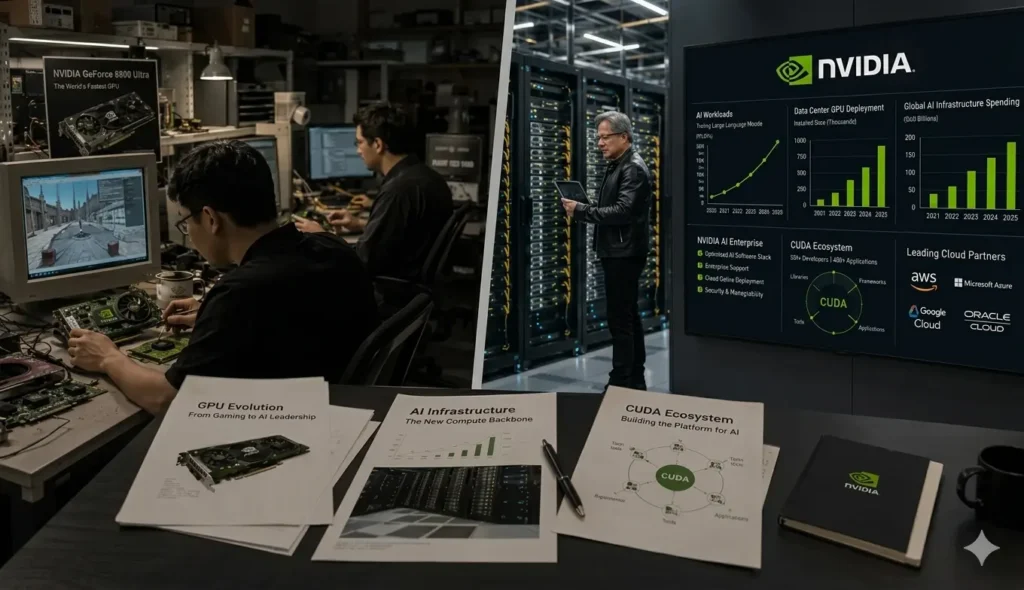
Jensen Huang, founder and CEO of Nvidia, has seen his net worth grow faster than virtually any other individual in the ranking over the past three years. Nvidia’s GPU technology became the essential infrastructure for AI model training, creating a pricing power and margin profile that translated directly into share price appreciation, and into Huang’s equity stake value. His rise is the clearest single example of how a specific technology bet, correctly made and patiently held, creates extraordinary wealth within a compressed timeframe.
Gautam Adani represents the Indian industrial wealth story, enormous in scale, periodically turbulent, and ultimately rooted in infrastructure assets (ports, airports, energy, logistics) that India’s economic growth requires regardless of short-term market sentiment. His trajectory illustrates both the opportunity and the vulnerability of concentrated, infrastructure-based, emerging-market wealth.
Mukesh Ambani’s Reliance Industries has positioned itself as India’s dominant consumer-facing conglomerate, telecoms through Jio, retail through Reliance Retail, petrochemicals, and an expanding digital platform ambition. His wealth reflects India’s rising consumer economy in ways that are fundamentally different from the technology platform wealth that dominates the top of Western rankings.
Also Read: How Do Countries Make Billion-Dollar Investment Deals
What the Rankings Actually Measure – And What They Don’t
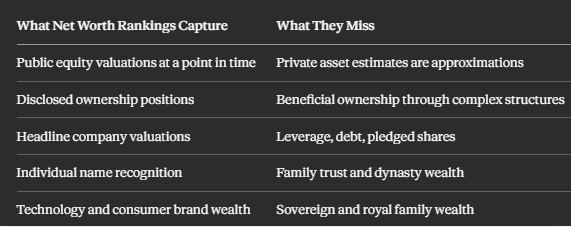
Critical Rule: Net worth figures for any billionaire with significant private company holdings, Musk’s SpaceX stake, for example, are estimates based on the most recent funding round valuation. Private company valuations can be 12–18 months old before they appear in net worth calculations, meaning rankings can significantly overstate or understate actual current wealth.
The most systematically underrepresented category of wealth in any published ranking is sovereign and royal family assets. The Al Saud family’s aggregate wealth, concentrated across Saudi Aramco, real estate, private investment portfolios, and state assets, is not captured in a single named-individual entry. When analysts estimate the aggregate wealth, figures run into the trillions, dwarfing any individual on the published list.
The Billionaire Wealth Sector Map 2026
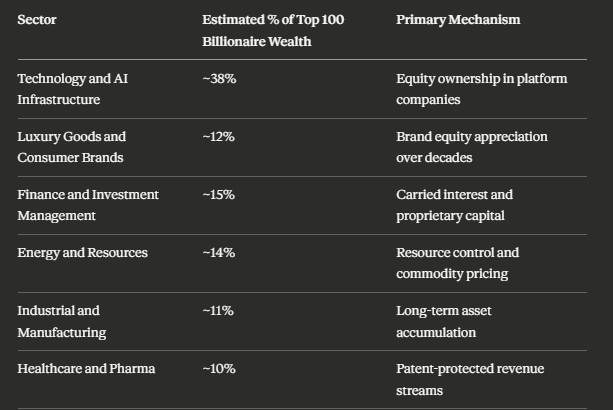
Technology’s dominance is the defining feature of 2026’s wealth map, but the concentration within technology matters. The AI infrastructure cycle has created wealth primarily for hardware enablers (Nvidia), cloud platforms (Microsoft, Amazon, Google/Alphabet), and foundation model companies, not for the broader application layer, where thousands of well-funded companies are competing for a profit pool that has not yet clearly materialized.
Why Billionaire Net Worth Figures Mislead Everyday Investors
Most people interacting with billionaire rankings make the same mistake: they treat the numbers as liquid, accessible wealth.
The reality is that the majority of the wealth in every top-tier billionaire ranking is illiquid in the practical sense. It is concentrated in equity stakes that cannot be sold quickly without moving the market, triggering regulatory review, or violating lock-up and insider trading restrictions.
Critical Warning: A billionaire with $100 billion in net worth cannot access $100 billion in cash. They can access a fraction, through structured financing against their equity (margin loans, prepaid variable forwards), through small, carefully managed secondary sales, or through dividends. The rest exists as a number on a screen representing what the market currently believes their equity is worth.
This illiquidity has real consequences. When markets drop 20%, a $100 billion fortune becomes an $80 billion fortune without a single dollar being spent or lost in the conventional sense. The wealth exists on paper, fluctuates with market conditions, and can create forced selling if equity-secured loans are called during a market downturn.
The “Information Gain” Framework – The Volatility Tier System
No competitor publishes this, but experienced wealth analysts informally use a volatility tier framework when assessing billionaire rankings:
Tier A — Stable Foundation Wealth: Luxury, industrial, resource-based. Annual volatility 10–20%. Arnault, Ambani, Koch family.
Tier B — Growth Platform Wealth: Technology platforms with diversified revenue. Annual volatility 20–35%. Bezos, Zuckerberg, Ellison.
Tier C — Concentrated Bet Wealth: Single company or sector with high growth expectations embedded. Annual volatility 35–60%+. Musk, Huang (Nvidia), early-stage tech founders.
Understanding which tier a fortune belongs to tells you more about its durability than the headline number does. Tier A wealth tends to be multigenerational and relatively resilient to market cycles. Tier C wealth can grow explosively in bull markets and contract severely in bear markets, sometimes removing individuals from the list entirely within a single year.
Your Plan for Next 24-Hour Should Be:
- Map the tier system to your portfolio. Which companies you own belong to Tier A, B, or C founders? The higher the tier, the higher your concentration risk relative to the headline market cap.
- Read the full Berkshire Hathaway annual letter and the Nvidia CEO’s latest earnings call back to back, the contrast in risk philosophy will clarify more about wealth-building strategy than any ranking list.
- Set up Bloomberg or Reuters alerts for 13D filings from the top 10 billionaire investors in your sectors. When concentrated wealth moves, it moves fast, and regulatory filings are the fastest public signal available.
Important Takeaways
- 2026 billionaire rankings are dominated by technology and AI infrastructure wealth, led by Musk, Bezos, Zuckerberg, Ellison, and Huang.
- Net worth figures are snapshots of equity valuations, not accessible, liquid cash, and can move by tens of billions in a single trading session.
- The volatility tier system (A/B/C) is more useful than headline net worth for understanding the durability and risk profile of any major fortune.
- Published rankings systematically understate sovereign and royal family wealth, which likely exceeds any individual on current lists.
- The AI infrastructure cycle is the defining wealth creation engine of 2024–2026, and its sustainability is the central question for the next ranking cycle.
Final Verdict
The 2026 billionaire rankings are the most accurate real-time map of which business models global capital currently trusts with its highest valuations. Read them that way and they become genuinely useful.
The AI cycle is the defining story. Jensen Huang’s rise, Oracle’s rerating, Microsoft’s sustained premium valuation, and the continued dominance of Amazon’s AWS, these are all expressions of the same underlying market conviction: that AI infrastructure is the most valuable real estate in the global economy right now. Fortunes are being made and repositioned on that conviction.
What separates the winners from the losers in the next three years will be whether the AI application layer delivers the profit pool that justifies current infrastructure valuations. If it does, the 2029 rankings will look broadly similar to 2026, same names, larger numbers. If it doesn’t, the correction will remove several names from the top tier faster than most observers currently expect.
FAQs – Frequently Asked Questions
Elon Musk holds the top spot, driven by his concentrated equity stakes in Tesla, xAI, and especially SpaceX, though his net worth fluctuates wildly with market sentiment.
By multiplying an insider’s known public shares by the current stock price, then adding estimates for real estate and private holdings based on their most recent funding rounds.
Technology and AI infrastructure, specifically cloud computing platforms, advanced semiconductor manufacturing, and foundation model creators, are the primary wealth engines.
Almost certainly; the concentrated, sovereign wealth of Gulf royal families, old European nobility, and opaque trust funds are systematically absent from public trackers.
Because his fortune is locked in hyper-volatile, highly sensitive tech stocks like Tesla, meaning a routine 10% market swing can wipe out or add tens of billions in days.
Both use similar equity data, but Bloomberg updates dynamically at the close of every New York trading day, whereas Forbes relies heavily on a definitive annual calculation alongside its real-time tracker.
They shift from wealth creation to wealth preservation, utilizing family offices, diverse global asset classes, legal trust structures, and defensive estate-planning foundations.
Founders with highly concentrated, single-stock wealth suffered the worst; Mark Zuckerberg lost over $70 billion in 2022 before Meta’s recovery, and Gautam Adani faced record-breaking short-seller drops in 2023.

Dwayne Paschke is a seasoned content strategist and AI automation specialist with over nine years of experience at the intersection of journalism and digital innovation. A versatile force in the media landscape, Dwayne has built a reputation as an expert content writer and investigative journalist, contributing high-impact pieces to various reputable news websites.