The post Altibbi’s App – A Family’s Medical Glossary Transformed into MENA’s $44 Million Health Empire appeared first on Disruptors Digest.
]]>
Imagine a region where 400 million people speak the same language (Arabic), yet accurate, life-saving information in that tongue was once a digital desert. In the mid-2000s, an Arabic-speaking patient looking for medical advice online was more likely to find superstition than science. Today, a single platform has bridged that gap, connecting millions to licensed physicians in minutes via a smartphone.
This is not just a story of a successful startup; it is the chronicle of how Altibbi transformed the healthcare landscape of the Middle East and North Africa (MENA) from a scattered collection of paper dictionaries into a $44 million AI-powered health empire.
Altibbi App As A Digital Giant in Medical
The genesis of Altibbi is a story of intergenerational vision, beginning not in a Silicon Valley garage, but with a doctor’s return to his roots. In 2004, after years of medical practice in Germany, Dr. Abdel Aziz Labadi returned to the Arab world and was immediately struck by a profound disparity: the lack of high-quality medical references in Arabic.
He began with a humble yet monumental task: creating the “Medical Glossary,” a comprehensive Arabic medical reference designed to simplify complex terminology for the average citizen. For four years, this glossary existed as a bridge between professional medical jargon and public understanding.
However, it was his son, Jalil Labadi, who recognized that a dictionary, no matter how thorough, was static. In 2008, Jalil saw the burgeoning potential of the digital age to turn his father’s glossary into a living, breathing ecosystem. He didn’t just want to define “diabetes” or “hypertension”; he wanted to create a platform where a person in a remote village in Egypt or a high-rise in Dubai could get real-time answers in their mother tongue.
The early days were defined by “sweat equity” and family support, as the founders relied on self-funding and small contributions from friends and relatives to keep the servers running and the mission alive.
Also Read: RZAM App – The AI-Powered Defense for UAE Digital Security | Cybersecurity
Milestones that Launched the Brand
If 2008 was the year of the idea, 2011 was the year of the mission. Altibbi officially launched from Amman, Jordan, with a clear objective: providing accurate medical information from trusted sources to a region hungry for it.
The first major signal of success came in 2012 when the platform moved beyond one-way information and introduced a free Q&A service. Suddenly, users weren’t just reading articles; they were asking text-based questions and receiving answers from specialized doctors at no cost. This established the “trust equity” that would become the company’s most valuable asset.
If you’re studying disruptive business models, this is one worth watching. By 2015, the institutional world took notice. Altibbi secured its first major investment round from Middle East Venture Partners (MEVP) and Dash Ventures. This capital was the fuel needed to move beyond Jordan, allowing the company to expand its user base across Saudi Arabia, the UAE, Kuwait, and Lebanon.
The breakthrough wasn’t just geographical; it was technological. In 2016, Altibbi activated its remote consultation services, effectively becoming the “Uber for Doctors” in the MENA region. For the first time, users could contact a doctor at any time, from any place, via telephone or the internet.
Altibbi’s Visionaries, Leadership And Management
At the helm is Jalil Labadi, a leader whose philosophy centers on “changing the narrative” of the patient-doctor relationship. Labadi’s vision is rooted in social innovation—viewing healthcare not just as a service, but as a right that should be cheaper and more accessible than traditional in-person consultations.
Under his leadership, Altibbi has adopted a “scientific-first” approach. This isn’t just a tech company; it’s a research entity. The leadership team has authored and published various research papers exploring how Artificial Intelligence can assist doctors in making more accurate medical decisions.
They have also fostered a culture of continuous improvement, as evidenced by the launch of the “Tebi Academy.” In partnership with Primary Care International, this training platform ensures that the 12,000+ accredited doctors on the platform are constantly enhancing their medical knowledge.
How Altibbi’s Telehealth, Ecosystem and Content Engines Function
Strip away the “HealthTech” labels, and Altibbi is a dual-sided marketplace that solves a massive logistics problem.
- For Patients: It offers 24/7 access to licensed doctors through the Altibbi App. Users can choose between a voice call or a text chat for a “symbolic fee” (subscriptions starting around $19.99).
- For Doctors: It provides the “Tebi Clinic,” a sophisticated patient management system. Doctors use this “e-clinic” to manage patient files, bookings, and electronic health records (EHR) online.
- The Revenue Model: Beyond direct consumer subscriptions, Altibbi operates a robust B2B and partnership model. They have partnered with major insurance providers like Tawuniya in Saudi Arabia to cover telehealth consultations for insured members. They also collaborate with multinational brands like Reckitt (owners of Gaviscon and Durex) to raise health awareness and provide specialized consultations.
The platform’s sheer breadth is staggering. It hosts over two million pages of medical content, including a medical glossary, news, and specialized sections for everything from “Altibbi Mama” (prenatal/postnatal care) to sexual health.
Blueprint for Altibbi’s Expansion And Scaling Too Rapidly
Altibbi’s scaling strategy was a masterclass in “Partnership-Led Growth.” Instead of trying to acquire every user individually, they partnered with governments and telecom giants.
In Egypt, Altibbi collaborated with the Ministry of Health and the Ministry of Communications to provide 24/7 electronic medical consultations. They worked with Telecom Egypt and the United Nations Development Program (UNDP) on a massive “1 Million Free Consultations” campaign targeting remote areas with limited healthcare access.
In Libya, they teamed up with Libyana Mobile Phone Company, offering thousands of daily consultations via SMS to its subscribers. These partnerships allowed Altibbi to penetrate markets at a speed that traditional marketing could never achieve.
For entrepreneurs, there’s a lesson hidden here: Scale doesn’t always come from more ads; it comes from becoming an essential part of the existing infrastructure.
Moments That Changed Everything
Every titan has its “Great Pivot.” For Altibbi, that moment arrived in 2021 with the full integration of Artificial Intelligence.
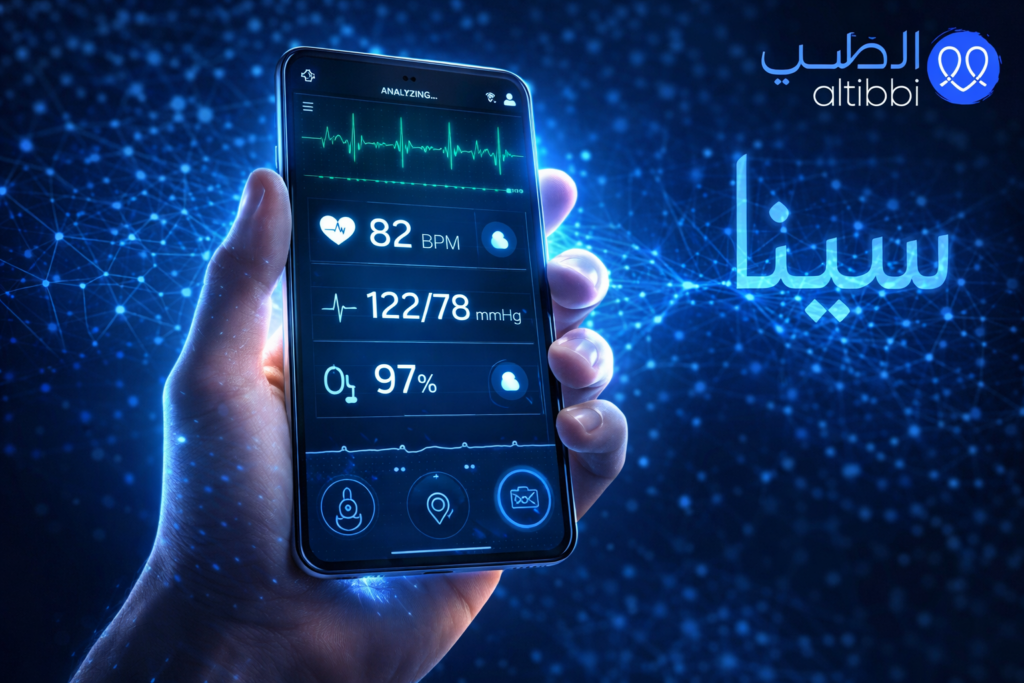
The introduction of the “+Connect” feature and AI-driven tools transformed the app from a communication tool into a diagnostic assistant. The “Tebi Clinic” app now includes a feature that can read vital signs—including heart rate, blood pressure, and oxygen saturation—simply by using the mobile phone’s camera to detect light reflections on the patient’s skin.
Furthermore, they launched “Sina,” an AI health assistant that searches thousands of trusted medical sources to provide instant answers to user queries. This move effectively positioned Altibbi as an AI-first company, capable of handling the initial triage of a patient before they even speak to a human doctor.
Great Inflection Points – Shifts in Altibbi’s Narrative
The metrics behind Altibbi validate its status as a market leader:
- 192 Million: The number of users who visit the platform annually.
- $44 Million: The amount raised in its March 2023 Series B funding round to drive growth in Saudi Arabia and Egypt.
- 12,000+: The number of accredited medical doctors across various specializations and Arab countries.
- 3 Million+: Total app downloads and successful medical consultations performed.
- $6.5 Million: The 2017 funding round that marked its transition from a regional player to a tech powerhouse.
- 10 Million+: Monthly website visitors as early as 2017.
This is where things get interesting… The company’s valuation continues to climb as it integrates deeper into the Saudi Arabian and Egyptian markets, which are the two largest economies in the region.
Data, Metrics and Milestones in Figures at Their Back – Challenges, Criticism, and Controversies
No platform of this scale is without its friction points. A review of the “Altibbi for Doctors” app on the Apple App Store reveals some technical growing pains, with some users citing “Bad UX” and bugs. Maintaining a seamless experience for 12,000 doctors across various devices (iOS 12.4 or later is required) remains a constant engineering challenge.
There is also the ever-present concern of data privacy. The platform’s privacy disclosures indicate that data such as location, contact info, and identifiers may be used for tracking and analytics. While Altibbi emphasizes that they “ensure the privacy of your health information” using the latest technology, the collection of precise location and device IDs is a point of scrutiny for privacy-conscious users.
Furthermore, the telehealth model itself faces the inherent challenge of “remote diagnosis.” As the platform notes, doctors provide a remote diagnosis “if possible,” but there are limitations to what can be achieved without a physical exam.
Where It Stands Today in the Competitive Market
Altibbi currently sits at the top of the MENA telehealth food chain, but the battlefield is crowded. Its primary competitors include:
- WebTeb: A major provider of Arabic medical content.
- Cura: A telehealth platform focusing on on-demand consultations.
- Vezeeta: A dominant player in doctor booking and pharmacy delivery.
Altibbi’s competitive advantage lies in its massive content library (2M+ pages) and its early adoption of AI. While other platforms focus on the “transaction” of booking a doctor, Altibbi has focused on the “information journey,” capturing the user at the moment they first search for a symptom.
Interesting Article: Crystal Ball System – Israel-UAE Strategic Partnership with EDGE Group for Modern Security
Predicting Altibbi’s Role in an AI-Driven Future
The future for Altibbi is clearly AI-centric. The research team is already working on deep learning approaches to automatically evaluate the quality of medical advice given on the platform.
Expect to see Altibbi evolve from a consultation platform into a comprehensive health monitoring ecosystem. With the ability to track vital signs via a smartphone camera, the next logical step is integration with wearable devices and chronic disease management. Their partnership with the Royal Health Awareness Society for chronic disease packages is a clear harbinger of this shift.
We may also see a deeper push into specialized demographics, following the success of “Altibbi Mama,” with potential apps for mental health or geriatric care.
Why Altibbi is Essential to Modern Arabic Society
Altibbi is more than a commercial success; it is a social equalizer. In a region where healthcare costs are rising and doctor-to-patient ratios are often strained, Altibbi provides a safety net.
It has been recognized by the World Economic Forum and won the Arab E-Content Award for its contribution to high-quality digital Arabic content. By providing 24/7 access to medical experts, it reduces the burden on emergency rooms and brings peace of mind to millions of households.
Ultimately, Altibbi matters because it proved that language should never be a barrier to health. It took a father’s dream of an Arabic dictionary and turned it into a digital lifeline for an entire generation.
FAQs – Frequently Asked Questions
Altibbi is a leading Arabic digital health platform that began as an Arabic medical glossary created by Dr. Abdel Aziz Labadi in 2004. In 2008, his son Jalil Labadi transformed the glossary into an online healthcare platform, and Altibbi officially launched in 2011 to provide trusted medical information and telehealth services across the MENA region.
The Altibbi app connects users with licensed doctors through text chat and voice consultations available 24/7. In addition to online consultations, it offers a vast Arabic medical knowledge base, AI-powered health assistance, and digital healthcare tools for patients and medical professionals.
Altibbi was founded by Dr. Abdel Aziz Labadi, who created the original Arabic Medical Glossary, and his son Jalil Labadi, who expanded the concept into one of the Middle East and North Africa’s largest digital healthcare platforms.
Unlike many telemedicine services that focus primarily on doctor appointments, Altibbi combines telehealth consultations, an extensive Arabic medical content library, AI-powered health assistance, electronic health record management, and partnerships with healthcare organizations. This integrated ecosystem enables users to access both reliable medical information and licensed healthcare professionals from a single platform.
Altibbi serves users across the Middle East and North Africa (MENA), with a strong presence in countries including Jordan, Saudi Arabia, the United Arab Emirates, Egypt, Kuwait, Lebanon, and Libya. The company has expanded through partnerships with governments, telecom providers, and healthcare organizations.
Altibbi integrates AI to improve digital healthcare services through features such as the Sina AI health assistant, which provides instant responses using trusted medical sources. The platform also develops AI-powered tools that support remote health assessments and assist healthcare professionals in delivering more efficient patient care.
Altibbi’s growth has been driven by strategic investment, continuous innovation, and regional expansion. The company secured multiple funding rounds, formed partnerships with governments and insurance providers, introduced AI-powered healthcare services, and expanded its network to more than 12,000 accredited doctors serving millions of users across the MENA region.
Altibbi has improved access to trusted Arabic-language healthcare by connecting patients with licensed doctors, providing reliable medical information, and expanding telemedicine services to underserved communities. Its digital health ecosystem helps bridge gaps in healthcare accessibility while supporting the region’s ongoing digital transformation in medicine.

Dwayne Paschke is a seasoned content strategist and AI automation specialist with over nine years of experience at the intersection of journalism and digital innovation. A versatile force in the media landscape, Dwayne has built a reputation as an expert content writer and investigative journalist, contributing high-impact pieces to various reputable news websites.
The post Altibbi’s App – A Family’s Medical Glossary Transformed into MENA’s $44 Million Health Empire appeared first on Disruptors Digest.
]]>The post Yousuf Hamad Al Shaibani’s Leadership in Dubai’s Digital Security and Space Sectors appeared first on Disruptors Digest.
]]>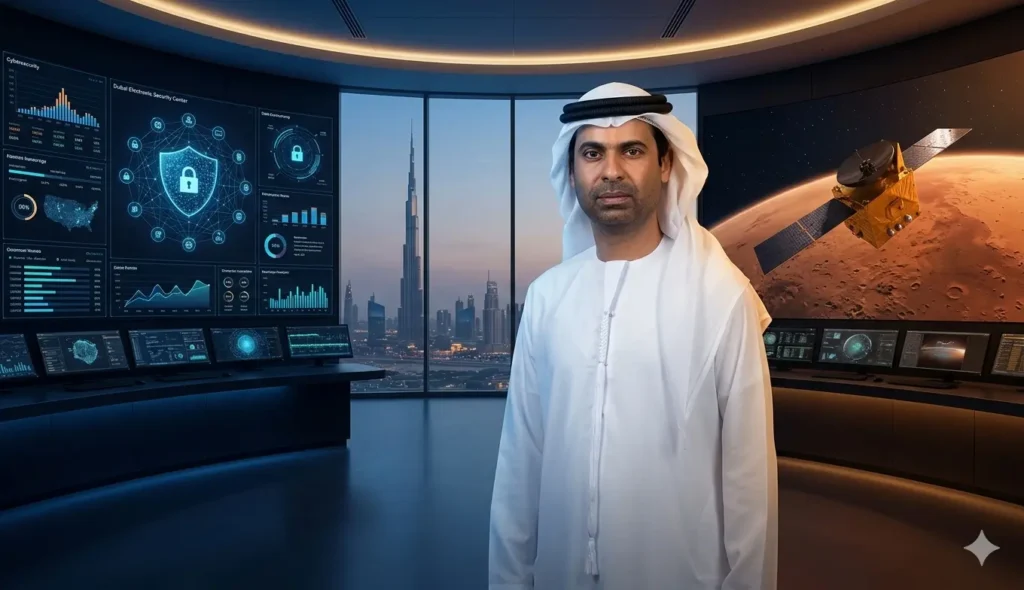
Over the past two decades, the United Arab Emirates (UAE) has evolved from a regional business hub into a global center for technology, digital transformation, cybersecurity, and space innovation. At the center of this change are two critical sectors: cybersecurity and space exploration. His Excellency Yousuf Hamad Al Shaibani serves currently as Chief Executive Officer (CEO) of the Dubai Electronic Security Center (DESC) accordingly to Global Government Cloud Platform, Vice Chairman of Mohammed Bin Rashid Space Centre (MBRSC), and Board Member of UAE Space Agency.
The UAE’s entry into the global space race requires strategic management of complex projects like the Emirates Mars Mission. Understanding the career and strategic decisions of Al Shaibani provides insight into how the UAE balances its digital safety with scientific progress.
Yousuf Hamad Al Shaibani’s Professional Background and Education
The foundation of Al Shaibani’s leadership lies in a strong technical education and over 25 years of experience in the government sector. He graduated from Etisalat University College in 1995. The institution later became part of Khalifa University following the UAE’s higher education restructuring.
To gain international expertise, he moved to the United Kingdom for postgraduate studies. In 1997, he earned a Master’s Degree in Microelectronics Systems Design from Central England University, which is now known as Birmingham City University. This specific focus on microelectronics provided him with the technical knowledge necessary to lead organizations that rely on advanced hardware and software systems.
Al Shaibani is recognized as a founding member of the Dubai Electronic Security Center. His long-term association with the organization, starting from its establishment, allowed him to shape its growth from the ground up. Before becoming the Director General, he held several senior positions and served as a member of the organization’s board of directors.
Related Article: H.E. Dr. Mohamed Al Kuwaiti – UAE Cybersecurity Strategy and His Leadership
Strategic Leadership at the Dubai Electronic Security Center (DESC)
Under the direction of Al Shaibani, DESC has become the primary authority for protecting Dubai’s information and telecommunications networks. His role as Director General and CEO involves overseeing the “cyber readiness” of the city. This is a critical task as Dubai integrates more services into its digital infrastructure through the Digital Dubai department.
Key achievements under his leadership at DESC include:
- Innovation in Cyber Readiness: His development team has created innovative platforms and software designed to detect and prevent digital threats.
- Government Integration: DESC works closely with other government entities to ensure that Dubai’s digital transformation is secure and sustainable.
- Policy Development: As a board member, Al Shaibani has contributed to the strategic policies that govern how data is handled and protected in the emirate.
Advancing the UAE Space Sector through MBRSC
In addition to his security roles, Al Shaibani serves as the Director General of the Mohammed Bin Rashid Space Centre (MBRSC). His involvement in the space sector is extensive. His leadership at MBRSC has been defined by high-profile missions that have placed the UAE on the international stage of scientific exploration.
Significant milestones in the UAE space sector led by Al Shaibani include:
- The Emirates Mars Mission (Hope Probe): Al Shaibani played a key role in the launch of this mission, which successfully reached Mars to study its atmosphere.
- Astronaut Program: He was instrumental in the mission that sent the first Emirati astronaut to space, a move that inspired a new generation of scientists in the region.
- Satellite Technology: Under his guidance, MBRSC has focused on Earth observation and remote sensing technologies, which provide vital data for urban planning and environmental monitoring.
These projects demonstrate a strategic decision to move the UAE economy beyond oil and toward a knowledge-based system driven by science and technology.
National Boards and Councils
Al Shaibani’s influence extends beyond individual centers to national-level policymaking. He holds seats on several influential boards that coordinate the UAE’s technological strategy. These roles ensure that the local successes in Dubai are aligned with national goals.
His current board memberships include:
- UAE Cyber Security Council: This body coordinates cybersecurity efforts across all seven emirates to ensure a unified defense against digital threats.
- UAE Space Agency: Serving on this board allows Al Shaibani to contribute to the overarching national space strategy, including the management of the National Space Fund.
- MBRSC and DESC Boards: He continues to serve on the boards of the organizations he leads, providing continuity and long-term vision.
By holding these positions, Al Shaibani acts as a bridge between operational execution at the centers and strategic planning at the federal level.
The Impact on Dubai’s Economic and Digital Strategy
The dual focus on security and space has a direct impact on the UAE’s economy. Through Digital Dubai and MBRSC, Al Shaibani oversees projects that create high-value jobs and attract international investment in the tech sector. The space sector, in particular, has seen the emergence of a “Space Economy” involving private startups and international collaborations.
For example, the MBRSC manages initiatives such as:
- Space Data Center: A hub for processing and sharing space-related data with international partners.
- National Space Academy: A program designed to train the next generation of Emirati engineers and scientists.
- Startup Support: Large events like Cybertech Global UAE-Dubai provide platforms for startups to interact with government leaders like Al Shaibani to find growth opportunities.
These efforts ensure that Dubai remains a leader in the global “smart city” movement, where technology is used to improve the quality of life for all residents.
Also Read: Zach Perret – Architect Behind Plaid
Key Career Events – Timeline
The following timeline highlights the professional progression of Yousuf Hamad Al Shaibani:
- 1995: Graduated from Etisalat University College (KUSTAR) in Sharjah.
- 1997: Earned a Master’s Degree in Microelectronics Systems Design from Central England University (UK).
- Founding Years: Served as a founding member of both DESC and MBRSC, helping to establish the core infrastructure for Dubai’s cybersecurity and space exploration.
- 2018: Represented DESC at major international events like HITBSecConf2018 in Dubai to discuss regional security challenges.
- 2021-2022: Oversaw the successful progress of the Emirates Mars Mission and participated in global summits like Cybertech Global to promote the UAE’s digital security.
- Present: Continues to lead DESC and MBRSC while serving on the boards of the UAE Space Agency and the UAE Cyber Security Council.
Related Article: UAE Cyber Pulse Initiative – National Cybersecurity Strategy
Future of Emirati Technology and Security
Looking ahead, the work of Al Shaibani suggests that the UAE will continue to prioritize technological independence. The development of local software and satellite technology reduces reliance on foreign systems and builds local expertise. The focus on “cyber readiness” will likely expand as artificial intelligence (AI) and the Internet of Things (IoT) become more common in Dubai’s infrastructure.
In the space sector, the UAE is moving toward more complex exploration and “Space Economy” projects, including the potential for long-term space research and commercial space activities.
Editorial Note
This article has been prepared using information published by official UAE government organizations, institutional biographies, public announcements, and reputable news sources. Leadership positions and organizational responsibilities are subject to change; readers are encouraged to consult official government websites for the latest updates.
Frequently Asked Questions – FAQs
He is the Director General of the Dubai Electronic Security Center (DESC) and the Director General of the Mohammed Bin Rashid Space Centre (MBRSC). He also serves on the boards of the UAE Space Agency and the UAE Cyber Security Council.
He graduated from Etisalat University College (now Khalifa University) in 1995 and received a Master’s Degree in Microelectronics Systems Design from Central England University (now Birmingham City University) in the UK in 1997.
DESC was established to strengthen Dubai’s cybersecurity infrastructure, protect its digital networks, and ensure the city’s readiness against electronic threats.
As a founding member and Director General of MBRSC, he played a key role in the Emirates Mars Mission and the program that sent the first Emirati astronaut into space.
DESC is part of the Digital Dubai department, which aims to digitize all aspects of life in the city. Al Shaibani’s leadership ensures that this digital transition is secure and protected from cyberattacks.
It refers to the commercial and economic activities related to space exploration, including the National Space Fund, space research conferences, and supporting startups in the space sector.
He has over 25 years of experience serving in the government sector and has been with DESC since its establishment.
Dwayne Paschke is a seasoned content strategist and AI automation specialist with over nine years of experience at the intersection of journalism and digital innovation. A versatile force in the media landscape, Dwayne has built a reputation as an expert content writer and investigative journalist, contributing high-impact pieces to various reputable news websites.
The post Yousuf Hamad Al Shaibani’s Leadership in Dubai’s Digital Security and Space Sectors appeared first on Disruptors Digest.
]]>