The post Amazon Expands Health AI Assistant to Main Platform as Tech Giants Accelerate AI Healthcare Push appeared first on Disruptors Digest.
]]>
Technology giant, Amazon, is expanding its artificial intelligence-powered healthcare assistant, Health AI, to a broader audience by integrating it directly into the company’s website and mobile application.
The move marks a significant step in Amazon’s growing ambition to reshape digital healthcare services using AI-powered tools.
Previously, the assistant was only available through One Medical, the primary-care provider Amazon acquired for $3.9 billion in 2023, according to reporting from TechCrunch. With the latest rollout, Amazon is making Health AI accessible to a much larger group of users through its main digital ecosystem.
The expansion allows individuals to interact with Health AI directly through Amazon’s platform without needing to be Prime subscribers or members of One Medical.
What Amazon’s Health AI Assistant Can Do
Amazon’s Health AI assistant is designed to function as a digital healthcare companion capable of answering health-related questions, explaining medical information, and assisting users in navigating healthcare services.
According to Amazon’s announcement, the AI system can help users:
- Understand lab test results
- Interpret health records
- Renew prescriptions
- Schedule medical appointments
- Connect with healthcare providers
The assistant can also provide general guidance about symptoms and treatments, helping users better understand potential health conditions before seeking professional care.
Users may ask questions such as explaining cholesterol results or seeking advice about common symptoms like congestion, sore throat, or allergies.
Through integration with the Health Information Exchange – a secure nationwide network used to share patient medical data—Health AI can access a user’s medical history with permission.
This allows the system to provide more personalized responses based on real medical records, including diagnoses, medications, and laboratory results.
Privacy and Security Concerns Around AI Healthcare
Despite the convenience offered by AI-driven healthcare tools, privacy experts have raised concerns about how sensitive medical data may be handled by technology companies.
Health data is among the most sensitive forms of personal information, and researchers have warned users to be cautious when sharing medical details with AI systems.
Amazon states that conversations with Health AI occur within a HIPAA-compliant environment, referring to the standards established under the Health Insurance Portability and Accountability Act, which regulates how healthcare data is protected in the United States.
According to the company, all interactions are protected through encryption and strict access controls designed to prevent unauthorized access to patient information.
Amazon also emphasized that it trains its AI models using abstracted data patterns rather than identifiable patient information. For example, if many users ask about medication interactions, the system may learn from these patterns while keeping individual identities anonymous.
However, the company has not yet provided detailed information on exactly how conversation data is encrypted or who may have internal access to these interactions.
Integration With One Medical Providers
In addition to answering questions, Health AI can connect users directly with medical professionals from One Medical.
For Amazon Prime members in the United States, the service includes up to five free direct-message consultations with One Medical providers for more than 30 common health conditions.
These conditions include cold and flu symptoms, urinary tract infections, allergies, pink eye, acid reflux, hair loss, and certain skin concerns.
Users who are not Prime members can still access One Medical physicians through Amazon’s pay-per-visit telehealth option, allowing them to receive professional medical guidance without maintaining an ongoing subscription.
To use the new system, users must sign in to their Amazon Health profile and start a conversation with the assistant through the Amazon website or mobile application.
AI Competition Intensifies in Healthcare
Amazon’s expansion of Health AI reflects a broader trend in which major technology companies are rapidly entering the digital healthcare sector.
In early 2026, OpenAI introduced ChatGPT Health, a version of its chatbot specifically designed to address medical questions.
Shortly afterward, AI company Anthropic launched Claude for Healthcare, another AI-powered system focused on assisting with medical information and healthcare workflows.
These developments highlight how artificial intelligence is increasingly being integrated into healthcare services, with companies competing to build tools that improve patient access to medical information while reducing pressure on traditional healthcare systems.
Future of AI in Healthcare
Amazon’s Health AI initiative represents another major step in the transformation of healthcare through artificial intelligence. By combining digital assistants with telehealth services and patient data systems, companies are attempting to create more accessible healthcare experiences.
However, as AI healthcare tools become more widespread, issues surrounding privacy, data protection, and medical accuracy will remain critical concerns for regulators and users alike.
For now, Amazon’s expansion of Health AI signals that the technology industry’s race to redefine healthcare through artificial intelligence is only just beginning.
FAQs – Frequently Asked Questions
Amazon Health AI is an artificial intelligence-powered healthcare assistant integrated into Amazon’s website and mobile app. It helps users understand medical information, interpret lab results, answer health-related questions, connect with healthcare providers, renew prescriptions, and schedule medical appointments.
Yes. Amazon has expanded Health AI beyond One Medical members, making it accessible through the Amazon website and mobile application. Users no longer need a One Medical membership or an Amazon Prime subscription to access the basic AI healthcare assistant, although certain telehealth benefits remain exclusive to eligible users.
Amazon Health AI can explain laboratory test results, interpret medical records, answer general health questions, provide educational information about symptoms and treatments, help users renew prescriptions, schedule appointments, and connect them with healthcare providers when appropriate.
With a user’s permission, Amazon Health AI can access information from connected Health Information Exchange (HIE) systems to provide more personalized responses. This may include reviewing medical history, diagnoses, medications, and laboratory results to offer context-aware healthcare guidance.
Amazon states that Health AI operates within a HIPAA-compliant environment designed to protect sensitive healthcare information. According to the company, user interactions are secured through encryption, access controls, and privacy safeguards that comply with U.S. healthcare data protection regulations.
One Medical is Amazon’s primary healthcare service that provides access to licensed medical professionals through in-person and virtual care. Health AI serves as an AI-powered assistant that helps users understand medical information and navigate healthcare services, while One Medical providers deliver professional medical diagnosis, treatment, and clinical care.
Amazon Health AI focuses on integrating AI assistance with Amazon’s healthcare ecosystem and One Medical services. ChatGPT Health and Claude for Healthcare are AI-powered healthcare assistants developed by OpenAI and Anthropic, respectively, with their own approaches to medical information, clinical workflows, and healthcare support. All three reflect the growing use of artificial intelligence to improve access to healthcare information.
The primary concerns include protecting sensitive medical information, ensuring compliance with healthcare privacy regulations, preventing unauthorized access to patient data, maintaining transparency in AI decision-making, and ensuring that AI-generated health information complements rather than replaces advice from qualified healthcare professionals. Users should always consult licensed medical providers for diagnosis, treatment, or medical emergencies.

Dwayne Paschke is a seasoned content strategist and AI automation specialist with over nine years of experience at the intersection of journalism and digital innovation. A versatile force in the media landscape, Dwayne has built a reputation as an expert content writer and investigative journalist, contributing high-impact pieces to various reputable news websites.
The post Amazon Expands Health AI Assistant to Main Platform as Tech Giants Accelerate AI Healthcare Push appeared first on Disruptors Digest.
]]>The post Dr. Hani Nachawati from American Hospital Dubai – Rare Jaw Tumor Surgery appeared first on Disruptors Digest.
]]>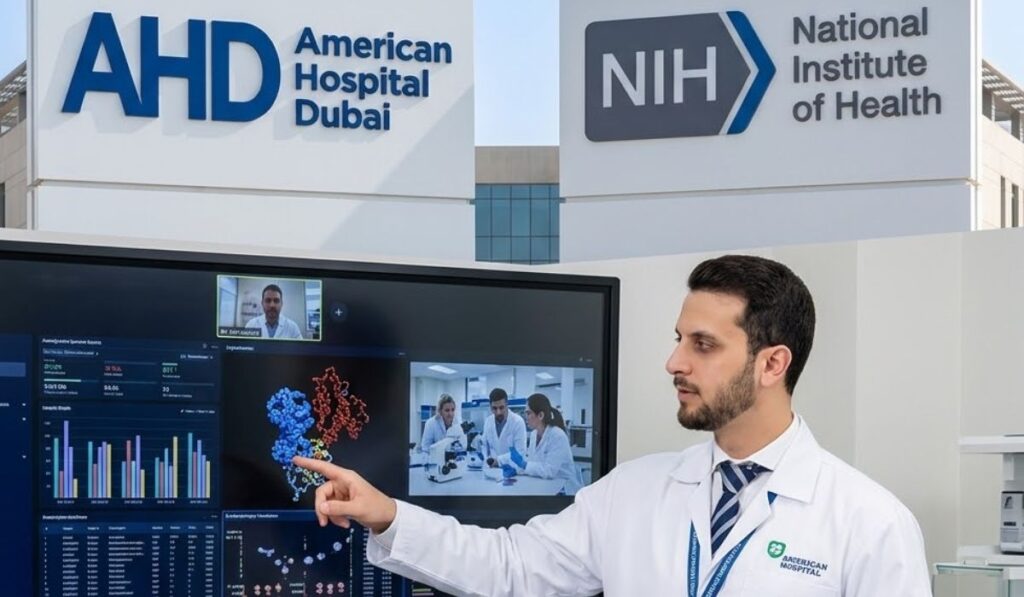
Dubai’s American Hospital Dubai has successfully performed a rare and highly complex surgical procedure to remove and reconstruct a patient’s jaw affected by an uncommon tumor, marking an important milestone in advanced medical care in the UAE.
The operation involved treating an odontogenic myxoma, a rare benign tumor that forms in the jawbone and originates from tissues associated with tooth development.
According to clinical information published by the National Institutes of Health, odontogenic myxoma is an uncommon tumor that can grow aggressively within the jaw and often requires complex surgical management.
The procedure carried out in Dubai required highly specialised surgical expertise and advanced planning technology, making it one of the most sophisticated operations of its kind performed in the country.
Rare Tumor Detected After Routine Examination
The patient, a female who had previously undergone tumor treatment in the United Kingdom in 2000, was initially treated through tumor excision and tissue removal. Years later, during a routine dental check-up, panoramic radiographs revealed unusual changes in the jawbone.
Concerned about the findings, the patient sought further evaluation at American Hospital Dubai, where doctors conducted extensive diagnostic assessments including advanced imaging scans, clinical examinations, and a biopsy.
The tests confirmed the presence of a large recurrent tumor affecting the left mandible, the lower jawbone responsible for essential functions such as chewing, speaking, and facial structure support.
Complex Surgical Plan Developed
Due to the size and progression of the tumor, Dr. Hani Nachawati, Consultant Oral Surgeon and Implantologist at American Hospital Dubai, determined that the most effective treatment would require a hemimandibulectomy.
A hemimandibulectomy is a surgical procedure that removes a portion or half of the mandible, or lower jawbone.
According to the American Association of Oral and Maxillofacial Surgeons, such procedures are typically used to treat severe jaw tumors, infections, trauma, or congenital conditions.
In this particular case, surgeons performed a left hemimandibulectomy while preserving the mandibular condyle, a critical part of the jaw joint that connects the jawbone to the skull through the temporomandibular joint (TMJ).
The preservation of this structure was essential for maintaining jaw movement and facial symmetry.
Advanced 3D Surgical Planning
To ensure maximum precision, the surgical team used 3D CAD/CAM planning technology, allowing doctors to create a detailed virtual surgical plan before entering the operating room.
Such digital surgical planning has become increasingly important in complex reconstructive procedures, enabling surgeons to simulate tumor removal and design the reconstruction process in advance.
According to research published by the National Library of Medicine, computer-assisted surgical planning significantly improves accuracy in maxillofacial reconstruction procedures.
Jaw Reconstruction Using Microvascular Surgery
After removing the affected section of the jaw, surgeons immediately reconstructed the bone using a fibular free flap, a sophisticated microvascular technique widely used in reconstructive surgery.
The fibular free flap involves transferring a segment of bone from the patient’s lower leg (fibula) to replace the removed jawbone. Blood vessels are then carefully reconnected under a microscope to restore blood circulation to the transplanted bone.
This technique helps restore both functional movement and facial structure, enabling patients to regain the ability to chew, speak, and maintain natural facial contours.
Multidisciplinary Surgical Collaboration
The demanding 12-hour surgery was carried out by a multidisciplinary team at American Hospital Dubai, combining expertise from multiple specialties.
The team included Dr. Hani Nachawati, along with ENT surgeon Dr. Roy, and plastic surgeons Dr. Tracia and Dr. Ali, supported by anesthesiology and intensive care specialists.
Such multidisciplinary collaboration is essential for complex head and neck surgeries, where surgeons must coordinate tumor removal, reconstruction, and patient recovery simultaneously.
Successful Recovery and Medical Innovation
Following the procedure, doctors reported that both the surgery and the post-operative recovery proceeded smoothly. The patient achieved strong functional outcomes along with a natural aesthetic appearance.
Medical experts note that procedures of this complexity highlight the growing capabilities of hospitals in the UAE to perform advanced surgical treatments that were once only available in major global medical centers.
American Hospital Dubai has built a strong reputation for treating complex diseases through advanced technology, specialised surgical teams, and multidisciplinary medical care.
The successful treatment of this rare tumor case demonstrates how cutting-edge surgical techniques, combined with detailed digital planning and collaboration among specialists, can significantly improve patient outcomes in complex medical conditions.
As healthcare innovation continues to advance, hospitals in the UAE are increasingly contributing to the development of world-class medical capabilities across the region.
FAQs – Frequently Asked Questions
Dr. Hani Nachawati is a consultant specializing in oral and maxillofacial surgery at American Hospital Dubai. He is experienced in treating complex facial conditions, including jaw tumors, facial trauma, reconstructive surgery, and advanced oral surgical procedures using modern surgical techniques.
The patient was diagnosed with a rare jaw tumor that required complex surgical removal followed by advanced reconstructive procedures. Such tumors can affect the jawbone, surrounding tissues, and facial function, making specialized treatment essential for successful outcomes.
Advanced jaw reconstruction involves restoring the structure and function of the jaw after tumor removal or severe injury. Surgeons may use digital surgical planning, 3D imaging, patient-specific implants, bone grafts, or microvascular free-flap reconstruction to achieve accurate functional and aesthetic results.
Digital surgical planning allows surgeons to create detailed 3D models before the procedure, helping them visualize the anatomy, design personalized reconstruction plans, improve surgical precision, reduce operating time, and enhance patient recovery.
Symptoms of a jaw tumor can include persistent jaw swelling, facial pain, numbness, difficulty chewing, loose teeth, changes in facial appearance, or limited jaw movement. Since symptoms vary depending on the tumor type, early evaluation by a specialist is important for accurate diagnosis and timely treatment.
Complex jaw tumor treatment often requires collaboration between oral and maxillofacial surgeons, radiologists, oncologists, pathologists, anesthesiologists, reconstructive surgeons, and rehabilitation specialists. This multidisciplinary approach helps ensure comprehensive treatment planning, surgical precision, and improved long-term patient outcomes.
Modern reconstructive surgery helps restore jaw function, facial symmetry, speech, chewing ability, and overall quality of life. Personalized reconstruction techniques also reduce complications and support better cosmetic and functional recovery.
American Hospital Dubai is known for offering advanced medical technologies, experienced multidisciplinary teams, and specialized treatment for complex conditions across multiple medical specialties. Its focus on innovation, digital healthcare solutions, and patient-centered care enables it to manage challenging surgical cases using internationally recognized standards.
Dwayne Paschke is a seasoned content strategist and AI automation specialist with over nine years of experience at the intersection of journalism and digital innovation. A versatile force in the media landscape, Dwayne has built a reputation as an expert content writer and investigative journalist, contributing high-impact pieces to various reputable news websites.
The post Dr. Hani Nachawati from American Hospital Dubai – Rare Jaw Tumor Surgery appeared first on Disruptors Digest.
]]>The post Altibbi’s App – A Family’s Medical Glossary Transformed into MENA’s $44 Million Health Empire appeared first on Disruptors Digest.
]]>
Imagine a region where 400 million people speak the same language (Arabic), yet accurate, life-saving information in that tongue was once a digital desert. In the mid-2000s, an Arabic-speaking patient looking for medical advice online was more likely to find superstition than science. Today, a single platform has bridged that gap, connecting millions to licensed physicians in minutes via a smartphone.
This is not just a story of a successful startup; it is the chronicle of how Altibbi transformed the healthcare landscape of the Middle East and North Africa (MENA) from a scattered collection of paper dictionaries into a $44 million AI-powered health empire.
Altibbi App As A Digital Giant in Medical
The genesis of Altibbi is a story of intergenerational vision, beginning not in a Silicon Valley garage, but with a doctor’s return to his roots. In 2004, after years of medical practice in Germany, Dr. Abdel Aziz Labadi returned to the Arab world and was immediately struck by a profound disparity: the lack of high-quality medical references in Arabic.
He began with a humble yet monumental task: creating the “Medical Glossary,” a comprehensive Arabic medical reference designed to simplify complex terminology for the average citizen. For four years, this glossary existed as a bridge between professional medical jargon and public understanding.
However, it was his son, Jalil Labadi, who recognized that a dictionary, no matter how thorough, was static. In 2008, Jalil saw the burgeoning potential of the digital age to turn his father’s glossary into a living, breathing ecosystem. He didn’t just want to define “diabetes” or “hypertension”; he wanted to create a platform where a person in a remote village in Egypt or a high-rise in Dubai could get real-time answers in their mother tongue.
The early days were defined by “sweat equity” and family support, as the founders relied on self-funding and small contributions from friends and relatives to keep the servers running and the mission alive.
Also Read: RZAM App – The AI-Powered Defense for UAE Digital Security | Cybersecurity
Milestones that Launched the Brand
If 2008 was the year of the idea, 2011 was the year of the mission. Altibbi officially launched from Amman, Jordan, with a clear objective: providing accurate medical information from trusted sources to a region hungry for it.
The first major signal of success came in 2012 when the platform moved beyond one-way information and introduced a free Q&A service. Suddenly, users weren’t just reading articles; they were asking text-based questions and receiving answers from specialized doctors at no cost. This established the “trust equity” that would become the company’s most valuable asset.
If you’re studying disruptive business models, this is one worth watching. By 2015, the institutional world took notice. Altibbi secured its first major investment round from Middle East Venture Partners (MEVP) and Dash Ventures. This capital was the fuel needed to move beyond Jordan, allowing the company to expand its user base across Saudi Arabia, the UAE, Kuwait, and Lebanon.
The breakthrough wasn’t just geographical; it was technological. In 2016, Altibbi activated its remote consultation services, effectively becoming the “Uber for Doctors” in the MENA region. For the first time, users could contact a doctor at any time, from any place, via telephone or the internet.
Altibbi’s Visionaries, Leadership And Management
At the helm is Jalil Labadi, a leader whose philosophy centers on “changing the narrative” of the patient-doctor relationship. Labadi’s vision is rooted in social innovation—viewing healthcare not just as a service, but as a right that should be cheaper and more accessible than traditional in-person consultations.
Under his leadership, Altibbi has adopted a “scientific-first” approach. This isn’t just a tech company; it’s a research entity. The leadership team has authored and published various research papers exploring how Artificial Intelligence can assist doctors in making more accurate medical decisions.
They have also fostered a culture of continuous improvement, as evidenced by the launch of the “Tebi Academy.” In partnership with Primary Care International, this training platform ensures that the 12,000+ accredited doctors on the platform are constantly enhancing their medical knowledge.
How Altibbi’s Telehealth, Ecosystem and Content Engines Function
Strip away the “HealthTech” labels, and Altibbi is a dual-sided marketplace that solves a massive logistics problem.
- For Patients: It offers 24/7 access to licensed doctors through the Altibbi App. Users can choose between a voice call or a text chat for a “symbolic fee” (subscriptions starting around $19.99).
- For Doctors: It provides the “Tebi Clinic,” a sophisticated patient management system. Doctors use this “e-clinic” to manage patient files, bookings, and electronic health records (EHR) online.
- The Revenue Model: Beyond direct consumer subscriptions, Altibbi operates a robust B2B and partnership model. They have partnered with major insurance providers like Tawuniya in Saudi Arabia to cover telehealth consultations for insured members. They also collaborate with multinational brands like Reckitt (owners of Gaviscon and Durex) to raise health awareness and provide specialized consultations.
The platform’s sheer breadth is staggering. It hosts over two million pages of medical content, including a medical glossary, news, and specialized sections for everything from “Altibbi Mama” (prenatal/postnatal care) to sexual health.
Blueprint for Altibbi’s Expansion And Scaling Too Rapidly
Altibbi’s scaling strategy was a masterclass in “Partnership-Led Growth.” Instead of trying to acquire every user individually, they partnered with governments and telecom giants.
In Egypt, Altibbi collaborated with the Ministry of Health and the Ministry of Communications to provide 24/7 electronic medical consultations. They worked with Telecom Egypt and the United Nations Development Program (UNDP) on a massive “1 Million Free Consultations” campaign targeting remote areas with limited healthcare access.
In Libya, they teamed up with Libyana Mobile Phone Company, offering thousands of daily consultations via SMS to its subscribers. These partnerships allowed Altibbi to penetrate markets at a speed that traditional marketing could never achieve.
For entrepreneurs, there’s a lesson hidden here: Scale doesn’t always come from more ads; it comes from becoming an essential part of the existing infrastructure.
Moments That Changed Everything
Every titan has its “Great Pivot.” For Altibbi, that moment arrived in 2021 with the full integration of Artificial Intelligence.
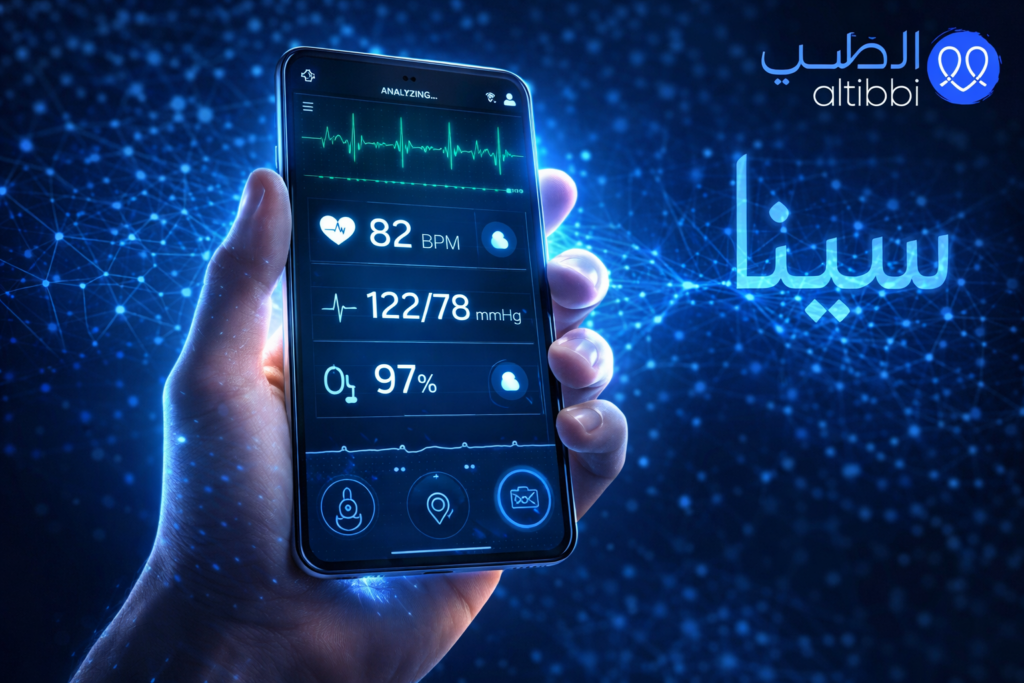
The introduction of the “+Connect” feature and AI-driven tools transformed the app from a communication tool into a diagnostic assistant. The “Tebi Clinic” app now includes a feature that can read vital signs—including heart rate, blood pressure, and oxygen saturation—simply by using the mobile phone’s camera to detect light reflections on the patient’s skin.
Furthermore, they launched “Sina,” an AI health assistant that searches thousands of trusted medical sources to provide instant answers to user queries. This move effectively positioned Altibbi as an AI-first company, capable of handling the initial triage of a patient before they even speak to a human doctor.
Great Inflection Points – Shifts in Altibbi’s Narrative
The metrics behind Altibbi validate its status as a market leader:
- 192 Million: The number of users who visit the platform annually.
- $44 Million: The amount raised in its March 2023 Series B funding round to drive growth in Saudi Arabia and Egypt.
- 12,000+: The number of accredited medical doctors across various specializations and Arab countries.
- 3 Million+: Total app downloads and successful medical consultations performed.
- $6.5 Million: The 2017 funding round that marked its transition from a regional player to a tech powerhouse.
- 10 Million+: Monthly website visitors as early as 2017.
This is where things get interesting… The company’s valuation continues to climb as it integrates deeper into the Saudi Arabian and Egyptian markets, which are the two largest economies in the region.
Data, Metrics and Milestones in Figures at Their Back – Challenges, Criticism, and Controversies
No platform of this scale is without its friction points. A review of the “Altibbi for Doctors” app on the Apple App Store reveals some technical growing pains, with some users citing “Bad UX” and bugs. Maintaining a seamless experience for 12,000 doctors across various devices (iOS 12.4 or later is required) remains a constant engineering challenge.
There is also the ever-present concern of data privacy. The platform’s privacy disclosures indicate that data such as location, contact info, and identifiers may be used for tracking and analytics. While Altibbi emphasizes that they “ensure the privacy of your health information” using the latest technology, the collection of precise location and device IDs is a point of scrutiny for privacy-conscious users.
Furthermore, the telehealth model itself faces the inherent challenge of “remote diagnosis.” As the platform notes, doctors provide a remote diagnosis “if possible,” but there are limitations to what can be achieved without a physical exam.
Where It Stands Today in the Competitive Market
Altibbi currently sits at the top of the MENA telehealth food chain, but the battlefield is crowded. Its primary competitors include:
- WebTeb: A major provider of Arabic medical content.
- Cura: A telehealth platform focusing on on-demand consultations.
- Vezeeta: A dominant player in doctor booking and pharmacy delivery.
Altibbi’s competitive advantage lies in its massive content library (2M+ pages) and its early adoption of AI. While other platforms focus on the “transaction” of booking a doctor, Altibbi has focused on the “information journey,” capturing the user at the moment they first search for a symptom.
Interesting Article: Crystal Ball System – Israel-UAE Strategic Partnership with EDGE Group for Modern Security
Predicting Altibbi’s Role in an AI-Driven Future
The future for Altibbi is clearly AI-centric. The research team is already working on deep learning approaches to automatically evaluate the quality of medical advice given on the platform.
Expect to see Altibbi evolve from a consultation platform into a comprehensive health monitoring ecosystem. With the ability to track vital signs via a smartphone camera, the next logical step is integration with wearable devices and chronic disease management. Their partnership with the Royal Health Awareness Society for chronic disease packages is a clear harbinger of this shift.
We may also see a deeper push into specialized demographics, following the success of “Altibbi Mama,” with potential apps for mental health or geriatric care.
Why Altibbi is Essential to Modern Arabic Society
Altibbi is more than a commercial success; it is a social equalizer. In a region where healthcare costs are rising and doctor-to-patient ratios are often strained, Altibbi provides a safety net.
It has been recognized by the World Economic Forum and won the Arab E-Content Award for its contribution to high-quality digital Arabic content. By providing 24/7 access to medical experts, it reduces the burden on emergency rooms and brings peace of mind to millions of households.
Ultimately, Altibbi matters because it proved that language should never be a barrier to health. It took a father’s dream of an Arabic dictionary and turned it into a digital lifeline for an entire generation.
FAQs – Frequently Asked Questions
Altibbi is a leading Arabic digital health platform that began as an Arabic medical glossary created by Dr. Abdel Aziz Labadi in 2004. In 2008, his son Jalil Labadi transformed the glossary into an online healthcare platform, and Altibbi officially launched in 2011 to provide trusted medical information and telehealth services across the MENA region.
The Altibbi app connects users with licensed doctors through text chat and voice consultations available 24/7. In addition to online consultations, it offers a vast Arabic medical knowledge base, AI-powered health assistance, and digital healthcare tools for patients and medical professionals.
Altibbi was founded by Dr. Abdel Aziz Labadi, who created the original Arabic Medical Glossary, and his son Jalil Labadi, who expanded the concept into one of the Middle East and North Africa’s largest digital healthcare platforms.
Unlike many telemedicine services that focus primarily on doctor appointments, Altibbi combines telehealth consultations, an extensive Arabic medical content library, AI-powered health assistance, electronic health record management, and partnerships with healthcare organizations. This integrated ecosystem enables users to access both reliable medical information and licensed healthcare professionals from a single platform.
Altibbi serves users across the Middle East and North Africa (MENA), with a strong presence in countries including Jordan, Saudi Arabia, the United Arab Emirates, Egypt, Kuwait, Lebanon, and Libya. The company has expanded through partnerships with governments, telecom providers, and healthcare organizations.
Altibbi integrates AI to improve digital healthcare services through features such as the Sina AI health assistant, which provides instant responses using trusted medical sources. The platform also develops AI-powered tools that support remote health assessments and assist healthcare professionals in delivering more efficient patient care.
Altibbi’s growth has been driven by strategic investment, continuous innovation, and regional expansion. The company secured multiple funding rounds, formed partnerships with governments and insurance providers, introduced AI-powered healthcare services, and expanded its network to more than 12,000 accredited doctors serving millions of users across the MENA region.
Altibbi has improved access to trusted Arabic-language healthcare by connecting patients with licensed doctors, providing reliable medical information, and expanding telemedicine services to underserved communities. Its digital health ecosystem helps bridge gaps in healthcare accessibility while supporting the region’s ongoing digital transformation in medicine.
Dwayne Paschke is a seasoned content strategist and AI automation specialist with over nine years of experience at the intersection of journalism and digital innovation. A versatile force in the media landscape, Dwayne has built a reputation as an expert content writer and investigative journalist, contributing high-impact pieces to various reputable news websites.
The post Altibbi’s App – A Family’s Medical Glossary Transformed into MENA’s $44 Million Health Empire appeared first on Disruptors Digest.
]]>