The post Inside the Foodics POS Story – Reviews, History, Vision and Ecosystem appeared first on Disruptors Digest.
]]>
Six billion orders. That is the staggering volume of transactions that have flowed through a single digital pipeline since 2014, transforming what was once a landscape of “organized chaos” into a data-driven frontier for the Middle East’s food and beverage industry.
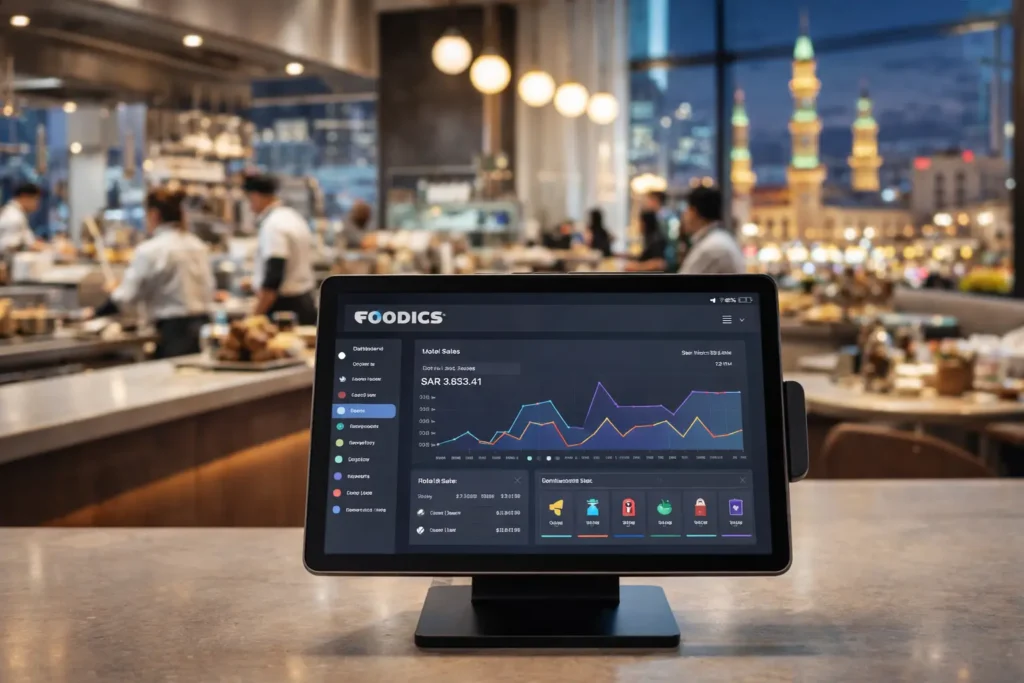
While diners see a sleek iPad at the counter, the reality behind the screen is a complex, multi-billion-dollar infrastructure that has become the silent nervous system for over 30,000 restaurants, cafes, and cloud kitchens.
In the high-stakes world of hospitality tech, Foodics is no longer just a startup; it is a regional heavyweight attempting to solve the oldest problem in the business: how to stop a kitchen from burning cash.
Two Students and a Paper Problem
The story did not begin in a boardroom, but in the crowded local cafes of Saudi Arabia. In 2014, Ahmad Al-Zaini and Mosab Al-Othmani, then students, noticed a recurring friction point: the static nature of the industry. Every time a restaurant wanted to change a price or add a seasonal special, they had to reprint physical menus. Digitalization was non-existent; the “backend” was often a stack of paper receipts and a prayer.
“We sensed there was a lack of digitalization in the Food and Beverage sector, especially in the ordering process,” Al-Zaini recalls. The initial spark was simple: digital tablets for menus. However, the founders quickly realized that a digital menu was merely a cosmetic fix for a structural crisis. To truly disrupt the market, they needed to build a cloud-based “one-stop-shop” that could handle everything from the first customer click to the final supplier payment.
Building the Cloud Architecture
Transitioning from a digital menu to a comprehensive Point of Sale (POS) and Restaurant Management System (RMS) required more than just code; it required a fundamental shift in how Saudi entrepreneurs viewed their data. Operating out of Riyadh, Al-Zaini (CEO) and Al-Othmani (CTO) began pitching a cloud-based future where a restaurant owner could manage an entire franchise from an iPad.
The early days were defined by the struggle to bridge the gap between “front of house” service and “back office” logistics. By moving the POS to the cloud, Foodics allowed real-time synchronization that was previously impossible for small food trucks or even established fast-food chains. The success signals came early as thousands of businesses across the Middle East, starving for efficiency, began swapping their legacy systems for the iPad-based solution.
Also Read: Mohamad Ballout With Kitopi Turned Empty Kitchens Into a Billion-Dollar Machine
Vision And A Complete Ecosystem
Under the leadership of Al-Zaini, Foodics has evolved into an ambitious “restaurant management ecosystem”. The leadership style is rooted in aggressive expansion and local presence; the company has invested heavily in human support on the ground in markets like the UAE, Egypt, and Jordan to build trust within the F&B community.
The vision is clear: to move beyond the kitchen. UAE Country Manager Niharika describes the industry as “organized chaos” and positions Foodics as the bridge to operational efficiency. This vision has recently expanded toward the broader hospitality sector, including hotels, through strategic partnerships with government entities.
How the Money Moves
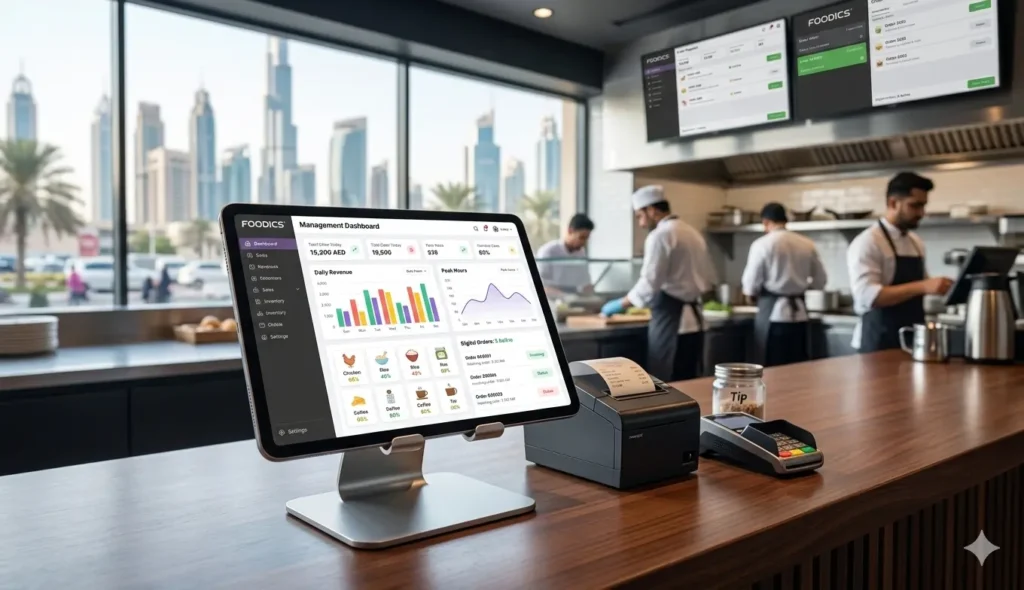
Foodics operates on a Software-as-a-Service (SaaS) model, with pricing starting at approximately $54 (or £42) per user, per month. This subscription revenue is the bedrock, but the real value lies in its modularity. The platform isn’t just one app; it is a marketplace of over 100 integrations.
The product suite is deep:
- Foodics Pay: An integrated payment solution allowing secure digital and card transactions.
- Inventory Management: Automated tracking that notifies owners when stock is low, reducing waste and manual errors.
- Accounting & HR: A dedicated dashboard for tracking bank balances (up to 10 accounts), profit/loss flow charts, and even employee loans and nationalities.
- Foodics One: A single-device solution with a built-in cashier for micro-retailers.
By integrating with procurement platforms like Suplyd, Foodics can automate the entire supply chain, theoretically eliminating human error in ordering raw materials.
The Accelerator of a Global Crisis
While many businesses crumbled during the 2020 pandemic, the hospitality industry’s shift toward e-commerce and take-out created a massive market opportunity for Foodics. “We witnessed a significant acceleration in the digitization of operations,” says Al-Zaini.
The company pivoted quickly to support cloud kitchens and launched Foodics PAY to meet the sudden surge in demand for contactless digital payments. This period proved that digital tools were no longer a luxury but a survival requirement. Beyond the pandemic, the company has shown a knack for community-driven breakthroughs, such as replacing hardware for free for UAE customers affected by recent floods.
Related Article: Calo’s Case Study in Customer-Obsessed Culture and Rapid Scaling
The Real World Reality Check – Foodics Reviews
Despite its meteoric growth and a high 4.5/5 rating on some software comparison sites when you search for Foodics reviews, actually Foodics faces a vocal segment of dissatisfied users. On platforms like Trustpilot, the company holds a 2.3/5 rating, with critics citing a sharp disconnect between “best-in-class” marketing and “nearly dead” ground support.
Investigation into user experiences reveals recurring pain points:
- Implementation Delays: Some business owners, like the management at Indomie Cafe in Nigeria, reported losing thousands of dollars in sales due to delays in setting up “Foodics Online”.
- Support Bottlenecks: Users have complained that chat support is often unhelpful and that on-ground technicians can take up to seven days to arrive.
- Financial Penalties: One high-profile complaint involved the depositing of post-dated cheques even after a business had officially closed, leading to claims of a lack of accountability.
This is where things get interesting: can a tech giant scale its human support as fast as its software?
Standing Out in a Crowded Market
Foodics does not operate in a vacuum. It faces stiff competition from global players like Toast POS, Square, and Lightspeed, as well as regional rivals like Grubtech.
Its primary advantage remains its deep regional integration, including support for Arabic and French, and a specific focus on the regulatory and tax environments (like ZATCA in Saudi Arabia) of the MENA region. However, competitors like Toast often outshine it in terms of sheer volume of verified positive reviews in the global market. Foodics counters this by positioning itself as the most comprehensive “all-in-one” solution specifically tailored for the Middle Eastern hospitality landscape.
The Data Driven Kitchen of 2026
The future of Foodics appears to be a bet on “Big Data” and Artificial Intelligence. Through integrations with platforms like Apicbase, the system is moving toward “Demand Forecasting”—using historical sales data to predict exactly how many tomatoes or kilograms of meat a restaurant will need next Tuesday.
This level of integration aims to “close the gap” between theoretical food costs and actual costs, which is often where restaurant profits disappear. By synchronising the front-of-house sales mix with back-of-house inventory down to the raw ingredient, Foodics is attempting to make the “unprofitable menu item” a thing of the past.
Digital Transformation of Foodics
Foodics has grown from a student’s observation in a cafe to a regional titan present in over 160 countries. It has successfully processed billions of orders and provided a digital lifeline to over 30,000 restaurants.
For entrepreneurs, there’s a lesson hidden here: innovation is rarely about the “bright idea” and almost always about the “infrastructure” that supports it.
As it eyes the broader hospitality and hotel sectors, the company’s biggest challenge will not be its code, but its culture. Balancing aggressive sales and rapid geographical expansion with the “empathy” and “support” it promises its users will determine whether Foodics remains the region’s preferred partner or becomes a cautionary tale of scaling too fast. For now, it remains the definitive architect of the Middle East’s digital dining revolution.
FAQs – Frequently Asked Questions
Foodics is a cloud-based Point of Sale (POS) and Restaurant Management System (RMS) designed for restaurants, cafes, food trucks, cloud kitchens, and other hospitality businesses. It helps businesses manage orders, payments, inventory, accounting, staff, customer data, and business analytics through a single integrated platform.
Foodics was founded in 2014 by Ahmad Al-Zaini and Mosab Al-Othmani in Saudi Arabia. What began as an idea to digitize restaurant menus evolved into one of the Middle East’s leading hospitality technology platforms serving thousands of businesses across the region.
Foodics is suitable for restaurants, cafes, coffee shops, bakeries, cloud kitchens, quick-service restaurants (QSRs), food trucks, fine dining establishments, and small retail businesses. Its cloud-based system supports both single-location businesses and multi-branch restaurant chains.
Foodics offers a comprehensive suite of features including cloud-based POS, inventory management, payment processing through Foodics Pay, accounting and HR tools, customer relationship management (CRM), sales reporting, multi-branch management, online ordering, and integrations with more than 100 third-party business applications.
Yes. Although Foodics was founded in Saudi Arabia, it has expanded across the Middle East and North Africa, including the UAE, Egypt, Jordan, Kuwait, Bahrain, and other markets. The platform also serves businesses internationally through its cloud-based infrastructure and multilingual support.
Foodics is widely recognized for its cloud-based technology, user-friendly interface, extensive integrations, and restaurant-focused features. However, some users have reported challenges related to implementation timelines, customer support responsiveness, and onboarding experiences. Businesses should evaluate both its strengths and customer reviews before selecting a POS solution.
Foodics leverages artificial intelligence, demand forecasting, and real-time business analytics to help restaurants optimize inventory, predict customer demand, reduce food waste, improve operational efficiency, and make more informed business decisions based on historical sales data.
Foodics competes with platforms such as Toast POS, Square, Lightspeed, and Grubtech. Its primary advantage lies in its deep focus on the Middle East and North Africa (MENA) market, offering localized features, Arabic language support, regional tax compliance, and integrations tailored specifically for hospitality businesses operating within the region.

Dwayne Paschke is a seasoned content strategist and AI automation specialist with over nine years of experience at the intersection of journalism and digital innovation. A versatile force in the media landscape, Dwayne has built a reputation as an expert content writer and investigative journalist, contributing high-impact pieces to various reputable news websites.
The post Inside the Foodics POS Story – Reviews, History, Vision and Ecosystem appeared first on Disruptors Digest.
]]>The post How Sheikha Moza’s Jadal Summit Is Redefining Muslim Women’s Intellectual Leadership appeared first on Disruptors Digest.
]]>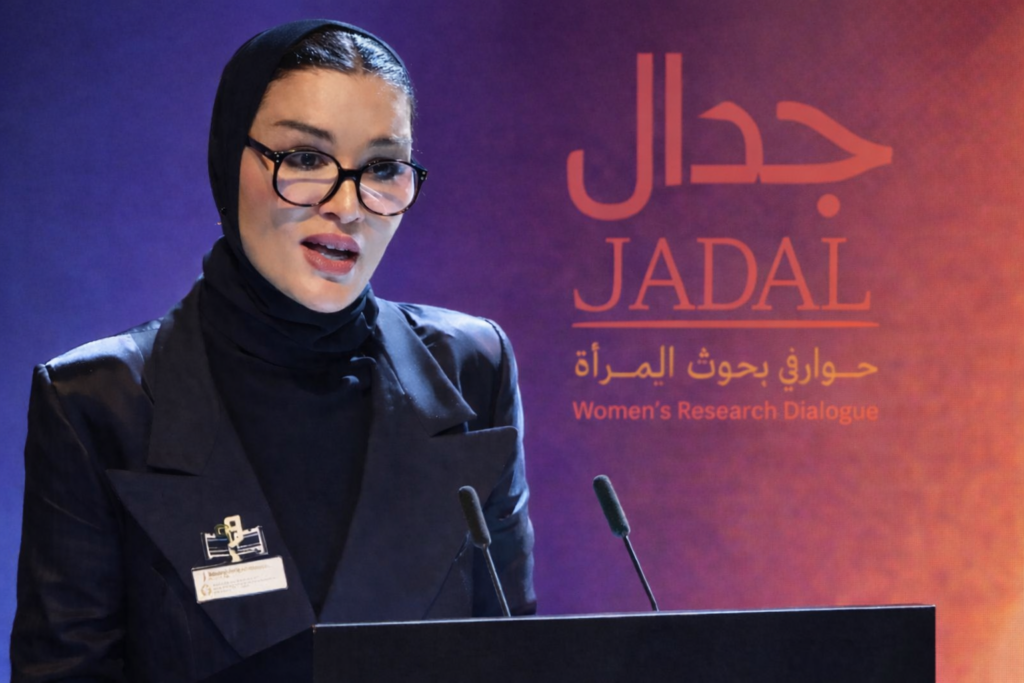
Her Highness Sheikha Moza bint Nasser, Chairperson of Qatar Foundation for Education, Science and Community Development, was present at the opening of Jadal, the annual research summit organized by Al-Mujadilah Center and Mosque for Women. The summit focuses on fostering collaboration and expanding research networks that address the current challenges and real-life experiences of Muslim women globally.
When Her Highness Sheikha Moza bint Nasser attended the opening of Jadal 2026 in Doha, the event was more than a ceremonial gathering. It was a statement about the future of scholarship, leadership, and narrative authority in the Muslim world.
Hosted by Al-Mujadilah Center and Mosque for Women under the umbrella of Qatar Foundation, the annual Jadal summit convened more than 100 Muslim women scholars, researchers, and practitioners from across North America, Europe, Africa, Asia, and the Middle East.
But the deeper story is not attendance numbers. It is infrastructure — intellectual infrastructure.
Building an Intellectual Ecosystem
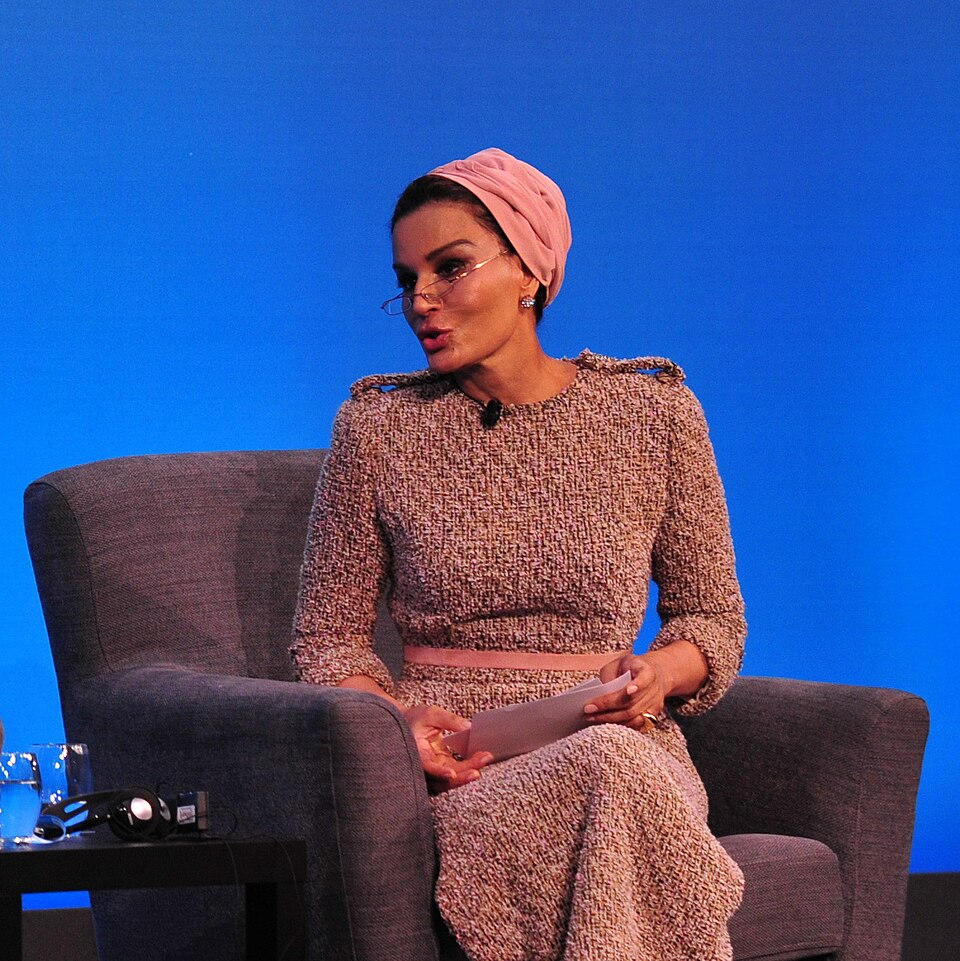
The 2026 theme, “Muslim Women Navigating Theology, Ethics, and Society,” signals a strategic pivot away from reactive discourse toward proactive knowledge production.
Rather than focusing solely on representation, Jadal centers normative authority — examining how Muslim women have shaped Islamic legal thought, ethics, governance, and community life since the inception of Islam.
In her opening remarks, Executive Director Dr. Sohaira Siddiqui emphasized stewardship in religious knowledge — describing it as both principled and responsive. Her framing reflects a growing movement toward scholarship that bridges tradition with contemporary complexity.
This approach aligns with global trends in academic reform. Institutions worldwide are rethinking how research intersects with lived experience, public policy, and community leadership.
From Conference to Conversation
Jadal positions itself not merely as a conference, but as an ongoing intellectual dialogue. This distinction matters.
Leadership summits often produce declarations. Sustainable movements build networks.
By gathering interdisciplinary voices — from ethical business to bioethics, urban belonging to legal reform — Jadal is constructing cross-sector intellectual capital.
The event also marked the launch of a new partnership between Al-Mujadilah and Qatar’s Ministry of Social Development and Family, formalized in the presence of HE Buthaina bint Ali Al Jabr Al Nuaimi.
The partnership aims to elevate historical and contemporary contributions of Muslim women through public programming and research initiatives. This signals institutional alignment between scholarship and social policy — a rare but powerful combination.
The “More Muslim” Podcast
One of the summit’s most forward-looking initiatives was the launch of More Muslim, an audio documentary podcast exploring the complexity of Muslim identity.
Blending historical analysis with contemporary storytelling, the series reflects a broader innovation trend: narrative sovereignty.
In an era shaped by algorithmic media and simplified identity narratives, institutions that control storytelling platforms control perception.
Al-Mujadilah’s move into narrative media suggests strategic recognition that scholarship must travel beyond academic journals to shape public consciousness.
Leadership Through Intellectual Stewardship
Sheikha Moza’s presence underscores Qatar Foundation’s long-standing investment in education and knowledge systems.
Under her leadership, Qatar Foundation has established global partnerships with universities such as Georgetown University in Qatar and other Education City institutions — reinforcing the country’s positioning as a regional knowledge hub.
Jadal fits within this broader ecosystem: not as a symbolic event, but as a structural pillar in Muslim women’s scholarship.
Why This Founder-Level Leadership Matters for 2026
While Sheikha Moza is not a startup founder in the traditional sense, her approach mirrors founder-led ecosystem building.
In 2026, leadership in emerging economies will increasingly hinge on intellectual sovereignty — the ability to shape research agendas, cultural narratives, and ethical frameworks.
By centering Muslim women as producers of theological and social thought, Jadal challenges outdated assumptions about authority structures within religious discourse.
More importantly, it demonstrates that leadership today is multidimensional:
- Institutional
- Intellectual
- Narrative
- Policy-aligned
As global debates around identity, ethics, and social reform intensify, platforms like Jadal may serve as incubators for next-generation thought leaders.
The summit is not merely about theology. It is about defining who shapes ethical discourse in the modern Muslim world.
And in that respect, Sheikha Moza’s continued stewardship positions her as one of the region’s most consequential ecosystem architects heading into 2026.
Why Jadal Matters Beyond Academic Conferences
Many academic conferences conclude with keynote speeches and published proceedings, but Jadal is designed to create lasting collaboration among scholars. By bringing together researchers from multiple countries and academic disciplines, the summit encourages long-term partnerships that can produce future publications, policy recommendations, educational initiatives, and community projects.
This collaborative approach strengthens the global network of Muslim women scholars while encouraging research that addresses real-world challenges rather than remaining confined to academic institutions. As universities increasingly prioritise interdisciplinary research, platforms like Jadal provide an important environment where theology, ethics, education, sociology, law, and public policy intersect.
Growing Importance of Women-Led Research in the Muslim World
Across the Muslim world, women are playing an increasingly significant role in higher education, scientific research, public policy, and religious scholarship. Universities throughout the Gulf region have witnessed rising female participation in postgraduate education, while women continue to assume leadership positions in research institutions, think tanks, and international organizations.
Initiatives such as Jadal reflect this broader transformation by providing opportunities for Muslim women to contribute original scholarship, exchange ideas internationally, and participate in discussions that influence both academic and public discourse.
Rather than focusing solely on representation, the summit highlights intellectual contribution and research excellence, reinforcing that knowledge production remains central to social and economic development.
Qatar’s Vision for Knowledge-Based Development
The Jadal Summit also aligns with Qatar’s long-term strategy of investing in education, innovation, and research as drivers of national development. Through Qatar Foundation and Education City, the country has established partnerships with internationally recognised universities while creating an ecosystem that supports scientific discovery, entrepreneurship, and policy research.
Hosting international gatherings such as Jadal strengthens Qatar’s position as a regional centre for academic collaboration and reinforces its commitment to fostering dialogue across cultures and disciplines.
Why Ethical Leadership Is Becoming More Important
Rapid technological advances, artificial intelligence, biotechnology, climate change, and social transformation continue to raise complex ethical questions for governments and communities worldwide. As these issues become increasingly interconnected, scholars are being called upon to provide balanced perspectives that combine academic research with moral reasoning.
By exploring theology alongside ethics and society, Jadal encourages conversations that address contemporary challenges while remaining grounded in historical scholarship. This interdisciplinary approach helps researchers develop practical insights that can inform education, policymaking, healthcare, and community leadership.
Research Collaboration Creates Greater Global Impact
International collaboration has become one of the strongest indicators of research quality. When scholars from different countries work together, they bring diverse experiences, methodologies, and cultural perspectives that often produce more comprehensive research outcomes.
Events like Jadal facilitate these partnerships by connecting researchers who may later collaborate on journal publications, educational programmes, conferences, and policy initiatives. Such networks also help early-career researchers gain mentorship from established academics and expand opportunities for future scholarship.
Expanding Role of Narrative in Academic Communication
Academic research no longer reaches audiences through journals alone. Podcasts, digital platforms, documentaries, and social media have become essential channels for communicating complex ideas to wider audiences.
The launch of the More Muslim podcast illustrates how institutions are adapting to changing media consumption habits. By translating scholarly discussions into accessible storytelling, research organizations can engage younger generations, encourage public dialogue, and increase awareness of issues that might otherwise remain within academic circles.
FAQs – Frequently Asked Questions
Jadal is an annual international research summit organized by Al-Mujadilah Center and Mosque for Women in Doha. It brings together Muslim women scholars, researchers, academics, and practitioners to discuss theology, ethics, leadership, and contemporary social issues.
Sheikha Moza bint Nasser is the Chairperson of Qatar Foundation for Education, Science and Community Development. She is internationally recognized for promoting education, research, innovation, and social development in Qatar and beyond.
The summit aims to strengthen research collaboration, expand scholarly networks, and highlight the intellectual contributions of Muslim women in areas such as theology, ethics, law, education, and public policy.
The 2026 theme was “Muslim Women Navigating Theology, Ethics, and Society,” focusing on how Muslim women contribute to religious scholarship while addressing contemporary ethical and societal challenges.
Jadal is organized by Al-Mujadilah Center and Mosque for Women, an initiative operating under Qatar Foundation.
The summit promotes long-term research collaboration, interdisciplinary scholarship, and intellectual leadership while creating opportunities for Muslim women to shape discussions on theology, ethics, education, and public policy.
More Muslim is an audio documentary podcast launched by Al-Mujadilah that explores Muslim identity through historical research, storytelling, and contemporary discussions aimed at broader public audiences.
The summit provides networking opportunities, encourages international research partnerships, promotes interdisciplinary collaboration, and supports the development of future scholars through knowledge sharing and academic engagement.
Qatar Foundation supports education, scientific research, innovation, entrepreneurship, and community development through initiatives such as Education City, international university partnerships, and specialized research institutions.
International collaborations enable scholars to exchange ideas, combine expertise, improve research quality, address global challenges from multiple perspectives, and develop evidence-based solutions that benefit society across borders.
Interdisciplinary research allows scholars from fields such as theology, ethics, sociology, education, law, and public policy to collaborate on complex issues that cannot be addressed from a single perspective. This approach often produces more practical and comprehensive solutions.
The summit connects scholars from different countries and institutions, encouraging joint research projects, knowledge exchange, and long-term academic partnerships that extend beyond the annual event.
Academic conferences provide opportunities to present research, receive expert feedback, build professional networks, establish collaborations, and stay informed about emerging developments within their field.
Qatar invests heavily in education through Qatar Foundation, Education City, international university partnerships, research funding, and innovation initiatives that promote scientific advancement and knowledge-based economic growth.
Podcasts help researchers communicate complex ideas in a more accessible format, enabling wider audiences to engage with academic discussions, historical perspectives, and contemporary issues outside traditional scholarly publications.
As societies face challenges related to technology, healthcare, artificial intelligence, and social change, ethical leadership helps ensure that decision-making balances innovation with fairness, responsibility, and long-term societal wellbeing.
Dwayne Paschke is a seasoned content strategist and AI automation specialist with over nine years of experience at the intersection of journalism and digital innovation. A versatile force in the media landscape, Dwayne has built a reputation as an expert content writer and investigative journalist, contributing high-impact pieces to various reputable news websites.
The post How Sheikha Moza’s Jadal Summit Is Redefining Muslim Women’s Intellectual Leadership appeared first on Disruptors Digest.
]]>